Potential of Gut Microbiome in Mosquitoes for Dengue Vector Control
Raiha Fatima1 ,Muhammad Kamran 1
1Department of Biosciences, COMSATS University, Islamabad, Pakistan
Abstract
Background:Medically important mosquito species belonging to genus Aedes are a major public health concern due to their ability to be efficient vectors of dengue, Chikungunya, Zika, and other arboviruses. Given the limited availability of vaccines and the absence of effective therapeutic treatments for arboviruses, the primary approach to preventing disease transmission is currently focused on controlling populations of Aedes mosquitoes. The incidence of dengue infection has witnessed a substantial surge in recent decades. The observed upward trajectory can be attributed to several factors, namely the rise in long-distance travel, population expansion and urbanization, inadequate sanitation practices, ineffective mosquito control measures, and heightened surveillance and official documentation of dengue occurrences. The conventional management of mosquito vectors through the application of different insecticides has resulted in adverse impacts on the environment and surrounding communities. These include the amplification of toxicity, unintended effects on non-target organisms, and the emergence of resistance in mosquito populations. Hence, it is imperative to develop novel tools and strategies for the management of mosquito vectors associated with these diseases. Recent research has revealed the existence of a wide range of microorganisms, collectively referred to as microbiota, within the midgut and other organs of mosquito vectors. These findings highlight the diverse and ever-changing nature of microbial communities in these organisms. The symbiotic microbiota present in these microbes predominantly contribute to the regulation of mosquito physiology, reproductive capacity, and immune response. The alteration of the midgut microbiota has been proposed to have an impact on the ability of mosquitoes to transmit a range of pathogens, including arboviruses and malaria parasites. Numerous symbiotic bacteria have been investigated for their potential in addressing mosquito-borne diseases, including but not limited to dengue, malaria, Zika, and yellow fever. The potential to cultivate mosquitoes with a predominant bacterial species in their gut microbiota presents an opportunity to explore the use of symbionts for the purpose of inducing antiviral responses or producing antiviral molecules in Aedes mosquitoes.
Key words:Dengue, Ades aegypti, Wolbachia pipientis, virus blocking strains.
Dengue is a viral infection that is transmitted to human beings via the bite of female mosquitoes from the Aedes genus.1 The primary means by which the disease is transmitted is through the mosquito species Aedes aegypti. However, in several countries, Aedes albopictus is also recognised as a secondary vector, albeit to a lesser degree. The etiological agent responsible for the pathogenesis of dengue fever is referred to as the dengue virus (DENV). There exist four distinct serotypes of Dengue virus (DENV), denoted as DEN 1-4, which exhibit genetic variability.2,3
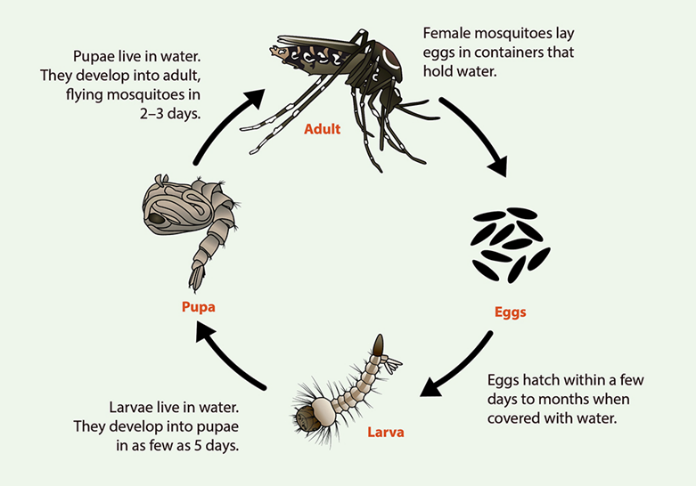
The Aedes genus has been identified in various tropical and subtropical regions across the globe.4 Mosquitoes have been found to play a significant role in the transmission of various diseases affecting humans. This transmission has been observed primarily in the semitropical/subtropical and tropical regions of the world.5,6 Aedes aegypti and Aedes albopictus, both belonging to the genus Aedes, play significant roles in the transmission of dengue viruses.7 Aedes aegypti is a mosquito of moderate size, characterised by the presence of black and white alternating bands on its legs and abdomen. Additionally, its thorax (specifically, the scutum) displays a distinct pattern of silver-white scales in the shape of a lyre.8,9 The eggs of these species are deposited in a conspicuous manner and possess a notable resistance to desiccation for a duration of up to one year, thereby contributing to their wide distribution in natural environments. Nevertheless, they undergo immediate hatching upon immersion in water.
The larval stage of the organism is aquatic in nature, residing in water and periodically ascending to the surface in order to engage in respiration. The larvae undergo four successive moulting events, during which they shed their exoskeleton, resulting in an increase in size with each moult.10 The larvae possess specialized respiratory structures known as syphon tubes, which enable them to respire efficiently. These larvae suspend themselves from the surface of the water. The larvae consume microorganisms and organic matter present in the aquatic environment. During the fourth stage, the larva undergoes a transformation into a pupa. The larvae undergo four developmental stages referred to as instars, commonly known as wigglers. The growth period of these organisms typically spans from 5 to 10 days, with the duration primarily influenced by factors such as water temperature, the availability of food, and the density of larvae within the containers. The pupal stage refers to a period of inactivity and non-feeding. Subsequently, the pupa undergoes metamorphosis and undergoes a transformation into its adult form.
Aedes aegypti mosquitoes exhibit opportunistic and aggressive biting behaviour, with their feeding activity reaching its highest levels during the early morning and late afternoon periods. Aedes albopictus, commonly known as the Asian tiger mosquito, exhibits a broad spectrum of hosts for its feeding behaviour, encompassing humans, various species of wild and domesticated animals,
as well as avian species.12,13 According to reports, female mosquitoes of the species Aedes aegypti exhibit a propensity for multiple blood feedings, as evidenced by the identification of human blood meals in females and subsequently confirmed through PCR-based techniques. According to a study conducted in Thailand, it was observed that 65% of female individuals engage in feeding twice per day.14
According to reports, adult mosquitoes are considered to be the most effective reservoirs and replication sites for dengue viruses. The Aedes
mosquito exhibits varying levels of susceptibility to distinct viral strains across diverse geographic locations. It has been observed that mosquito eggs with drought resistance serve as reservoirs for certain arboviruses, particularly in regions characterized by low annual precipitation.15
To date, no research has been conducted in Pakistan pertaining to the vector status of Aedes aegypti and Aedes albopictus. Both were identified as vectors of dengue fever in numerous countries within the Southeast Asian region. In 2006, the Vector Biology laboratory at GCU conducted a study in which wild mosquitoes were collected from the old city of Lahore. The findings revealed that all of the collected mosquitoes belonged to the species A. albopictus, suggesting that this species could potentially serve as a vector for dengue viruses in Lahore.17 During the period of August to November in 2008, the coexistence of Ae. aegypti and Ae. albopictus was observed in various locations within Lahore.
In the year 2009, during the months of March to May, the Aedes aegypti species exhibited the highest population density in the old city area of GCU Lahore.18 The aforementioned studies have demonstrated that both species of Aedes have been observed to be highly prevalent in Lahore over the past few years.19
The Aedes aegypti species can be found in various habitats which contain stagnant and standing rainwater, and create favourable conditions for mosquito breeding.20,21 Similar to Aedes aegypti, another species known as Aedes albopictus also exhibits a tendency to inhabit areas in close proximity to human settlements and engages in container breeding practises.22 Nevertheless, these species exhibit a diverse range of habitats, including but not limited to use automobile tyres, or cemeteries.23,24 The hematophagous nature of mosquitoes, characterized by their blood feeding behaviour, is a significant aspect of their biology. According to the literature, it has been observed that female mosquitoes are the exclusive blood-feeders of humans and other vertebrates.25 The process of blood feeding is an essential requirement for female organisms as it enables them to acquire protein necessary for their sustenance and facilitates the production of eggs.26 Dengue fever (DF), Dengue hemorrhagic fever (DHF), and Dengue shock syndrome (DSS) are globally recognized as emerging infectious diseases.27
Dengue fever (DF) is a highly transmissible tropical disease that has significant impacts on human health in terms of both morbidity and mortality. According to the World Health Organization (WHO, 2009), the disease has reached epidemic proportions in more than 100 countries, with a high-risk population of 2.5 billion individuals.
Notably, the South East Asian regions have been identified as the most heavily impacted areas globally.24,28 The manifestations of dengue infection encompass a range of clinical presentations, spanning from a mild viral syndrome to the development of severe hemorrhagic fever. Dengue fever is characterized by various symptoms including frontal headache, retroocular pain, muscle and joint pain, nausea, vomiting, and a generalized rash. During the febrile period, it is possible for individuals to experience flushing of the face, neck, and chest. Additionally, a rash known as macro popular rash may appear on the third or fourth day. The occurrence of complications in cases of dengue hemorrhagic fever (DHF) and dengue shock syndrome (DSS) is characterized by a significant increase in the permeability of blood capillaries.
This heightened permeability leads to the initiation of both external bleeding, such as from the nose and gums, as well as internal bleeding, which is caused by the leakage of fluids from blood vessels.29 Photophobia is a significant symptom associated with dengue viruses. Several symptoms of dengue fever exhibit notable similarities to those of malaria, leptospirosis, and influenza, which are prevalent diseases worldwide.30
The dengue viruses are classified within the genus Flavivirus, which is a member of the family Flaviviridae. These viruses are primarily transmitted by mosquitoes of the Aedes genus. The dengue viruses possess a single-stranded RNA genome measuring 11 kilobases (kb) in length. The gene sequence of these viruses is as follows: 5-C-pr M (M)-E-NS1-NS2A-NS2B-NS3-NS4A-NS4B-NS5-3.31 Annually, the tropical region of the world, specifically East Africa, Southeast Asia, South America, Australia, Mediterranean countries, and China, has recorded over 800,000 cases of DF/DHF. The history of dengue can be traced back several decades. The initial outbreak of DF was documented concurrently in Asia, Africa, and North America (CDC, 2005). The initial occurrence of the DSS was documented in the urban areas of Southeast Asia and the United States during the 1950s. In 1981, Cuba experienced outbreaks of Dengue Hemorrhagic
Fever (DHF) and Dengue Shock Syndrome (DSS), resulting in a total of 344,203 reported cases, including 10,312 severe cases and 158 fatalities. The global distribution of dengue cases is depicted in Figure 2.33
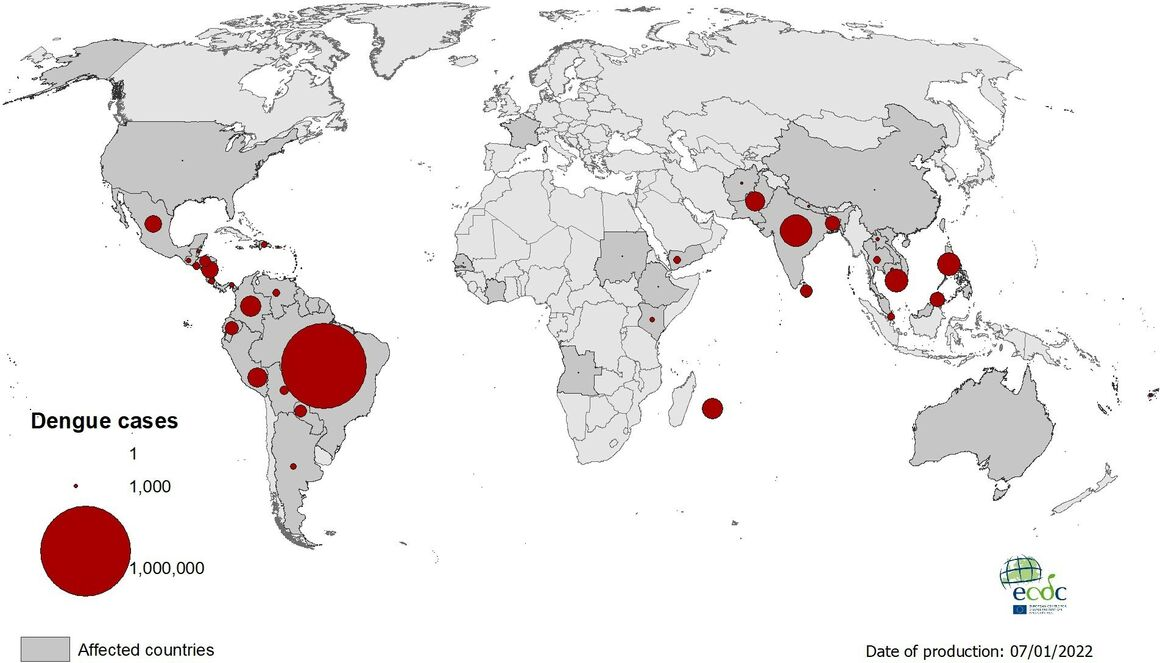
The occurrence of dengue hemorrhagic fever and dengue shock syndrome cases in Venezuela was documented in 1989 and 1990. Subsequently, in 1993, reports of dengue cases emerged in Central American countries such as Costa Rica and Panama. The documentation of serotype 3 of the dengue virus in Nicaragua and Panama occurred in 1994.34 In 2005, it was recognized as a significant global health concern, as it is classified as one of the prominent vector-borne diseases impacting the human population. The initial occurrence of dengue fever in Pakistan, specifically in Karachi, was documented in 1994. Approximately 1800 cases of Dengue Hemorrhagic Fever (DHF) were reported in the Lasbella district of Baluchistan during the subsequent years. From 2006 to the present, there has been an annual occurrence of an epidemic in Pakistan. During the outbreak in 2006, a total of 5,000 cases were reported nationwide, with 2,000 cases being confirmed positive. The city of Karachi experienced 43 deaths, while Lahore reported 7 deaths. According to a study conducted in 2008, Lahore experienced a total of seven fatalities and over 900 reported cases.35 In the year 2010, it was observed that 34 out of the total 36 districts in the province of Punjab were classified as being at a high risk level for dengue, thus highlighting a concerning situation within this particular province. In 2011, a significant number of positive cases, exceeding 15,000, were reported throughout the Punjab province, accompanied by a mortality count surpassing 300. The urban city of Lahore was subjected to a high level of risk, resulting in numerous fatalities. Subsequently, a total of over 100,000 confirmed positive cases, accompanied by approximately 250 fatalities, were documented across various regions of the nation.36
Wolbachia pipientis
Wolbachia pipientis is a prevalent type of bacteria that is maternally inherited and obligate intracellular in nature. It has the ability to infect various insect species, but it is not naturally present in Aedes aegypti.37 The genus Wolbachia comprises Gram-negative bacteria that have been found to infect approximately 40% of arthropod species and nearly 30% of mosquito species. Wolbachia exhibits transovarial transmission and possesses the capability to induce various reproductive manipulations, including cytoplasmic incompatibility.
These manipulations can be effectively utilised for the purpose of managing mosquito populations.38 Furthermore, the introduction of novel Wolbachia transfections in Ae. aegypti has been found to significantly influence the host's susceptibility to various pathogens. In laboratory assays, it has been observed that Aedes albopictus, when transinfected with the wMel Wolbachia strain, exhibits an inability to transmit Dengue or Chikungunya viruses.39 Aedes albopictus exhibits natural superinfection with two distinct strains of Wolbachia, namely wAlbA and wAlbB. Therefore, in order to devise efficient Wolbachia-centered approaches for managing Ae. albopictus, it is imperative to evaluate the stability and capacity for population invasion of newly established Wolbachia infections. Given the probable association with Wolbachia inter-strain interactions, it is imperative to ascertain the prevalence of wAlbA and wAlbB within populations of Ae. albopictus under natural conditions.
The establishment of a persistent trans infection of Aedes aegypti mosquitoes with certain strains of Wolbachia bacteria results in the acquisition of resistance against widespread infection by dengue virus (DENV) and other arthropod-borne viruses (arboviruses). The integration of "virus-blocking" strains of Wolbachia into natural populations of Aedes aegypti is a developing strategy for controlling the spread of dengue fever.40 The methodology entails the systematic introduction of mosquitoes infected with wolbachia into a natural mosquito population, with a consistent release schedule spanning multiple months. Wolbachia employs a mechanism to promote the integration of its own population by manipulating the reproductive outcomes between
mosquitoes that are uninfected and those infected with Wolbachia. This manipulation ensures that the only successful mating outcomes are those resulting in progeny that are infected with Wolbachia.41
Lambrechts et al.42,43 have provided evidence demonstrating an additional significant attribute of wolbachia in the management of dengue transmission, specifically its ability to reduce the lifespan of vectors. The researchers postulated that Wolbachia may have the potential to reduce the lifespan of mosquitoes infected with dengue. Rather than pursuing the complete elimination of mosquitoes, the scientists sought to employ bacteria as a means to manipulate the age distribution within the mosquito population. While the presence of mosquitoes would persist, their life spans would be comparatively reduced in relation to their current longevity. After a mosquito becomes infected with dengue, a latency period of eight to twelve days is required before the mosquito becomes capable of transmitting the virus to another individual. Subsequently, the mosquito remains infectious for the remainder of its lifespan, typically spanning three to four weeks.44 If the life span of a mosquito is shorter, it would result in a reduced number of opportunities for the transmission of dengue. Research is currently underway to develop an additional strain of Wolbachia that can effectively suppress the dengue virus within the Aedes aegypti vector. This approach has the potential to function as a vaccine for dengue in mosquitoes.
The transmission of the dengue virus occurs through a cycle involving human-to-mosquito-to-human contact, in which the mosquito species Aedes aegypti serves as the primary vector. These mosquitoes inhabit areas in close proximity to human populations, primarily in tropical and subtropical regions across the globe. The female Aedes aegypti mosquito assumes the role of a dengue vector subsequent to its consumption of the blood of an individual afflicted with the dengue virus. Mosquitoes that have been infected with dengue virus are capable of transmitting the disease through subsequent blood meals throughout their lifespan. The life cycle of Aedes aegypti encompasses both aquatic and terrestrial stages, exhibiting a considerable level of complexity. The eggs of these mosquitoes are deposited within containers, and the emergence of new Aedes aegypti occurs upon the containers becoming filled with water. Dengue fever presents a significant threat in densely populated areas characterized by rainy seasons, where there exist substantial populations of Aedes aegypti mosquitoes and a pronounced level of interaction between these mosquitoes and human beings.
The indigenous gut microbiota of Anopheles mosquitoes is recognized to have a significant impact on the physiological processes of the host organism. Throughout their life cycle, mosquitoes encounter a diverse range of microorganisms, a significant proportion of which reside in the midgut of the mosquito. Consequently, these microorganisms coexist in the same environment as the pathogens ingested by the mosquito. The mosquito midgut serves as a location where various reciprocal interactions occur among the mosquito, its commensal bacteria, and ingested pathogens. These interactions have a significant impact on the extent of pathogen infection and subsequent transmission.
This study aimed to investigate the reciprocal interactions among the immune system of Aedes mosquitoes, the dengue virus, and the microbiota present in the mosquito midgut. To achieve this, the authors employed molecular and microbiological assays. The research findings indicate that specific bacterial isolates obtained from the mosquito midgut have a negative impact on the infection of dengue virus. This phenomenon is partially demonstrated by the activation of the mosquito immune system in response to microbial agents. In contrast, infection with the dengue virus elicits immune responses within the midgut tissue of mosquitoes, which subsequently target the indigenous microbiota residing in the mosquito midgut. This research enhances our comprehension of dengue virus infection in Aedes mosquitoes, potentially facilitating the advancement of innovative biocontrol approaches to impede dengue transmission.
- Brady OJ, Hay SI. The global expansion of dengue: how Aedes aegypti mosquitoes enabled the first pandemic arbovirus. Annual review of entomology. 2020;65:191-208. https://doi.org/10.1146/annurev-ento-011019-024918
- Darwish NT, Alias YB, Khor SM. An introduction to dengue-disease diagnostics. TrAC Trends in Analytical Chemistry. 2015;67:45-55. https://doi.org/10.1016/j.trac.2015.01.005 Dalpadado R, Amarasinghe D, Gunathilaka N, Ariyarathna N. Bionomic aspects of dengue vectors Aedes aegypti and Aedes albopictus at domestic settings in urban, suburban and rural areas in Gampaha District, Western Province of Sri Lanka. Parasites & Vectors. 2022;15(1):1-14. https://doi.org/10.1186/s13071-022-05261-3
- Weeraratne TC, Perera MDB, Mansoor MM, Karunaratne SP. Prevalence and breeding habitats of the dengue vectors Aedes aegypti and Aedes albopictus (Diptera: Culicidae) in the semi-urban areas of two different climatic zones in Sri Lanka. International Journal of Tropical Insect Science. 2013;33(4):216https://doi.org/10.1017/S174275841300026X
- Shafee N, AbuBakar S. Effects of Dengue 2 Virus inoculation on Toxorhynchites splendens larvae. Journal of Entomology. 2006;3:89-94. https://doi.org/10.3923/je.2006.89.94
- Rahman MS, Pientong C, Zafar S, Ekalaksananan T, Paul RE, Haque U, et al. Mapping the spatial distribution of the dengue vector Aedes aegypti and predicting its abundance in northeastern Thailand using machine-learning approach. One Health. 2021;13:100358.https://doi.org/10.1016/j.onehlt.2021.100358
- Gubler DJ. Dengue and dengue hemorrhagic fever: its history and resurgence as a global public health problem. Dengue and dengue hemorrhagic fever. 1997:1-22. https://doi.org/10.2149/tmh.2011-S05
- Makanga B, Costantini C, Rahola N, Yangari P, Rougeron V, Ayala D, et al. “Show me which parasites you carry and I will tell you what you eat”, or how to infer the trophic behavior of hematophagous arthropods feeding on wildlife. Ecology and evolution. 2017;7(19):7578-84. https://doi.org/10.1002/ece3.2769
- Devi n. Molecular dna barcoding of mosquitoes collected from chattogram medical college area: Chattogram Veterinary and Animal Sciences University Chattogram-4225,Bangladesh;2019. http://dspace.cvasu.ac.bd/jspui/handle/123456789/360
- Bull JJ, Turelli M. Wolbachia versus dengue: evolutionary forecasts. Evolution, medicine, and public health. 2013;2013(1):197-207. https://doi.org/10.1093/emph/eot018
- Lahondère C, Lazzari CR. Mosquitoes cool down during blood feeding to avoid overheating. Current biology. 2012;22(1):40-5 http://dx.doi.org/10.1016/j.cub.2011.11.029
- Nguyen HV, Than PQT, Nguyen TH, Vu GT, Hoang CL, Tran TT, et al. Knowledge, attitude and practice about dengue fever among patients experiencing the 2017 outbreak in Vietnam. International journal of environmental research and public health. 2019;16(6):976. https://doi.org/10.3390/ijerph16060976
- 37.Chen H, Zhang M, Hochstrasser M. The biochemistry of cytoplasmic incompatibility caused by endosymbiotic bacteria. Genes. 2020;11(8):852. https://doi.org/10.3390/genes11080852
- Utarini A, Indriani C, Ahmad RA, Tantowijoyo W, Arguni E, Ansari MR, et al. Efficacy of Wolbachia-infected mosquito deployments for the control of dengue. New England Journal of Medicine. 2021;384(23):2177-86. 10. 1056/NEJMoa2030243
- Patil SP. Chapter-6 Wolbachia pipientis: A Prospective Solution to Mosquito Borne Diseases. Essentials of. 2020:93.08

An Official Publication of
Islamabad Medical & Dental College
Volume 12 Issue 3
Editorial
Address of Correspondence
Muhammad Kamran
Email:
kamranahmdani@gmail.com
Cite this article.Fatima R, Kamran M. Potential of Gut Microbiome in mosquitoes for Dengue Vector Control. J Islamabad Med Dental Coll. 2023; 12(3): 214-221. DOI: https://doi.org/10.35787/jimdc.v12i3.1024.