Ovulation Induction Response in Non-Obese Versus Obese Women with Polycystic Ovarian Syndrome at Fertility Clinic of a Tertiary Care Hospital, Rawalpindi
Unsa Malik1, Shazia Syed2, Sobia Nawaz2, Sumaira Mubasher1, Aisha Ishtiaq1, Humaira Bilqis2
1Department of Obstetrics and Gynaecology, Benazir Bhutto Hospital, Rawalpindi, 2Department of Obstetrics and Gynaecology Rawalpindi Medical University.
Objective: To validate the influence of obesity on response of ovulation induction by Clomiphene citrate in PCOS related subfertility
Methodology: Rotterdam criteria was used to diagnose PCOS. WHO criteria of BMI=23 kg/m² cutoffs for Asian population was used to divide women in two groups; non-obese (Group-A < 23 kg/m²) and obese/overweight (Group-B ≥ 23 kg/m²). In both groups ovulation was induced with Clomiphene Citrate and response was assessed via ultrasound follicular tracking, Day 21 serum progesterone and serum B-HCG levels two weeks after the HCG injection.
Results: Total participants were 200 (100 in each group). Mean age (years) in Group-A vs Group-B was 25.38 vs, 27.62 and mean BMI (kg/m²) was 20.82 vs 28.34 respectively. The frequent symptoms in Group-A Vs Group-B were Oligomenorrhoea (87% vs 97%) and amenorrhea (13% vs 03%). P-value (0.009) was significant. Difference in Ultrasound features of PCOS and LH:FSH ratio in both groups were insignificant (P-value=0.214 and 0.316 respectively). The difference in almost all parameters of OI between the two groups was statistically significant. In Group-A vs Group-B; the presence of dominant follicle after Clomiphene citrate was 52% vs 34% (p value=0.01); Day 21 serum progesterone >30ng/ml was 21% vs 09% (p value=0.01); a positive serum β-HCG level > 50 mIU/L 02 weeks after HCG administration was 12% vs 04% (p value=0.09).
Conclusion: Obesity control and lifestyle modification are imperative for significant improvement in fertility outcomes for PCOS related subfertility.
Keywords: Polycystic ovarian syndrome, Subfertility, Ovulation induction, BMI, Clomiphene citrate.
PCOS is a complex endocrine disorder characterized by hyperandrogenism, anovulation and insulin resistance. It affects 5-10% of females of the reproductive age.1 PCOS is a leading cause of subfertility in both developing and developed countries. An indigenous study shows PCOS related subfertility to be as high as 33.2%.2 Rotterdam criteria3 provides the diagnostic criteria including two of the three clinical features of: Oligo-ovulation/ Anovulation, Clinical/ biochemical signs of hyperandrogenism and Ultrasonographic findings of polycystic ovaries defined as “presence of more than 12 follicles measuring 2-9 mm in diameter or ovarian volume of more than 10cm3 “. PCOS clinically has two phenotypes in context of BMI i.e., obese/ overweight and non-obese. More than 80% of the premenopausal females presenting with PCOS have above average BMI,4 while 40% women with subfertility and recurrent miscarriages are either overweight or obese.5 Subfertility is due to anovulation in 75% of the women affected by PCOS.6 Insulin resistance and hyperandrogenism are major causes of anovulation and may be deteriorated by obesity in PCOS.7 Ehrmann DA8 stated that there is a bidirectional relationship between obesity and PCOS, both exacerbate each other in a never ending cyclical manner. Lifestyle changes and weight reduction therapies can prove beneficial in treatment of such patients.9 Obesity is associated with high LH concentration which is the key hormone in relationship between reproduction and fat metabolism.10 Raised levels of LH results in a low chance of conception. Abundant visceral body fat has a strong association with insulin resistance, causing hyperinsulinemia and high insulin like growth factor (IGF-1) bioactivity as a result of decreased concentration of insulin-like growth factor binding protein (IGFBP-1). IGF-1 improves responsiveness of granulosa cells of antral follicles to FSH by promoting the induction of FSH receptors. Both insulin and IGF-1 stimulate androgen synthesis in theca cell. Therefore, insulin and IGF-1 are important intra-ovarian controlling bodies. Any systemic or local disturbance in these regulators alter spontaneous ovulation causing anovulatory cycles in PCOS.10
Clomiphene citrate, a selective estrogen receptor modulator, has long been used as a first line agent for inducing ovulation in PCOS related subfertility.11 It binds with the hypothalamic and pituitary estrogen receptors, blocking inhibitory feedback of estrogen thereby increasing release of GnRH. This increases FSH and LH release causing follicular development, maturation and subsequent ovulation.
This study was aimed to identify difference in response of ovulation induction by Clomiphene citrate therapy in non-obese versus obese woman, contributing further to negative relationship between obesity and ovulation induction.
A comparative analytical study was conducted at Fertility Clinic of Obs/Gynae department, Benazir Bhutto Hospital. Rotterdam criteria was used to diagnose PCOS. All women with PCOS related subfertility and desirous of conception were enrolled for the study through non probability consecutive sampling. WHO criteria12 of BMI=23 kg/m² cutoffs for Asian population was used to divide women in two groups; non-obese (Group-A < 23 kg/m²) and obese/overweight (Group-B ≥ 23 kg/m²). In both groups ovulation was induced by Clomiphene Citrate in dose of 50mg/day from Day 2 to 6 of menstrual cycle for consecutive 5 days. In case of failed response, dose was increased every month by 50mg up to a maximum of 150mg/day over 3 consecutive cycles. Response to ovulation induction was assessed as outcome measures of: transvaginal ultrasound (TVS) for follicular size tracking, Day 21 serum progesterone > 30 ng/ml and serum Beta HCG level of >50mIU/ml two weeks after HCG injection. After Clomiphene therapy, TVS was done from day 9 to 12 of the menstrual cycle for tracking follicular size. Aim was to achieve at least a single dominant follicle of >18 mm or two follicles of 16mm. An intramuscular injection of HCG 10,000 IU to induce LH surge for ovulation was given after visualizing the dominant follicle. The women were then counselled to avail fertility period and revisit 2 to 3 days after the HCG injection to check for rupture of follicle. At day 21 serum progesterone level was measured and serum beta HCG level two weeks after HCG injection. All data was recorded on a specially designed proforma.
Data was entered on SPSS version 23.0. Continuous variables were expressed in Mean and Standard Deviation while categorical variables as Frequency and Percentage. P value of < 0.05 was considered significant.
Total participants enrolled were 200 (100 in each group); Group-A (non-obese) and Group-B (obese/overweight). Mean age (years) in Group-A vs Group-B was 25.38 vs, 27.62 and mean BMI (kg/m²) was 20.82 vs 28.34 respectively (Figure.1).
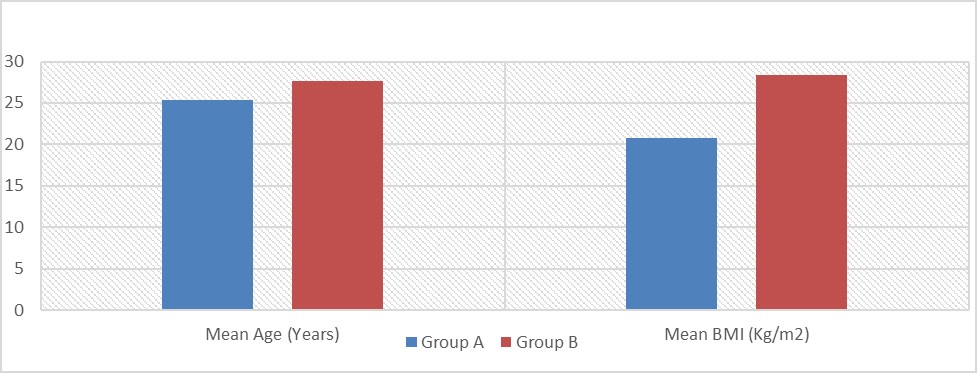
Figure 1. Comparison of Mean age and BMI
Participants were assessed according to Rotterdam criteria of PCOS (Table.1). The majority of women (184 i.e., 92%) presented with Oligomenorrhea; Group-A Vs Group-B were (87% vs 97%) while amenorrhea was seen in 13% vs 03% respectively. P-value (0.009) was significant. Ninety nine percent (n=199) of the participants showed polycystic ovary features on pelvic USG. Statistics of LH:FSH ratio were also calculated and found insignificant. So, the difference in Ultrasound features of PCOS and LH:FSH ratio in both groups were insignificant (P-value=0.214 and 0.316 respectively). The difference in almost all parameters of OI between the two groups was statistically significant (Table.2). In Group-A vs Group-B; the presence of dominant follicle after Clomiphene citrate was 52% vs 34% (p value=0.01); Day 21 serum progesterone >30ng/ml was 21% vs 09% (p value=0.01); a positive serum β-HCG level >50 mIU/L 02 weeks after HCG administration was 12% vs 04% (p value=0.09). To recap, 34 Obese women of Group-B developed dominant follicle, out of these 09 patients actually had ovulated (positive serum progesterone level) and subsequently only 04 achieved a clinical pregnancy as depicted by positive serum β-HCG level, regardless of pregnancy outcome.
Table I. Comparison of Rotterdam Criteria. |
|||||
Rotterdam Criteria of PCOs |
Group A |
Group B |
Total |
p-value |
|
Oligomenorrhea |
87 (87.0) |
97 (97.0) |
184 (92.0) |
0.009 |
|
13 (13.0) |
3 (3.0) |
16 (8.0) |
|||
LH: FSH (ratio) |
10.91 |
28.34 |
39.25 |
0.214 |
|
USG features of polycystic ovaries |
Present |
99 (99.0) |
100 (100.0) |
199 (99.5) |
0.316 |
Absent |
01 (01.0) |
00 (0.0) |
1 (0.5) |
||
Table II. Comparison of ovulation induction response between two groups. |
|||
Parameters of ovulation induction |
Group A (non-obese) |
Group B (obese) |
p-Value |
Presence of dominant follicle |
52 |
34 |
0.01 |
Serum Progesterone >30ng/ml |
21 |
9 |
0.01 |
Serum Beta HCG>50 mIU/L |
12 |
4 |
0.09 |
The women affected with PCOS mostly present with anovulatory subfertility. Hence, ovulation induction is an important option for treatment of subfertility in such cases. The response to ovulation induction varies among patients due to various factors, one of which is the BMI. Obesity deteriorates biochemical as well as endocrinological profile in PCOS. Clomiphene citrate, a selective Estrogen receptor modulator, has been used as first line agent for ovulation induction in PCOS related subfertility since long. This study was designed to compare response of ovulation induction by Clomiphene citrate in obese /overweight versus non obese patients presenting with PCOS. The participants of our study were in age range of 18 years to 35 years. The mean age of participants in group A (non-obese) and group B (obese/overweight) was 25.38 and 27.62 years respectively. This is comparable with a similar study conducted by Sachdeva13, where the mean age was 27 and 28 years respectively. The mean body mass index seen for group-A (20.8 kg/m2) and for group-B (28.34 kg/m2) is also comparable with the same study. Almost 80% of the women with PCOS have ovulatory dysfunction manifested as oligomenorrhea/amenorrhea.14 When Rotterdam Criteria was applied and analyzed, 87% of our patients in non-obese group presented with oligomenorrhea and 13% with amenorrhea while in obese group 97% patients had oligomenorrhea and only 3% had amenorrhea comparable with a study conducted by Cheema15 where amenorrhea was 5.6% but oligomenorrhoea was in 27.10% cases. The polycystic ovarian morphology (PCOM) on USG is the most prevalent feature of PCOS.16 In literature research the highest prevalence of PCOM found was 53%.17 In our study, almost 100% of the patients among obese group had this feature while 99% in non-obese group. This difference can probably be explained in terms of ethnic variations but needs to be investigated further. Rotterdam criteria involves measuring LH:FSH ratio as one of the diagnostic parameters. LH:FSH ratio > 2 is considered significant for PCOS.18 In a past study the LH:FSH ratio was as high as 94%.19 In our study, this ratio came out to be 10.91 for non-obese group and 28.34 for obese group with a p- value of 0.214 which is insignificant. Three important parameters are used to assess response of Ovulation Induction by Clomiphene Citrate. Firstly, a Transvaginal ultrasound to look for dominant follicle, done between Day 9 to 12 of the menstrual cycle. It revealed that 52% of the non-obese compared with 34% in obese/overweight group had a dominant follicle and were categorized as responders. The difference in response was statistically significant (p value=0.01). Hence, non- obese patients showed a better response to ovulation induction by Clomiphene citrate than obese group. A parallel response was described by a study conducted in a Government Hospital of India in 2019. This study included the Asian females affected by PCOS and non-obese patients showed better response to ovulation induction while obese patients responded to higher doses of Clomiphene due to their obesity.12 This result is also consistent with multiple other studies,20-23 in which almost 60%-85% of the patients ovulated after clomiphene citrate treatment., however only 15-25% of them achieved clinical pregnancy. Day 21 serum progesterone level is the next second indicator of ovulation.24,25 In our study among non-obese group, 21 patients showed serum progesterone level of > 30ng/ml and 9 patient among obese / overweight group had this response. This difference in response was also statistically significant (p value=0.01).
The last important parameter to assess the end response of ovulation induction is serum beta HCG level to confirm the clinical pregnancy. Among non-obese group total 12 patients achieved clinical pregnancy regardless of pregnancy outcome. In obese group, only 4 patients showed serum beta HCG level > 50mIU/ml, further endorsing a link between obesity and subfertility in patients affected with PCOS. In few past studies22,23 the reported clinical pregnancy rate with clomiphene citrate was 15-25%, however this was not stratified according to BMI. The overall response seen in our study, to ovulation induction was much better in non-obese group supporting the negative impact of higher BMI on ovulation induction response by Clomiphene citrate.
Obesity is strongly associated with anovulatory subfertility in women with PCOS. There is better response of ovulation induction by Clomiphene citrate in non-obese PCOS. Therefore, obesity control and lifestyle modification as first line management strategy are imperative for significant improvement in fertility outcomes for PCOS related subfertility. The incorporation of lifestyle modification and weight reduction program before jumping upon pharmacological treatments for subfertility is the need of hour. Every PCOS affected female desirous of conception visiting any healthcare facility should have her weight measured and BMI calculated at the very first visit. Every fertility centre/ Clinicians dealing with this domain should spread awareness on how strongly weight changes affect responsiveness to ovulation induction and long-term benefits of subfertility treatments.
Limitations:
Being a single-centred study, sample size was limited. The results can be supported further by a local multi-centred study with a larger sample size, to make findings generalized. Extended study duration could have been helpful regarding follow up of pregnancy outcomes.
- Sheehan MT. Poly cystic ovarian syndrome: diagnosis and management. Clin Med Res. 2004;2(1):13–27. https://doi.org/10.3121/cmr.2.1.13
- Sidra S, Tariq MH, Farrukh MJ, Mohsin M. Evaluation of clinical manifestations, health risks, and quality of life among women with polycystic ovary syndrome. PloS one. 2019 Oct 11;14(10). https://doi.org/10.1371/journal.pone.0223329
- ESHRE TR, ASRM-Sponsored PCOS Consensus Workshop Group. Revised 2003 consensus on diagnostic criteria and long-term health risks related to polycystic ovary syndrome. Fertility and sterility. 2004 Jan 1;81(1):19-25. https://doi.org/10.1093/humrep/deh098
- Silvestris E, de Pergola G, Rosania R, Loverro G. Obesity as disruptor of the female fertility. Reproductive Biology and Endocrinology. 2018 Dec;16(1):1-3. https://doi.org/10.1186/s12958-018-0336-z
- Best D, Avenell A, Bhattacharya S. How effective are weight-loss interventions for improving fertility in women and men who are overweight or obese? A systematic review and meta-analysis of the evidence. Human reproduction update. 2017 Nov 1;23(6):681-705. https://doi.org/10.1093/humupd/dmx027
- Adams J, Polson DW, Franks S. Prevalence of polycystic ovaries in women with anovulation and idiopathic hirsutism. Br Med J (Clin Res Ed). 1986 Aug 9;293(6543):355-9. https://doi.org/10.1136/bmj.293.6543.355
- Fichman V, Costa RD, Miglioli TC, Marinheiro LP. Association of obesity and anovulatory infertility. Einstein (São Paulo). 2020 Mar 9;18. https://doi.org/10.31744%2Feinstein_journal%2F2020AO5150
- Makhija N, Tayade S. Serum Nesfatin-1, Body Mass Index And Clinico-Metabolic Profile In Polycystic Ovarian Syndrome. European Journal of Molecular & Clinical Medicine.;7(11):2020. https://doi.org/10.7759%2Fcureus.37809
- Smithson DS, Vause TDR, Cheung AP. No. 362-Ovulation Induction in Polycystic Ovary Syndrome. J Obstet Gynaecol Can. 2018 Jul;40(7):978-987. doi: 10.1016/j.jogc.2017.12.004. PMID: 29921434. https://doi.org/10.1016/j.jogc.2017.12.004
- Galtier-Dereure F, Pujol P, Dewailly D, Bringer J. Choice of stimulation in polycystic ovarian syndrome: the influence of obesity. Human reproduction. 1997 Oct 1;12(suppl_1):88-96. https://doi.org/10.1093/humrep/12.suppl_1.88
- Bansal S, Goyal M, Sharma C, Shekhar S. Letrozole versus clomiphene citrate for ovulation induction in anovulatory women with polycystic ovarian syndrome: A randomized controlled trial. Int J Gynaecol Obstet. 2021 Mar;152(3):345-50. https://doi.org/10.1002/ijgo.13375
- Zegers-Hochschild F, Adamson GD, De Mouzon J, Ishihara O, Mansour R, Nygren K, Sullivan E, Van der Poel S. The international committee for monitoring assisted reproductive technology (ICMART) and the world health organization (WHO) revised glossary on ART terminology, 2009. Human reproduction. 2009 Nov 1;24(11):2683-7. https://doi.org/10.1016/j.fertnstert.2009.09.009
- Sachdeva G, Gainder S, Suri V, Sachdeva N, Chopra S. Comparison of the different PCOS phenotypes based on clinical metabolic, and hormonal profile, and their response to clomiphene. Indian Journal of Endocrinology and Metabolism. 2019 May;23(3):326. https://doi.org/10.4103%2Fijem.IJEM_30_19
- Dokras A, Stener-Victorin E, Yildiz BO, Li R, Ottey S, Shah D, et al. Androgen Excess-Polycystic Ovary Syndrome Society: position statement on depression, anxiety, quality of life, and eating disorders in polycystic ovary syndrome. Fertility and sterility. 2018 May 1;109(5):888-99. https://doi.org/10.1016/j.fertnstert.2018.01.038
- Cheema HK, Arora R. Prevalence and Clinical Profile of Patients with Polycystic Ovary Syndrome-A Hospital Based Study. J. Evolution Med. Dent. Sci .2019;8(32):2573-76. http://dx.doi.org/10.14260/jemds/2019/560
- Mumusoglu S, Yildiz BO. Polycystic ovary syndrome phenotypes and prevalence: differential impact of diagnostic criteria and clinical versus unselected population. Curr Opin Endocrine Metab Res.2020;12:66-71.
- Lauritsen MP, Bentzen JG, Pinborg A, Loft A, Forman JL, Thuesen LL, et al. The prevalence of polycystic ovary syndrome in a normal population according to the Rotterdam criteria versus revised criteria including anti-Müllerian hormone. Human reproduction. 2014 Jan 16;29(4):791-801. https://doi.org/10.1093/humrep/det469
- Haider S, Manan N, Khan A, Qureshi MA. Prevalence of Elevated Luteinizing Hormone (LH)/Follicle Stimulating Hormone (FSH) Ratio in Polycystic Ovary Syndrome (PCOS) Women Among Local Population. J Dow Univ Health Sci,2011 Apr. 28;5(1):17-20.
- Esmaeilzadeh S, Andarieh MG, Ghadimi R, Delavar MA. Body mass index and gonadotropin hormones (LH & FSH) associate with clinical symptoms among women with polycystic ovary syndrome. Global journal of health science. 2015 Mar;7(2):101. https://doi.org/10.5539/gjhs.v7n2p101
- Ellakwa HE, Sanad ZF, Hamza HA, Emara MA, Elsayed MA. Predictrs of patient responses to ovulation induction with clomiphene citrate in patients with polycystic ovary syndrome experiencing infertility. Int J Gynaecol Obstet. 2016; 133 (1): 59-63 https://doi.org/10.1016/j.ijgo.2015.09.008
- Khakwani M, Parveen R, Yousaf S, Tareen AU. Efficacy of letrozole versus clomiphene citrate on ovulation induction in patients with polycystic ovarian syndrome. Pak J Med Sci. 2022;38(5):1155-58. https://doi.org/10.12669/pjms.38.5.5565.
- Kar S. Clomiphene citrate or letrozole as first-line ovulation induction drug in infertile PCOS women: A prospective randomized trial. J Hum Reprod Sci. 2012;5(3):262-65. https://doi.org/10.4103/0974-1208.106338
- Agrawal K, Gainder S, Dhaliwal LK, Suri V. Ovulation induction using Clomiphene Citrate using stair - step regimen versus traditional regimen in Polycystic Ovary Syndrome Women - A Randomized Control Trial. J Hum Reprod Sci. 2017;10(4):261-64. https://doi.org/ 10.4103/jhrs.
- Sakar MN, Oglak SC. Letrozole is superior to clomiphene citrate in ovulation induction in patients with polycystic ovary syndrome. Pakistan Journal of Medical Sciences,2020 ;36(7):1460. https://doi.org/10.12669%2Fpjms.36.7.3345
- Mejia RB, Summers KM, Kresowik JD, Van Voorhis BJ. A randomized controlled trial of combination letrozole and clomiphene citrate or letrozole alone for ovulation induction in women with polycystic ovary syndrome. Fertility and sterility. 2019;111(3):571-8. https://doi.org/10.1016/j.fertnstert.2018.11.030

An Official Publication of
Islamabad Medical & Dental College
Volume 13 Issue 3
Address of Correspondence
Shazia Syed
Email:
drshazee@hotmail.com
Authors’ Contribution: 1,2Conception; Literature research; manuscript design and drafting; 3,4 Critical analysis and manuscript review; 5,6Data analysis; Manuscript Editing.
Cite this article. Malik U, Syed S, Nawaz S, Mubasher S, Ishtiaq A, Bilqis H. Ovulation Induction Response in Non-Obese Versus Obese Women with Polycystic Ovarian Syndrome at Fertility Clinic of a Tertiary Care Hospital, Rawalpindi. J Islamabad Med Dental Coll. 2024; 13(3): 443-448. DOI: https://doi.org/10.35787/jimdc.v13i3.1043