Expression of JAK2 V617F Mutation in BCR-ABL Negative Myeloproliferative Neoplasms
Ayesha Khursheed2Hamid Saeed Malik3Manzar Bozdar4Rafia Mahmood5, Zara Tasneem6
1Department of Hematology, Armed Forces Institute of Pathology (AFIP), Rawalpindi, Pakistan
Objective: To detect the presence of JAK2V617F mutation in BCR-ABL negative myeloproliferative neoplasms and to stratify high risk patients for targeted therapy.
Methodology:: This cross-sectional study was conducted in the Department of Hematology, Armed Forces Institute of Pathology (AFIP), Rawalpindi, from Dec 2023 to Oct 2023. A total of 40 consecutive patients of BCR-ABL1 negative myeloproliferative disorders, diagnosed according to WHO defined hematological criteria for each disorder, were included in the study. Informed consent and ethical approval were obtained from each individual. Bone marrow aspiration and biopsy was done by aseptic technique. All patients had their blood samples examined for the G-T point mutation (V617F) in the JAK2 gene located on chromosome 9, utilizing allele-specific real-time qualitative polymerase chain reaction (RT-qPCR). Results were entered and analyzed on SPSS version 22.
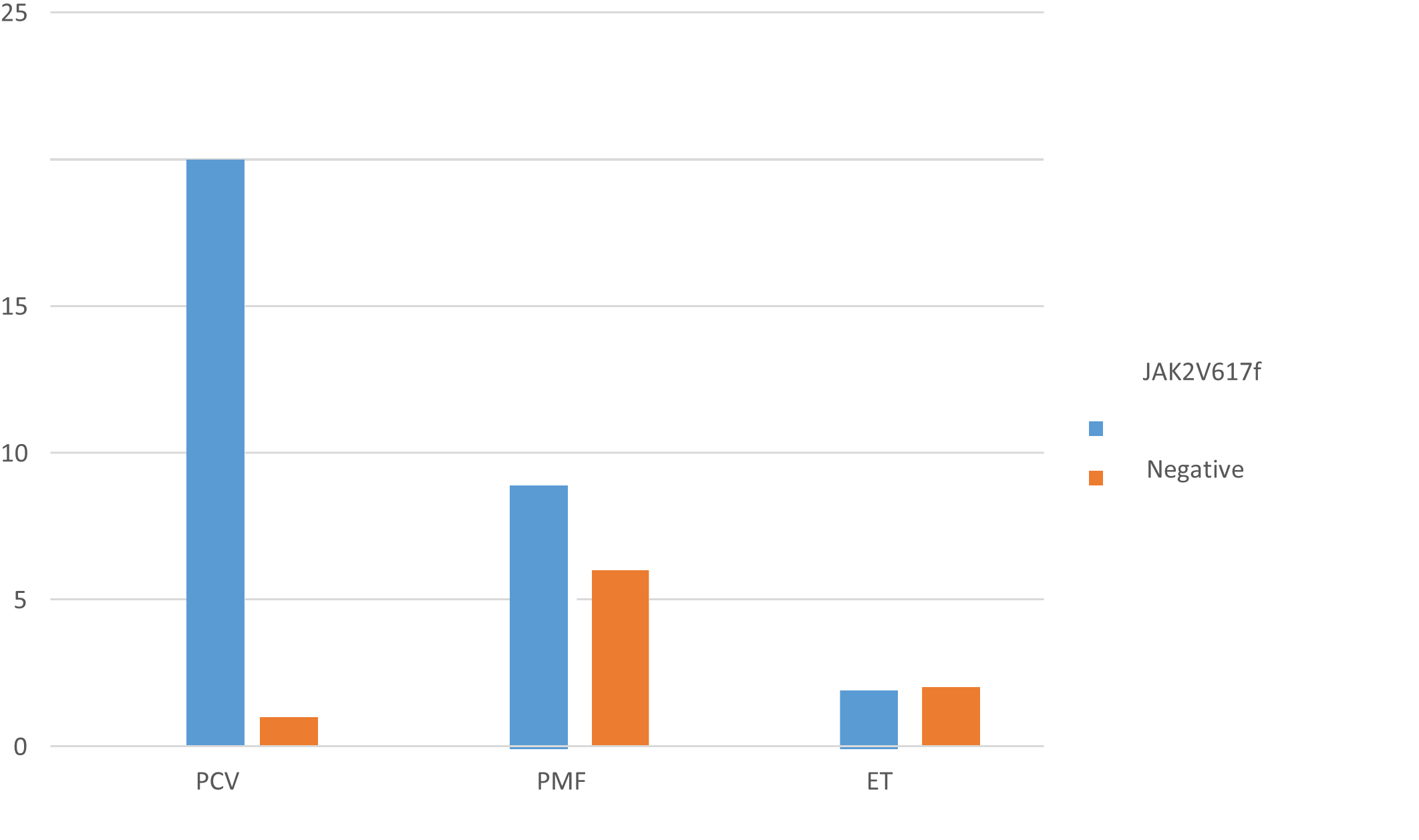
Results:Out of total 40 patients included in our study, 21(52.5%) were diagnosed as Polycythemia Vera (PV), 15 (37.5%) as Primary myelofibrosis (PMF) and 4 (10%) were diagnosed as essential thrombocythemia (ET). JAK2 mutation was found in 20 (95.2%) patients of PV, 9 (60%) patients of PMF and 2 (50%) patients of ET with a significant p-value of ˂ 0.017
Conclusion: JAK2 V617F is a useful clinical marker for establishing diagnosis and separating high risk patients for specific targeted therapy
Key words:Essential thrombocythemia, Myeloproliferative neoplasms, Polycythemia vera, Primary myelofibrosis.
As per world health organization (WHO) 2022 categorization of tumors the three diseases namely Polycythemia Vera (PV), Essential Thrombocythemia (ET) and Primary Myelofibrosis (PMF), which share similar clinical and laboratory characteristics, are commonly referred to as classical BCR - ABL 1 negative myeloproliferative neoplasms (MPNs).1 BCR - ABL 1 negative MPNs are clonal disorders of hematopoietic stem cells which are marked by over proliferation of one or more myeloid cell types and the incidence is on a rise at a rate of 3.8 times in last ten years. These Philadelphia negative MPNs have a worldwide combined annual incidence that ranges from 0.4 to 2.8 cases per 100,000 individuals for PV, 0.38 to 1.7 cases per 100,000 for ET and 0.1 to 1.0 cases per 100,000 for PMF.2 People diagnosed with MPNs face higher risk of the condition transforming into acute myeloid leukemia (AML) which is linked to limited treatment effectiveness and reduced survival rates. These conditions are additionally linked to an increased risk of bone marrow failure, significant hemorrhage and thromboembolism as compared to general population.3 The goal of treatment approaches is to prevent thrombo-hemorrhagic complications and includes aspirin, cytoreductive, phlebotomy, and anticoagulation therapy and use of JAK 2 inhibitors.
JAK 2 (Janus kinase 2; 9p24) mutation occurs as a single acquired point mutation in the Janus kinase 2 gene which results in valine to phenylalanine substitution at position 617 (V617F). It is found in about 95% of individuals diagnosed with Polycythemia Vera and in 50-60% of those suffering with Essential thrombocytosis or Primary Myelofibrosis.4 The presence of JAK-2 mutation clearly identifies a neoplastic process. Since it plays a significant role in the etiology of BCR-ABL negative MPNs therefore, screening of JAK2 mutational status has been integrated in the diagnostic criteria of WHO classification for MPNs.5
JAK 2 is a diagnostic and prognostic molecular marker which differentiates between primary and secondary polycythemia in most cases with certainty and stratifies high risk MPNs, particularly ET which is classified according to IPSET- scoring system that includes age, previous history of thrombosis, cardiovascular risk factors and JAK 2 mutational status.6
The discovery of JAK2V617F has paved the ways for the development of specific JAK2 inhibitors for the treatment of PV, ET and PMF.7 As JAK-2 is a potential therapeutic target for treatment, its detection is important to provide specific targeted therapy to high risk patients with JAK2 inhibitors that induces rapid and remarkable improvement in symptoms and survival.8 This mutational analysis opens new opportunities for therapeutic interventions.9,10 The goal of this research was detection of mutation and stratification of high risk patients for targeted therapy.
This cross-sectional investigation was conducted at Armed forces institute of pathology, Department of Hematology, Rawalpindi between Dec 2022 and Oct 2023. The study commenced after approval from Institutional Ethical Review Board via (No FC-HEM22- 6/READ-IRB/22/1543) dated 9th DEC 2022. The sample size was determined using the WHO sample size calculator taking reference prevalence of 2% of anticipated population of MPN’s, a 95% confidence interval, a 5% margin of error and an 80% test power. A total of 40 patients diagnosed according to WHO hematological criteria and after performing bone marrow examination were included in the study by using non probability consecutive sampling technique. Informed consent was obtained from all patients and ethical approval was secured. Newly diagnosed individuals of all ages and both genders were included in the study. Patients with BCR-ABL positive myeloproliferative neoplasms like (CML), all other hematological malignancies and patients on therapy were excluded from study. The study excluded pregnant women and individuals who had not provided their consent. Patients for the study were selected from the population referred by physicians to AFIP, department of hematology for investigation of disease, strictly following the inclusion and exclusion criteria. Patient’s information was kept confidential and each individual was allotted a code number. Approximately 5 milliliters of venous blood were collected from each patient under sterile condition. After running quality control procedures, EDTA anticoagulated samples from patients were run within 6 hours of collection and blood counts were generated on fully automated 7-part differential hematology analyzer of series XN-3000 having a reticulocyte channel analysis feature utilizing impedance technology and fluorescent flow cytometry. Bone marrow slides were stained by Giemsa stain and iron stain and trephine biopsy was stained by routine H & E and reticulin stains.
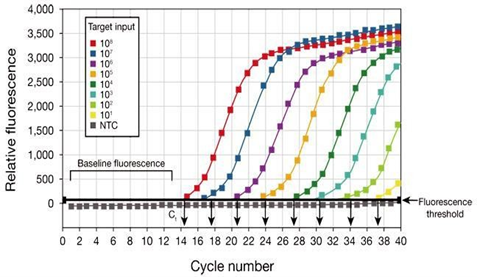
JAK2 mutation analysis: Real time PCR (7500 ABI) was performed after DNA extraction and amplification for mutation identification. This method utilizes fluorescent dyes for monitoring the quantity during the progression of amplification process as shown in Figure 1. DNA of each patient was extracted from the fresh peripheral blood taken in EDTA tube by using automated extractor (Thermofisher Gene Jet Genomic DNA. Purification kit made by USA). The target was amplified by real time PCR with SYBR Green/AVA green dye. For initialization of PCR the DNA was amplified in a 14 µl PCR reaction mixture containing SYBR Green/AVA green dye (Thermofisher), 1.0 ul PCR primers for V617F (reverse and forward), 2-3ul of patient DNA and 6.0 ul of DNA’s & RNAs free water in a PCR reaction tube, followed by loading on thermal cycler. Two specific set of primers were used, reverse primer having a sequence (5'-CTGAATAGTCCTACAGTGTTTTCAGTTTCA) and a forward primer having sequence (5'-AGCATTTGGTTTTAAAT TATGGAGTATATT). Each batch of real time PCR was run with a known positive control, a negative control (NTC) and water blank without primers to avoid any contamination. Thermal cycling conditions consisted of 40 cycles of denaturation at 95⁰C for 10 minutes, 95⁰C for 15 seconds and primer annealing at 60⁰C for 1 minute. Results were interpreted by analysis of Cycle threshold (CT) value. Data were analyzed using Statistical Package for the Social Sciences (SPSS) version
22.
Quantitative variables like age, HB, TLC, Platelets, PCV (HCT) and MCV were presented with mean ± SD. Frequencies and percentages were computed for presentation of qualitative variables like various bone marrow features of MPNs, gender and JAK2 mutational status. Chi square test was used for comparison of hematological parameters among mutated and unmated cases. The p-value of ≤ 0.05 was considered as significant.
This study evaluated a total of 40 cases. Mean age of total population was 56.65 ± 13.9 years. Minimum age was 25 and maximum was 85 years. Out of total population, 23 individuals, comprising 57.5% of the total, were males, while 17 individuals, constituting 42.5 were females with a M/F ratio of 1.3:1. Majority of the patients with PV and PMF were males, 13 (56.5%) and 9 (39.1%) respectively whereas ET was seen to be more prevalent among females 3(17.6%).
In this study diagnosis of PV and ET was made according to WHO criteria based on clinical features, peripheral blood counts, bone marrow findings and JAK 2 mutation status. Since WHO 2022 criteria requires integration of clinical, pathologic, and genetic data, diagnosis of PV was made by the presence of JAK 2 mutation and raised hemoglobin of >16.5 g/dl in men and > 16 g/dl in women, diagnosis of ET was made by occurrence of JAK2 mutation and raised platelet counts > 450x 10^9/L and PMF was diagnosed on the basis of peripheral blood counts, bone marrow findings and presence of JAK2 mutation.
JAK2 mutation was positive in 20 (95.5%) patients of PCV, 9 (66.6%) patients of PMF and 2 (50%) patients of ET as detected by allele specific real time PCR with a significant p value of ≤ .05.
graphically.
Classical MPN’s are an important group of hematological disorders in our country. These thrombohaemorrhagic syndromes have a significant morbidity and mortality due to their vascular involvement. Therefore, routine screening for JAK 2 mutations in diagnostic work up of MPNs is essential.12 Thrombotic complications are much more common than haemorragic complications, i.e. 20 vs 6 %
respectively and include superficial vein thrombosis (SVT), distal or proximal vein thrombosis (DVT), pulmonary embolism (PE) and venous thrombosis (VT) at unusual sites.13
The occurrence of abdominal vein thrombosis varies between 1% and 23%, with specific prevalence rates for Polycythemia Vera (PV), Essential Thrombocythemia (ET), and Primary Myelofibrosis(PMF) estimated to be approximately 10%, 13%, and 1%, respectively.14 Additionally, in individuals who exhibit hepatic vein thrombosis (Budd-Chiari syndrome), MPNs are the main causative factor.15 The importance of
It has a considerable influence on categorization, diagnosis, survival and prognosis of PV, ET and PMF. The major benefit of this molecular diagnosis is the discrimination of a primary clonal hematopoietic disorder from MPN due to reactive causes.17
The land mark discovery of this mutation ten years ago has reclassified the disease and revolutionized the area of molecular diagnostics of MPNs and resulted in the clinical implementation of innovative medical treatments.18 It now serves as to be an essential component of a new risk stratification system for ET that has 4 risk categories now: extremely low risk (Individuals aged 60 years or below with no prior thrombosis history and possessing a wild type JAK2), low risk (those aged 60 years or below with no history of thrombosis but carrying a mutated JAK2), intermediate risk (individuals aged 60 or above with no history of thrombosis and wild type JAK2 ), and high risk (individuals with history of thrombosis or those aged 60 or above with JAK2 mutation). In ET presence of JAK2 has been linked to an increased risk of thrombosis whereas in PV a higher JAK2 mutant allele burden has been linked to pruritus and fibrotic transformation.19
In our study, hematological parameters like hemoglobin and hematocrit were found to be higher in mutated cases of PV, a higher platelet count was observed in ET and increased fibrosis was seen in PMF which was in accordance with the diagnostic criteria. Bone marrow features were also consistent with the diagnosis of each and respective neoplasm. About 38.09% of the patients with PV showed increased myelofibrosis at the time of diagnosis. The negative cases were put on screening for other driver mutations.
Lab detection of JAK2 is highly sensitive and specific for establishing diagnosis of MPNs, differentiating high risk patients and discriminating PV from other causes of erythrocytosis. The rapid, reliable, and simple nature of RT-PCR makes it a more sensitive approach for detecting JAK2 V617F compared to alternative methods such as direct sequencing, RFLP, ARMS assay, and others. Besides molecular characterization of MPNs at diagnosis, JAK 2 quantification can be used to evaluate the effectiveness of therapy. A study conducted at Khyber Pakhtunkhwa in our population by Sidra et al concluded that 92.62% of patients with PV, 63.15% of patients with ET and 60% patients with PMF harbor the mutation.20 Screening of JAK 2 in MPN patients determined by Sabrina et al showed a prevalence of 95% of JAK2 V617F mutation among patients with PV.21 A similar frequency of mutation was also observed in South African population by Shires et al.22
Detection of JAK2 mutation via RT-PCR contributes to early diagnosis of myeloproliferative disorders and helps in modifying the management of disease and improving their prognosis and survival, especially with the availability and therapeutic use of JAK2 inhibitors. The study also highlights the unaddressed requirements in managing vascular and thrombotic complications among patients with MPNs.
- Khoury JD, Solary E, Abla O, Akkari Y, Alaggio R, Apperley JF, Bejar R, Berti E, Busque L, Chan JK, Chen W. The 5th edition of the World Health Organization classification of haematolymphoid tumours: myeloid and histiocytic/dendritic neoplasms. Leukemia. 2022 Jul;36(7):1703-19.https://doi.org/10.1038/s41375-022-01613- 1.
- Kim J, Byun JM, Hong J, Koh Y, Shin DY, Kim I, Yoon SS, Park H, Bang SM. Incidence, characteristics and risk factors of thromboembolic events in East Asian patients with BCR-ABL1 negative myeloproliferative neoplasms. Sci. Rep. 2021 Sep 8;11(1):17819. https://doi.org/10.1038/s41598-021-97464-4
- Rampal RK, Maria PO, Varshini HS, Levine RL, Cao A. Synergistic therapeutic efficacy of combined JAK1/2, Pan-PIM, and CDK4/6 inhibition in myeloproliferative neoplasms. Blood. 2016 Dec 2;128(22):634. https://doi.org/10.1182/blood.V128.22.634.634 Griesshammer M, Sadjadian P. The BCR-ABL1-negative myeloproliferative neoplasms: a review of JAK inhibitors in the therapeutic armamentarium. Expert Opin Pharmacother. 2017 Dec 12;18(18):1929-38. https://doi.org/10.1080/14656566.2017.1404574
- Passamonti F, Maffioli M. The role of JAK2 inhibitors in MPNs 7 years after approval. Blood. 2018 May 31;131(22):2426-35. https://doi.org/10.1182/blood-2018-01-791491
- Papageorgiou L, Elalamy I, Vandreden P, Gerotziafas GT. Thrombotic and Hemorrhagic Issues Associated with Myeloproliferative Neoplasms. Clin. Appl. Thromb./Hemost. 2022 Jun;28:10760296221097969.
- De Stefano V, Rossi E. Budd–Chiari Syndrome and Myeloproliferative Neoplasms. Budd-Chiari Syndrome.2020:73-88. https://doi.org/10.1007/978-981-32-9232-1_6 Grabek J, Straube J, Bywater M, Lane SW. MPN: The molecular drivers of disease initiation, progression and transformation and their effect on treatment. Cells. 2020 Aug 14;9(8):1901. https://doi.org/10.3390/cells9081901
- Cattaneo D, Iurlo A. Immune dysregulation and infectious complications in MPN patients treated with JAK inhibitors. Front Immunol. 2021 Nov 19;12:750346. https://doi.org/10.3389/fimmu.2021.750346.
- Hamayun S, Farooq G, Marwat MA, Batool Z, Ali N, Gul S. FREQUENCY OF JAK2 MUTATION IN BCR-ABL NEGATIVE MYELOPROLIFERATIVE NEOPLASMS IN KHYBER PAKHRUNKHWA. KJMS. 2019 Sep;12(3):403.
- Cordua S, Kjaer L, Skov V, Pallisgaard N, Hasselbalch HC, Ellervik C. Prevalence and phenotypes of JAK2 V617F and calreticulin mutations in a Danish general population.Blood.2019 Aug 1;134(5):469-79. https://doi.org/ 10.1182/blood.2019001113
- Shires K, Rust A, Harryparsad R, Coburn J, Gopie R. JAK2/STAT5 pathway mutation frequencies in South African BCR/ABL negative MPN patients. Hematol Oncol Stem Cell Ther. 2023 Apr 4;16(3):16. https://doi.org/10.56875/2589- 0646.1064

An Official Publication of
Islamabad Medical & Dental College
Volume 12 Issue 4
Editorial
Address of Correspondence
Kehkashan Hassan
Email:
kehkashan_hassan@yahoo.com
Cite this article.. Hassan K, Khursheed A, Malik SH, Bozdar M, Mamood R, Tasneem Z. Expression of JAK2 V617F Mutation in BCR - ABL Negative Myeloproliferative Neoplasms. J Islamabad Med Dental Coll. 2023; 12(4): 317-323. DOI: https://doi.org/10.35787/jimdc.v12i4.1057