The Journey from Basic to Clinical Pharmacology
Sarwat Jahan1, Salman Zahir2, Manzoor Khan3, Khansa Khan4, Mashal Asad1, Ahmed Hassan Khan1
1Northwest School of Medicine, Peshawar, 2Northwest General Hospital and Research Center, Peshawar, 3Khyber Teaching Hospital, Peshawar, 4Khyber Girls Medical College, Peshawar
Objective: The subjects of basic pharmacology and clinical pharmacology originate from same concepts but have a clear demarcation yet are so inter-linked and netted together that it is very critical and technical to identify and differentiate one from the other. This write-up is basically aimed to discuss and analyze the demarcations and similarities between basic and clinical pharmacology.
Methodology: Total 10 pharmacologists, pharmacists and medical specialists were recruited to conduct the survey from 1st Oct 2021 to 15th Nov 2021 in Khyber medical university. Information was collected via literature search online, consulting Pharmacology books, libraries and discussions with subject experts
Results: The basic pharmacology focuses on the study of the effects of substances on the body following experimental data that is collected via animal studies which defines the basic parameters and helps in derivation of the main foundational principles of the subject. Clinical pharmacology although follows the same basic principles and concepts but is the study of these principles in the human subjects rather than the animal studies. These studies are subjects however the two are inter-connected in many ways and the concepts go to and from one to the other.
Conclusion: The basic pharmacology is limited to the animal studies while the clinical pharmacology shelters human clinical trials and the policies, which come with the human studies and therapeutics.
Keywords: Basic Pharmacology, Clinical Pharmacology, Therapeutics, Pre-clinical trials, Clinical trials
Although The subject of pharmacology is a multi-verse of concepts, branches, divisions and definitions that all go to different directions, originating from the same point but are so inter-linked and netted together that it is very critical and technical to identify and differentiate one from the other.1 Tracing it back reaches down to two terms “basic pharmacology” and “clinical pharmacology”. In an attempt to clearly demarcate the boundaries of one from the other, we came across many perspectives and debates. This write-up is basically aimed to discuss and analyze the demarcations and similarities between basic and clinical pharmacology.
Drug development is under an increased need for the subject experts who can put the concepts into a strategic use hence bringing out better therapeutics.2 Clinical aspect of pharmacology parallels drug development and usage, diversity in response, raised drug discovery standards and development of therapeutics that are efficacious, safe and cost effective.3 It also directly contributes to the betterment of the health-care system by developing initiatives and policies.4 The demarcation of both the disciplines is important in order to clearly lay down components that will ultimately improve and optimize the research, therapeutics and health-care.5 The discrimination and clear understanding of the subject domains is the mainstay to strengthen core concepts and to know which domain to follow and what are the parameters and policies related to the domain.
The methodology to conduct the study was adopted after ample information and by following the new trends and innovations in the field of research. In this study total 50 pharmacologists, pharmacists and medical specialists were inculcated in the survey over a period of 5 months starting from 1st December 2022 till 15th April 2023 in Northwest School of Medicine, Peshawar. The sources of information pool were collected and formulated from literature search via different authentic online search engines, consulting latest editions of Pharmacology books, libraries and discussions with subject experts. All this information was collected from different sources in order to understand and clearly define the demarcations, goals and better understanding of the similarities and differences between the two distinctive fields of basic and clinical Pharmacology. The information after collection was assembled first in the specific subject matter of its respective domain and then later it was assembled in more palatable form. The discussions were held with subject experts to collect and assemble various prospects regarding the differences in both the domains. All the information was then assembled and write up was done based on the knowledge and information compiled.
History of evolution of two branches from one
The birth of pharmacology followed the synthesis of urea from inorganic material by Friedrich Wohler that lead to the origin of organic chemistry in 1828.6 By the beginning of the nineteenth century François Magendie performed experimental studies of nux vomica and discovered its anti-convulsant activity which was soon followed by claud Bernard’s discovery of effect of curare on the neuromuscular junction.7,8 This laid the foundation of the subject of pharmacology or the science of drugs. Pharmacology is an experimental science that studies the alterations of chemical substances in the living organisms. Basic pharmacology was the foundation stone of the subject that started with the experimental studies of drug absorption,
metabolism, distribution, excretion and the pharmacodynamics in the animal models.9 The basic principals were laid down and analyzed using the animal experimental models.
The origin of clinical pharmacology is unclear however; it could be attributed to the experimental study of glycosides in human subjects by Professor Harry Gold around late 1930s.10 Following the experimental work, in 1941 the first edition of “Goodman & Gilman’s Pharmacological Basis of Therapeutics” was published.11 Pharmacologists in those days were referred to as the jack of all trades by a British pharmacologist Sir John Gaddumonce,12 as they were solely responsible for the entire work starting from planning, lab set up, animal preparations and experiment execution. In addition, a lot of subjects like statistics, biochemistry and mathematics related to pharmacology were regarded as a part of the subject rather than separate individual divisions, it was therefore mandatory for a pharmacologist to have a knowledge on all these sections as well. In 1940s Sir Horace Smirk took the discoveries in the basic pharmacology field made by Paton and Zaimis regarding the effect of quaternary-ammonium ganglion blockers and applied them on patients with hypertension that yielded promising results.13
The beginning of the human research opened up a new perspective. Animal researches were safe, convenient and had a lot less ethical issue. The results could also be applied to the human population with almost similar results. However, this was not always the case. The difference in the human and animal species affected the pharmacokinetic and the pharmacodynamic profiles of most of the drugs.14 In addition, the variability of response also lied among the human races, sex and ethnicities etc, so the applicability of the animal studies was not beneficial in these instances. This and the ongoing successful human pharmacology experiments opened up the gates for a new individual subject of clinical pharmacology that although was the branch of the same tree but carried its own distinction as well. The subject of pharmacology therefore moved from the laboratory to the human population and hospitals back and forth and led to further advancements, concepts and a free flow of ideas between pharmacology, therapeutics and medicine.
“Pharmacology” has been defined as the study that deals with the interaction between the living organisms and substances via chemical processes in which the substances bind to regulatory molecule and either activate or inhibit normal processes in the body.15 The “basic pharmacology” focuses on the study of the effects of substances on the body following experimental data that is collected via animal studies which defines the basic parameters and helps in derivation of the main foundational principles of the subject.15
“Clinical pharmacology” although follows the same basic principles and concepts but is the study of these principles in the human subjects rather than the animal studies.16 From this similar root arise the applicability of these substances for therapeutic benefits which leads to “medical pharmacology or therapeutics” defined as the study of applicability of substances in disease prevention, diagnosis and treatment. It is a very common misconception to take clinical pharmacology as being same as the medical pharmacology; however, these are related but are two separate domains.17 The substances given lead to some un-toward and undesirable effects in the body. “Toxicology” is the study of these un-desirable effects of substances in the living organisms and includes effects on single cell, to effects on the entire living system as well as the effects of these substances on the complex ecosystems.15
Scopes in new drug development
The framework of clinical pharmacology extends from the basic pharmacological concepts in relation to the human beings to the application of these concepts in populations.18 The basic pharmacology also follows the same course, however, the derivation of the basic concepts is from animal studies that can be sent for human testing in the domain of clinical pharmacology or could be re-tested, improved and then utilized in the clinical pharmacology domain. The concepts derived from both basic and clinical pharmacology are put into practice via therapeutics. Both the clinical and basic pharmacology consist of studies of binding of ligands and receptors (Receptor Pharmacology), bio-physical mechanisms involved in cellular function (Cellular Pharmacology) as well as the effects of drugs on different organ systems (System Pharmacology).5
The basis of the basic pharmacology of new drugs is dependent on the data obtained from the pre-clinical or non-clinical trials that are intended for the determination of safe doses and determine acute and chronic drug toxicities. Basic data about the drug pharmacokinetics and pharmacodynamics is analyzed and lays down principles for mechanism of action and pharmacological as well as toxic effects. Historically the studies on animals date back to the ancient Greek era with the documented experiments by Aristotle on animals.19 The transition from discovery to pre-clinical development is continuous, and the results of experimental medical science and toxicology often influence the choice of a leading drug candidate. There is a clearly defined boundary between the pre-clinical and the clinical trials that is marked by an investigational new drug application (IND).20 The saying ‘start with a conclusion in mind’ fits perfectly for the pre-clinical trials, as the IND has to support the design that is to be followed by a randomized clinical trial. The areas covered by basic pharmacology in regards to new drug development include pharmacological actions of the active ingredient, designing a dosage regimen, analysis of drug pharmacokinetics, safety as well as toxicology. Since most of the drugs fail to successfully complete the pre-clinical studies (pre-clinical trials hence called the valley of death),21 it is relevant to state that those drugs stay in the basic domain and do not make it to the clinical pharmacology domain. Some of such drugs may get to go ahead after being scrutinized by properly set 'Go-No-Go' criteria,22 hence identifying the key issues to weed out any fixable errors. At this point the subject takes a detour from basic towards clinical pharmacology in terms of new drug development. The pre-clinical trials move to the human studies or the clinical trials. The history of the clinical trials dates back to 1537 when Ambroise Pare used digestive oils obtained from egg yolks and turpentine to clean the wounds of the soldiers.23 That however was an emergency response and the clinical trials in the real sense started in the mid-20th century when all the ethical considerations were set up ultimately leading to the declaration of Helsinki.24 The principle of informed consent was formulated, which is an essential component of clinical pharmacology.25 Clinical trials are divided into 4 phases and have the purpose to assess the drug safety, pharmaco-kinetic and pharmaco-dynamic profiles in humans, maximum dose that can be tolerated. The trials also offer determination of optimal doses, dosing regimens, effective routes of administrations, efficacy of the drugs and the treatment end-points. The selection of the control group for the human studies is a systematic process and involves selection criterion, randomization techniques, sample selection, identification and avoidance of confounding variables and placebo selection.26 Placebos have been used since 1800s but were put into practice officially in 1863 by Austin Flint who conducted a study on the herbal remedy of rheumatoid arthritis.27 Pharmacovigilance serves to identify and analyze rare drug adverse effects as well as the variation in rug response among large number of individuals.28
Scopes in subject content
There is no simple list in the basic concepts that may clearly demarcate between the basic and the clinical pharmacology other than the clinical pharmacology concepts made on the basis of the basic pharmacology but then analyzed and modified in relevance to the human studies. However, when the basic concepts become a part of the human pharmacology, they give rise to many areas that are distinct to clinical pharmacology. Thus, if it comes to exceptionally defining clinical pharmacology based on the content the definition will start with the basic pharmacology to the practical applications and therapeutics. The conceptual paradigm for both subjects start together. We believe it can be divided into two sections. First one is the part where the basic pharmacology forms concepts and the clinical pharmacology derives its basics from those concepts. This network starts with the pharmacology at the molecular level. This involves concepts related to receptors, enzymes and different mechanisms of transport. Then starts the concepts related to the cellular and molecular pharmacology. This area tends to cover cellular structures in regards to drug action, the genetic variations that may lead to differences in response, drug pharmacokinetics including drug metabolism. The effects of drugs on different organs, the adverse effects produced on different organs as well as the drug and organ interactions make up organ pharmacology. All of these core concepts when applied to human population become a part of clinical pharmacology as much as they are of basic pharmacology. The concepts of translational research arise from the basic pharmacology and goes directly to clinical pharmacology where a number of observations and concepts are hypothesized, rejected or consolidated when a study map taken from the basic pharmacology is opened up in the practical applicability side. Three principal components are encompassed during translation including the research at the laboratory level to the clinical applicability and reaching towards the needs of the population, thus moving first from a laboratory (basic pharmacology) to a clinical trial (clinical pharmacology) and then from trial to the population (Therapeutics). Thus, translational pharmacology successfully integrates both the basic and the clinical side, starting from one and going to the other directly.29 From this point onwards starts the second part in which; instead of clinical pharmacology sharing with or deriving the concepts from the basic pharmacology, the clinical pharmacology takes the dominance and forms concepts that are reflected onto basic pharmacology. The use of the drug practically in the human subjects gives rise to human toxicology studies, observational studies and the clinical trials. The human pharmacology gives rise to the health economics related to the value of different pharmaceutical preparations (pharmaco-economics) and formation of medicine policies,30 social factors effecting drug actions, studies of utilization of drugs, prescribing studies, prescribing irrationalities and ethical studies. Some of the concepts already formed in the basic side are also extended or modified in the clinical domain. Population variability in drug response and construction of quantal dose response curves forms the basis of the median lethal dose, the median toxic dose, therapeutic index as well as the therapeutic window. Comparative drug studies lead to rational, safe and evidence-based prescribing. A significant content of the clinical pharmacology is the introduction of the essential drugs that cope up for the priority health needs of the population. The list of the drugs included is obtained from population-based studies that identify the prevalence of diseases, benefit and efficacy of the drug along with its safety and affordability. All these principles taken from the clinical pharmacology are then incorporated into the basic pharmacology concepts.
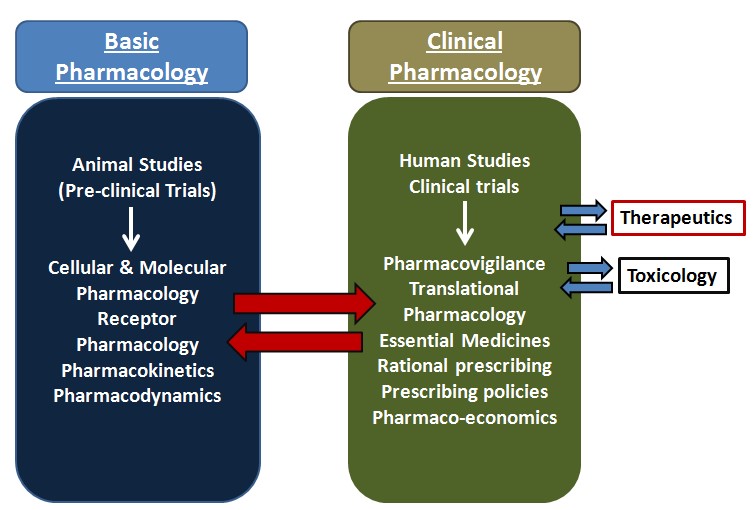
Figure 1: The inter-connections between the domains of basic Pharmacology & Clinical Pharmacology
Sphere of a Pharmacologist
Needless to say, that the title pharmacologist is quite complex. The qualification requires the knowledge starting with the basic concepts to animal research to the practical applicability of the drugs. Can we make a distinction between a basic and clinical pharmacologist here? Well as per the ongoing discussion we can attempt to do so. A pharmacologist teaches and does research but if we take the domains separately, the pharmacologist may be a basic pharmacologist or a clinical pharmacologist. The basic pharmacologist will keep the domain of his research as far as the laboratory and animal studies. The clinical pharmacologist will take the basic research to the population side and is thus involved in policy forming regarding the use of medicines in population and implementation of the knowledge into clinical prescribing practices. Therefore, a clinical pharmacologist needs to have knowledge for the disease pathophysiology and population dynamics to successfully plan and execute the research work and to rationalize its use in the general population.31,32,33
Shortcomings Following Knowledge Gap
Although the clinical pharmacological policies have systematically revolutionized the therapeutics, it still requires a lot of work. The lack of knowledge of the subject domain is one of the main reasons for multiple research inaccuracies. The researchers and even the pharmacologists themselves are unaware of the distinction of the clinical pharmacology from the basic pharmacology and hence do not have the knowledge of where to look for accurate research protocols and policies and whether they exist or not. The knowledge and application of the scientific principles laid down by the clinical pharmacology into therapeutics and research will enhance the quality of the therapeutic and pharmacological research advancement and will ensure ethical, legal and accurate practices. patients.31
Dengue The basic and clinical pharmacology are inter-connected domains at the initial basic pharmacokinetic and pharmacodynamic levels but they do have a very distinct demarcation as well. In addition, clinical pharmacology extends to but is not limited to therapeutics and toxicology. Clinical pharmacology was reported by W.H.O as a separate subject in 1970 and clinical pharmacologists were started to be recognized as separate subject specialists.34 There is an increasing awareness regarding the subject identity, scope and domain, however there are still major knowledge gaps that need to be filled. There is a requirement of more trained clinical pharmacologists not only to analyze and maintain the dynamics of the subject but also to teach and raise awareness regarding the subject identity and scope. The pharmaco-kinetic profiles used in the investigation of systematic behaviors come from the basic pharmacology domain at the molecular, cellular and the organ system level.15 The parameters from the applicability side and trials come from the clinical pharmacology domain and alter the basic parameters retrospectively via the dose response curve analysis and population profiles.18 Both of the branches working together ensure the evidence based and rational prescribing practices.35,36 Basically the concepts go to and from the basic to clinical to the therapeutic side. The basic pharmacology captures the parameters obtained from the laboratory and animal studies. Clinical pharmacology applies the basic principals in human studies and builds on and modifies the basic principles and constructs concepts de novo as well. The concepts formed in the clinical pharmacology are then utilized in therapeutics with the clinical pharmacology parameters like pharmaco-vigilance analyzing the therapeutic outcomes and toxicology.
Around the end of 19th and beginning of the 20th century a lot of advancement has been made in the science and chemistry that worked like a foundation stone for the analysis of drug action at cellular and tissue levels.37 There was a marked development in the pharmaceutical industry following animal studies and a number of very efficacious drugs were produced and marketed. The animal studies were reliable enough and were not attached to lot of ethical issues. These studies also favored the calculation of the toxic and lethal doses and assured safety for human use. Animal species were studied in detail and selected specifically in accordance to the similarity of the system with the human structures.38 The paradox that existed however was the sub-standard product that were started to be marketed following false claims. This warranted the need for rational drug testing and policy forming. The clinical pharmacology hence emerged as a consequence of the dire need during the time and constructed accurate experimentation, trials and introduced policy forming and rational prescribing. In addition to this the animal studies were accurate but not accurate enough to be applied to the entire population.39 The clinical trials and pharmaco-vigilance are the only accurate parameters for advancing towards therapeutics and practical drug therapy that consists of various aspects including rational drug prescribing, errors in prescribing, compliance, and adherence as well as dosing regimens. Policies of research planning, conducting, formulary forming and post marketing surveillance ensure accurate and quality marketing.40 The drug development relies on the application of the basic pharmacology concepts into the clinical trials of the clinical pharmacology that either filters it forward for the therapeutics or sends it to the basic pharmacology to either attempt to fix and modify the parameters or to look for alternative structures and mechanisms. The inter-connection thus works towards better therapeutic outcomes and treatment options. Basic and clinical pharmacology are two separate entities however both rely on each other and go hand in hand, from basic to clinical research back and forth.
The distinction between the subjects of basic and clinical pharmacology is important. It is significant to understand the scope and domains of both in order to achieve systematic and applicable concepts and therapeutics. The simplest distinction is the experimental model that these studies follow. The basic pharmacology is limited to the animal studies while the clinical pharmacology shelters human clinical trials and the policies that come with the human studies and therapeutics.
- Prasad JP. Conceptual Pharmacology. Universities Press; 2010.
- Engel LW, Straus SE. Development of therapeutics: opportunities within complementary and alternative medicine. Nature reviews drug discovery. 2002 Mar;1(3):229-37. https://doi.org/10.1038/nrd750
- Somogyi A, Loke YK, Ferro A, Lewis LD, Cohen AF, Ritter JM. Clinical pharmacology: a declaration of intent. BJCP. 2010 Jul;70(1):1. https://doi.org/10.1111%2Fj.1365-2125.2010.03706.x
- Walubo A. The current status and trend of clinical pharmacology in developing countries. BMC Pharmacol Toxicol. 2013; 14:49. https://doi.org/10.1186/2050-6511-14-495.
- Aronson JK. A manifesto for clinical pharmacology from principles to practice. BJCP. 2010 Jul;70(1):3. https://doi.org/10.1111/j.1365-2125.2010.03699.x
- Sanford MS, Chiu P, Kozlowski MC, Puchlopek-Dermenci ALA. Celebrating Women in Organic Chemistry. J Org Chem. 2020 Feb 21;85(4):1769–72. https://doi.org/10.1021/acs.joc.0c00247
- Lesch JE. 7. Experimental Pharmacology. Sci Med Fr. 2014 Apr 14;145–66.
- Shmuely S. Curare: The poisoned arrow that entered the laboratory and sparked a moral debate. Soc. Hist. Med. 2020 Aug 1;33(3):881-97. http://dx.doi.org/10.1093/shm/hky124
- Page C. A response to:‘A manifesto for clinical pharmacology from principles to practice’by Jeff Aronson. BJCP. 2010 Dec;70(6):912. https://doi.org/10.1111%2Fj.1365-2125.2010.03769.x
- McDonald S. Exploring protein structure-function relationships in xanthanases from glycoside hydrolase family 9 (Doctoral dissertation, University of British Columbia). https://dx.doi.org/10.14288/1.0387207
- Piper BJ, Alinea AA, Wroblewski JR, Graham SM, Chung DY, McCutcheon LR, et al. A Quantitative and Narrative Evaluation of Goodman and Gilman’s Pharmacological Basis of Therapeutics. Pharmacy. 2020 Mar;8(1):1. https://doi.org/10.3390/pharmacy8010001
- Dollery CT. Clinical pharmacology–the first 75 years and a view of the future. BJCP. 2006 Jun;61(6):650. https://doi.org/10.1111%2Fj.1365-2125.2006.02672.x
- Bursztyn M. Daytime napping and ambulatory blood pressure monitoring: relevancy in Asian populations. J. Clin. Hypertens. 2017 Dec;19(12):1246-8. https://doi.org/10.1111%2Fjch.13080
- Shifflett K, Marzi A. Marburg virus pathogenesis - Differences and similarities in humans and animal models. Virol J. 2019 Dec 30;16(1). https://doi.org/10.1186/s12985-019-1272-z
- Katzung B, Masters S, Trevor A. Basic & clinical pharmacology. 2004
- Huang S, Lertora J, Jr AA. Principles of clinical pharmacology. 2012
- Davies J. The pharmacological basis of therapeutics. 2007 https://doi.org/10.1136%2Foem.2007.033902
- Reidenberg MM. A new look at the profession of clinical pharmacology. Clin Pharmacol Ther. 2008 Feb;83(2):213–7. https://doi.org/10.1038/sj.clpt.6100424
- Baumans V. Use of animals in experimental research: an ethical dilemma?. Gene therapy. 2004 Oct;11(1):S64-6. https://doi.org/10.1038/sj.gt.3302371
- Dimasi JA. Risks in new drug development: approval success rates for investigational drugs. Clin. Pharmacol. Ther. 2001 May;69(5):297-307. https://doi.org/10.1067/mcp.2001.115446
- Seyhan AA. Lost in translation: the valley of death across preclinical and clinical divide–identification of problems and overcoming obstacles. Transl. Med. Comm. 2019 Dec;4(1):1-9. https://doi.org/10.1186/s41231-019-0050-7
- Booth B, Zemmel R. Prospects for productivity. Nat. Rev. Drug Discov. 2004 May;3(5):451-6. https://doi.org/10.1038/nrd1384
- Hernigou P. Ambroise Paré II: Paré’s contributions to amputation and ligature. Int Orthop. 2013 Apr;37(4):769–72. https://doi.org/10.1007%2Fs00264-013-1857-x
- Goodyear M, Lemmens T, Sprumont D, Tangwa GB. The FDA and the Declaration of Helsinki: a new rule seems to be more about imperialism than harmonisation. BMJ. 2009; 338:1157-8. https://ssrn.com/abstract=1912226
- Colledge F, Elger BS. Impossible, impractical, and non-identifiable? New criteria regarding consent for human tissue research in the Declaration of Helsinki. Biopreserv. biobank. 2013 Jun 1;11(3):149-52. https://doi.org/10.1089/bio.2013.0006
- Umscheid CA, Margolis DJ, Grossman CE. Key concepts of clinical trials: A narrative review. Postgrad Med. 2011 Sep;123(5):194–204. https://doi.org/10.3810%2Fpgm.2011.09.2475
- Oberbaum M, Lysy J, Gropp C. From Nebuchadnezzar to the randomized controlled trial--milestones in the development of clinical research. Harefuah. 2011 Aug 1;150(8):668-71.
- Bihan K, Lebrun-Vignes B, Funck-Brentano C, Salem JE. Uses of pharmacovigilance databases: an overview. Therapies. 2020 Nov 1;75(6):591-8. https://doi.org/10.1016/j.therap.2020.02.022
- Gadkar K, Kirouac D, Parrott N, Ramanujan S. Quantitative systems pharmacology: a promising approach for translational pharmacology. Drug Discov. Techno. 2016 Sep 1;21:57-65. https://doi.org/10.1016/j.ddtec.2016.11.001
- Rawlins M, Barnett D, Stevens A. Pharmacoeconomics: NICE's approach to decision‐making. BJCP. 2010 Sep;70(3):346-9. https://doi.org/10.1111%2Fj.1365-2125.2009.03589.x
- Achike FI, Ogle CW. Information overload in the teaching of pharmacology. J Clin Pharmacol. 2000;40(2):177–83. https://doi.org/10.1177/00912700022008838
- Williams D. Monitoring medicines use: the role of the clinical pharmacologist. BJCP. 2012 Oct;74(4):685-90. https://doi.org/10.1111/j.1365-2125.2012.04316.x
- Moore N. The role of the clinical pharmacologist in the management of adverse drug reactions. Drug Saf. 2001;24(1):1–7. https://doi.org/10.2165/00002018-200124010-00001
- Lathers CM. Lessons learned from the past: A guide for the future of clinical pharmacology in the 21st century. J Clin Pharmacol. 2000;40(9):946–66. https://doi.org/10.1177/00912700022009684
- Laing RO, Hogerzeil HV, Ross-Degnan D. Ten recommendations to improve use of medicines in developing countries. Health policy plan. 2001 Mar 1;16(1):13-20. https://doi.org/10.1093/heapol/16.1.13
- Kamarudin G, Penm J, Chaar B, Moles R. Educational interventions to improve prescribing competency: a systematic review. BMJ open. 2013 Aug 1;3(8): e003291. https://doi.org/10.1136/bmjopen-2013-003291
- Bankova VS, de Castro SL, Marcucci MC. Propolis: recent advances in chemistry and plant origin. Apidologie. 2000 Jan 1;31(1):3-15. https://doi.org/10.1051/apido:2000102
- Hau J, Schapiro SJ, Van Hoosier Jr GL. Handbook of Laboratory Animal Science: Animal Models, Volume III. CRC press; 2004 Nov 29. https://doi.org/10.1201/9781420039627
- Bart van der Worp H, Howells DW, Sena ES, Porritt MJ, Rewell S, O’Collins V, et al. Can animal models of disease reliably inform human studies? PLoS Med. 2010 Mar;7(3):1–8. https://doi.org/10.1371/journal.pmed.1000245
- Ratanawijitrasin S, Soumerai SB, Weerasuriya K. Do national medicinal drug policies and essential drug programs improve drug use?: a review of experiences in developing countries. Soc. Sci. Med. 2001 Oct 1;53(7):831-44. https://doi.org/10.1016/s0277-9536(00)00390-7

An Official Publication of
Islamabad Medical & Dental College
Volume 13 Issue 1
Short Communication
Address of Correspondence
Khansa Khan
Email:
khansakhan515@yahoo.com
Authors’ Contribution: 1,2Conception; Literature research; manuscript design and drafting; 3,4 Critical analysis and manuscript review; 5,6Data analysis; Manuscript Editing.
Cite this article. Jahan S, Zahir S, Khan M, Khan K, Asad M, Khan AH. The Journey from Basic to Clinical Pharmacology. J Islamabad Med Dental Coll. 2024; 13(1): 187-195.
DOI: https://doi.org/10.35787/jimdc.v13i1.1061