GeneXpert Assay in Detection of Pulmonary Tuberculosis and Rifampicin Tuberculosis Resistant in Tehsil Hazro Population; A Cross Sectional Study
Shaukat Mehmood, Farrah Pervaiz, Humaira Mahmood, Mehwish Riaz, Farrah Diba, Javeria Khan
Department of Public Health, Armed Forces Post Graduate Medical Institute (AFPGMI), NUMS, Rawalpindi
Objective: To determine the prevalence of Tuberculosis and MDR Tuberculosis by GeneXpert assay in Tehsil Hazro District Attock.
Methodology: Total 1460 patients of TB suspect were included in the study. First LED microscopy of all TB suspects was done. LED Microscopy positive cases along with suspects having history of HIV, close contacts of MDR TB, all TB cases of retreatment and sputum-negative cases of LED microscopy having positive clinical findings were sent for GeneXpert Assay. Results from the GeneXpert assay were categorized as GeneXpert positive, GeneXpert negative, and MDR Tuberculosis. Determinants of MDR- TB were identified using questionnaires regarding MDR –TB.
Results: Out of total 205 patients on GeneXpert Assay, 43 patients were GeneXpert positive test with no rifampicin resistance, 3 patients were GeneXpert positive with rifampicin resistance and 63 patients were GeneXpert negative but sign and symptoms, X-ray findings and laboratory tests were supporting tuberculosis and according to opinion of TB specialist they were labeled as Sputum negative Tuberculosis. Tuberculosis prevalence in Tehsil Hazro was 0.073. From the results, it was concluded that an overall MDR rate was 2.7% in our study population.
Conclusion: GeneXpert Assay is a rapid technique and reliable for Mycobacterium detection. The main determinants of MDR-TB were the patients who had contact h/o with MDR cases and those who did not follow the treatment regime in their previous Tuberculosis treatment.
Keywords: GeneXpert Assay, LED microscopy, MDR Tuberculosis, Sputum positive TB, Sputum negative TB.
Tuberculosis (TB) is a communicable, preventable, and curable disease. TB was declared a global emergency in 1993 by WHO. Tuberculosis is caused by Mycobacterium Tuberculosis. Robert Koch in 1882, discovered that Tuberculosis is mainly caused by an infectious agent, Mycobacterium tuberculosis.1 Patients having pulmonary Tuberculosis are the most important source for the spread of infection. TB Infection is initiated when droplet nuclei are inhaled, these particles contain Mycobacterium tuberculosis having a diameter 1—5 um.2 Tuberculosis (TB) is considered to be a major global health problem. Globally tuberculosis has been estimated to be the second leading cause of death occurring from an infectious disease. The World Health Organization reports in 2017 that 10 million people fell ill with TB globally and 1.6 million died due to tuberculosis infection. 90 % were adults aged >15 years. Pakistan produces 510000 new TB cases every year. Globally there are 558000 MDR-TB cases per year and in Pakistan and 15000 MDR TB cases every year. The incidence of TB in Pakistan is 231/ 100000. TB kills around 70,000 Pakistanis every year and according to a WHO estimate of 2017.3
ln low and middle-income countries deaths from tuberculosis are over 95%. Tuberculosis is among the top five causes of death for women 15 to 44 years of age. Pakistan has been ranked 5th in the world with the highest number of TB patients and 4th in rank globally in Multi-Drug Resistant TB.4 Every year TB kills around 48,000 Pakistanis and WHO estimates for the year 2008 that number of MDR TB cases varies between 1.6-22.3% mainly in countries having high TB burden including Pakistan. Mycobacterium Tuberculosis which is resistant to rifampicin and isoniazid is called MDR-TB. Usually, there are > 90 % of rifampicin-resistant strains which also show resistance to isoniazid.5 Most commonly Sputum smear microscopy is a test used for TB diagnosis which has a case detection rate of 68 %.6 Among 5.8 million notified cases there were estimated 2 million smear-negative cases globally in 2010, and it shows that there is a great instance of TB misdiagnosis.
Tuberculosis especially multi-drug resistant TB is considered a major public health problem. TB control is globally hampered by insensitive, slow diagnostic methods, particularly for the detection of drug-resistant TB cases. There is an increase in disease transmission due to delays in the diagnosis of TB.7
There are multiple methods used in TB diagnosis which include ZN staining, florescent-based LED microscopy, Culture testing, and Nucleic acid Amplification tests (GeneXpert). Successful treatment of TB requires early detection and diagnosis for which methods involving less time and more sensitivity are preferred. In developing countries misdiagnosis and false negative detection are common. ZN smear microscopy and LED microscopy are used which have poor sensitivity and require more time for diagnosis which ultimately leads to default rates. TB culture either solid or liquid culture is considered the gold standard but takes several weeks for diagnosis and also requires specialized laboratories with technical experts. In clinical specimens of pulmonary and extrapulmonary TB cases, there are a number of Nucleic GeneXpert Assays is a simple and fully automated cartridge-based DNA detection assay.8,9 Which includes all steps of PCR giving results within 2 hours. The diagnostic accuracy of TB by the GeneXpert system has been reported as high. This diagnostic accuracy will benefit in the diagnosis of high-risk tuberculosis especially HIV-associated TB patients and pediatric patients. It is also beneficial in extrapulmonary cases where AFB smear examination is usually a negative acid amplification method that has been used for rapid detection of Tuberculosis. DNA-based techniques have an advantage for rapid detection and also the capability for the detection of even low genome species in various specimens. World Health Organization (WHO) recommended in 2011 that use of rapid molecular genotyping methods are superior to conventional methods and MDR-TB treatment is given for at least two years. MDR drugs are expensive and toxic.8-10 Low socioeconomic status and limited diagnosis and treatment can increase MDR cases in the developing world. Patients with failure of 1st line ATT and patients who relapse during treatment are at high risk of developing MDR-TB.11 For good TB prevention and control, early diagnosis and treatment are important.12 For rapid diagnosis and treatment of TB, the GeneXpert Assay is a very useful tool.13
Among cartridge-based, independent, diagnostic instruments GeneXpert MTB/RIF) assay is the only which along with the identification of MDR TB also detects Rifampicin resistance in a single tube giving high-level specificity. It is evident that almost 90% of Rifampicin resistance cases also develop resistance to Isoniazid and the Mono-resistance to rifampicin is less common. This technique requires little technical skills and results are obtained within 2 hours having least biohazards. Analysis for drug susceptibility resistance is very important in the treatment of TB Patients, failure of which can lead to treatment failure cases and the emergence of MDR-TB cases.14
In District Attock there is no such study before, therefore this is the first study on the role of GeneXpert assay in the detection of pulmonary tuberculosis and rifampicin Resistant.
This descriptive cross-sectional study was done at THQ Hospital Hazro of District Attock from January 2019 to December 2020. A total of 1460 patients during this period were enrolled while the calculated sample size was 384 by considering the 50% prevalence.
Inclusion criteria: In this study, we recruited all TB suspects from tehsil Hazro, who had positive findings on lab reports were included.
Exclusion criteria: Patients who had no suggestive TB history, no supportive signs and symptoms, and had negative lab findings were excluded from the study.
Patients were recruited through non-probability consecutive sampling from the OPD of the THQ hospital Hazro. The TB cases were selected particularly from the TB DOTS department. This research study was approved by the institutional ethical review committee (Ltr no. 2271/THQ/Hospital/Hazro). The Sputum samples of all TB suspects patients were sent to the laboratory of THQ hospital Hazro where LED microscopy was done then the sample which were LED microscopy positive along with a sample of retreatment TB patients and the patients having strong history whom lab and x-ray findings were consistent with TB were selected for GeneXpert analysis and the sample was processed for GeneXpert testing.
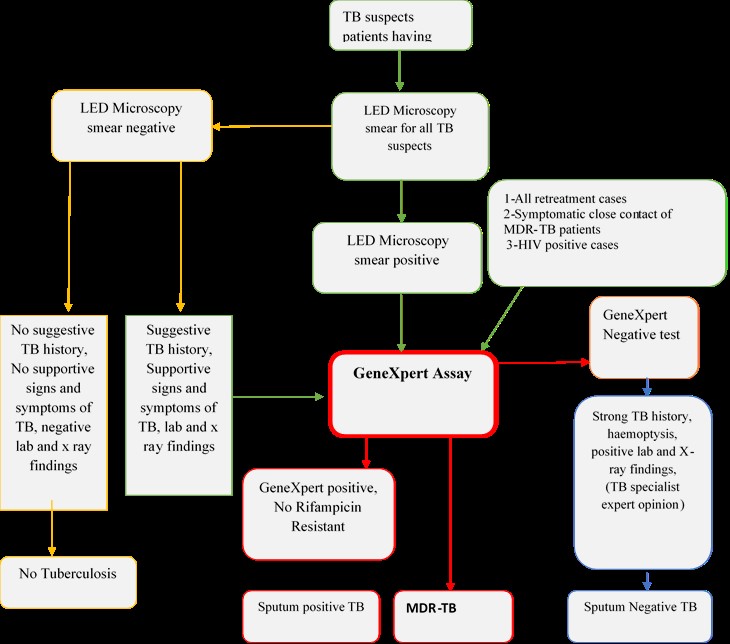
Figure 1: Flow chart of patient’s recruitment
The PCR procedure was carried out in the cartridge and MTB detection was reported after 2 hours. The flow chart of patients is given in Figure 1.
The TB suspects in the study were 1460. The mean age of study participants was 44.5±22.4 years. The majority of the study population of age ranges 11-40 years had pulmonary TB. TB was more in male than female patients.
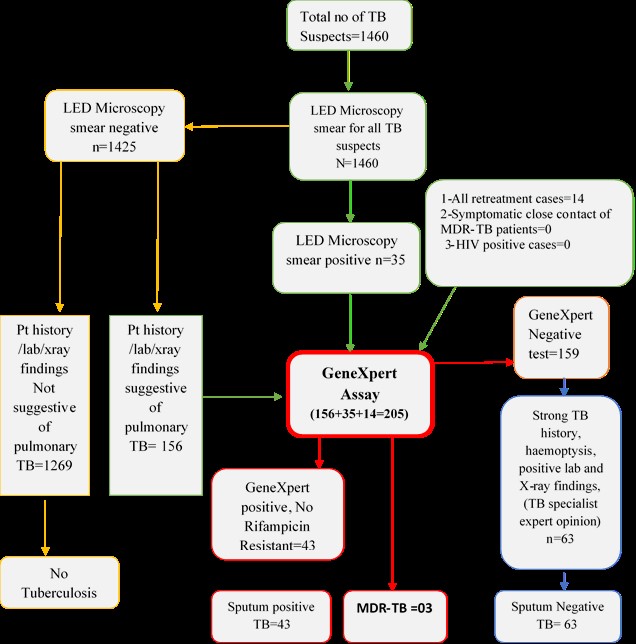
Figure 2: Flow chart shows patient’s detection with TB and MDR
The LED microscopy was done in all TB suspects. Of a total of recruited 1460 patients suggestive of TB, 1425(97.6%) had negative LED Microscopy smear, out of which 156(10.9%) were suggestive of pulmonary TB as shown in figure 2. GeneXpert Assay was carried out in 205(14%) patients. 159(77.5%) had GeneXpert Negative test labelled in orange, 43(20.9%) were GeneXpert positive with No rifampicin resistance labelled in red and only 03(1.4%) patients were GeneXpert positive test with rifampicin resistance were labelled in red in the flow diagram. Below mentioned are three findings of the GeneXpert test also depicted in figure 3:v
- 43 patients were GeneXpert positive test with No rifampicin resistance
- 03 patients were GeneXpert positive test with rifampicin resistance were
- 63 patients were a GeneXpert negative test but signs and symptoms
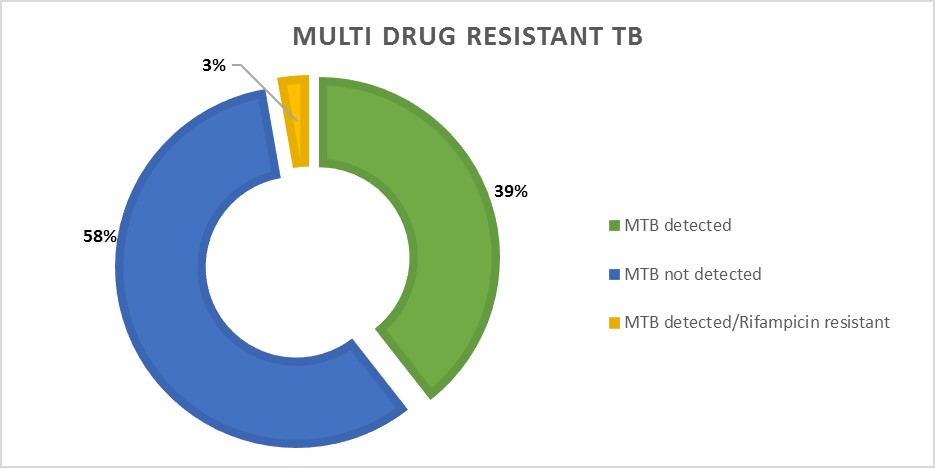
Figure 3: GeneXpert findings for multi-drug resistant TB (MTB)/RIF Detection
Table I: GeneXpert Results for MTB/RIF Detection |
|
GeneXpert |
N (%) |
MTB detected |
43(39.5%) |
MTB not detected |
63(57.8%) |
MTB detected/Rifampicin resistant |
3(2.7%) |
Total |
109 |
TABLE II: Determinants of MDR TB patients |
|
Variables |
N (%)/ Mean ±SD |
Age in years |
44.5±22.4 |
Gender: |
2(66.6%) |
Education: |
1(33.3%) |
Residence: |
2(66.6%) |
Employment status: |
1(33.3%) |
Case category: |
0 |
Significant history: |
1(33.3%) |
Followed treatment regime as prescribed: |
1(33.3%) |
X-ray findings and laboratory tests were supporting tuberculosis and the opinion of TB specialists having TB and they were labeled as Sputum negative Tuberculosis as given in Table I.
TB prevalence was 0.073% in Tehsil Hazro. An overall MDR rate of 2.7% was found in our study population. The determinants of MDR TB are shown in Table 2. From the detailed study of MDR-TB cases, it was concluded that patients who had a contact history with MDR cases and those who did not follow the treatment regime in their previous TB were more prone to develop MDR-TB. Out of 3 MDR-TB patients, the determinants of MDR-TB were mainly patients who had contact h/o with MDR cases and those who did not follow the treatment regime in their previous TB were more prone to develop MDR TB.
Globally it was found that the prevalence of MDR-TB is increasing day by day. ln Pakistan and other developing countries MDR-TB cases are increasing which is a serious threat to control Tuberculosis. The main reason is the delay in diagnosis and then the treatment which leads to MDRTB. Globally GeneXpert Assay is recommended for the detection of pulmonary Koch’s especially in smear-negative specimens.7
In the current study the objective was to determine the role of GeneXpert assay in the detection of TB and Rifampicin resistance and to find out the determinants of rifampicin resistance in TB suspect patients coming to THQ hospital Hazro. According to this study, the TB prevalence in tehsil Hazro was 0.073% and the majority of 11-40 years population had pulmonary TB. TB was more in males than in female patients, the MDR-TB rate was 2.7. From the detailed study of MDR-TB cases, it was concluded that patients who had a contact history with MDR cases and those who did not follow the treatment regime in their previous TB were more prone to develop MDR-TB. A similar study was done by Saeed Muhammad et al., in 2017 and concluded that the GeneXpert assay was a very good tool for the diagnosis of Tuberculosis and resistance against rifampicin in TB patients with high specificity and sensitivity.15 Rehman Hazir et all in 2016 made a study on the Molecular detection of rifampicin-resistant by GeneXpert assay among treated and untreated tuberculosis TB patients from Khyber Pakhtunkhwa. 6.1% of Samples were found to be resistant to Rifampicin. He concluded that the prevalence resistance against rifampicin was high among treated and non-treated TB Patients.16
According to a study by Rajeswari Ramachandran et al., in India studied molecular (genotypic) techniques that find specific genetic mutations in the MTB genome, linked primarily to specific anti-TB drugs. The GeneXpert Assay has great benefits for having control of the drug-resistant TB program. The biggest advantage is a quick test that leads to early diagnosis.17 A review by Karen R Steingart et al., 2013 showed that GeneXpert has been used as the first diagnostic test to detect tuberculosis and to detect rifampicin resistance in patients suspected of having TB, MDR-TB, or HlV-related TB is very clear and sensitive.18 GeneXpert assay can also be as helpful as additional tests following microscopy of previously diagnosed patients without smear-negative. The effect of the GeneXpert Assay that is resistant to rifampicin should be carefully considered as the potential risk of multi-drug-resistant TB in a given patient and the expected increase in multi-drug-resistant TB in that area. The study of RC Okonkwo et al. concluded that Xpert gene assay methods in TB/MDRTB diagnosis in his facility reveal high positive TB and Rifampicin resistance.19
In a comprehensive manner as per investigator knowledge, it is very difficult to compare and discuss with other similar studies conducted in Pakistan. In the future, further work is needed to conduct similar studies in other districts of Punjab to make it more generally applicable. Therefore, it is concluded that GeneXpert assay is particularly recommended for the detection of pulmonary TB especially in smear-negative specimens. GeneXpert Assay can also accelerate the early detection of multi-drug resistant TB in smear-positive specimens.
It is concluded by our study that GeneXpert Assay is a reliable and fast technique for M. tuberculosis detection and Rifampicin resistance and it was concluded that the main determinants of MDR-TB were the patients who had contact h/o of MDR case and those who did not follow the treatment regime in their previous Tuberculosis. For the early detection of M. tuberculosis and Rifampicin resistant GeneXpert assay should be used in the routine.
Limitations and strength of study: This study has a big sample size and conducted at the district level can be the strength. When it comes to limitations; it was limited to one district, single-centered data, and no comparison was made.
- Damene H, Tahir D, Diels M, Berber A, Sahraoui N, Rigouts L. Broad diversity of Mycobacterium tuberculosis complex strains isolated from humans and cattle in Northern Algeria suggests a zoonotic transmission cycle. PLoS Negl Trop Dis. 2020; 14(11):e0008894. https://doi.org/10.1371/journal.pntd.0008894
- Mitchell VP, Tyler C T. Use of the Human Vaccine, Mycobacterium bovis Bacillus Calmette Guérin in Deer .Frontiers in Veterinary Science.2018; 5: 244. https://doi.org/10.3389/fvets.2018.00244
- World Health Organization (2018) Global Tuberculosis Control: 2018. Information Resource Centre HTM/STB, World Health Organization, Geneva.
- Irfan U, Aamer AS, Anila B, Mazhar A, Afsar K, Ubaid U et al. Rifampicin resistance mutations in the 81 bp RRDR of rpoB gene in Mycobacterium tuberculosis clinical isolates using Xpert MTB/RIF in Khyber Pakhtunkhwa, Pakistan: A Retrospective study. BMC infect. dis 2016:16:413. https://doi.org/ 10.1186/s12879-016-1745-2.
- Du J, Shu W, Liu Y, Wang Y, Zhan Y, Yu K et al. Development and validation of external quality assessment panels for mycobacterial culture testing to diagnose tuberculosis in China. Eur J Clin Microbiol Infect Dis .2019; 38:1961–1968. https://doi.org/10.1007/s10096-019-03634-8
- Källenius G, Correia-Neves M, Buteme H, Hamasur B, Svenson SB. Lipoarabinomannan, and its related glycolipids, induce divergent and opposing immune responses to Mycobacterium tuberculosis depending on structural diversity and experimental variations,Tuberculosis.2016;96:120-130. https://doi.org/10.1016/j.tube.2015.09.005.
- Sajjad A, Sumera A, Aman U,Anwar Sheed Evaluation of GeneXpert MTB/RIF Assay for Detection of Pulmonary Tuberculosis on Sputum Samples. JCPSP.2018;29 (1): 66-69.
- Qin Z, Bing Q, Chang L, An NS, Xiao HW, Naliu JZ et al. GeneXpert MTB/RIF for rapid diagnosis and rifampin resistance detection of endobronchial tuberculosis. Asian Pacific Society of Respirology 2018 https://doi.org/10.1111/resp.13316
- Rrezarta B, Gjyle M, Arsim K, Greta L, Lul R. Comparison of GeneXpert MTB/RIF and conventional methods for the diagnosis of tuberculosis in Kosovo. J Infect Dev Ctries 2016; 10(4):418-422. https://doi.org/10.3855/jidc.7569.
- Atashi S, Izadi B, Jalilian S, Madani SH, Farahani A, Mohajeri P. Evaluation of GeneXpert MTB/RIF for determination of rifampicin resistance among new TB cases in west and northwest of Iran, New Microbes New Infect.2017. https://doi.org/10.1016/j.nmni.2017.07.002.
- Demelash A, Berhanu S, Lemessa O. Determinants of multidrug-resistant tuberculosis in Addis Ababa, Ethiopia .Infect Drug Resist. 2017; 10 :209—213
- Kibriti M, Tsehaye A, Haftamu H, Tewolde W, Hagos G,Tadele A et al. Prevalence and Factors Associated with Multidrug-Resistant Tuberculosis (MDR-TB) among Presumptive MDR-TB Patients in Tigray Region, Northern Ethiopia . Can. J. Infect. Dis. Med. Microbiol ; 2019: 2923549:8
- Javaid A. Multi-drug-resistant tuberculosis: Current situation in Pakistan Pak J Chest Med .2017; 23(02): 28 – 30
- Hosne JS,Tahmina J, Zakir HH, Abdullah Y, Imtiaz A, Aleya F et al.Diagnosic Evaluation of GeneXpert MTB/RIF Assay for detection of Rifampicin Resistant Mycobacterium Tuberculosis among Pulmonary Tuberculosis Patients in Bangladesh. Journal of Tuberculosis Research 2016:4, 55-60.
- Muhammad S, Shagufta I, Shahida H, Adeel A, Mamoon A, Maleeha A. GeneXpert: A new tool for the rapid detection of rifampicin resistance in mycobacterium tuberculosis. JPMA2017:67: 270.
- Hazir R, Shakir U, Amjad K, Qasim M, Jabbar A, Sadiq N et al. Molecular detection of rifampicin resistance by GeneXpert® assay among treated and untreated pulmonary tuberculosis patients from Khyber Pakhtunkhwa, J Glob Antimicrob Resist 2017 ;9:118-120
- Rajeswari R, Muniyandi M .Rapid molecular diagnostics for multi-drug resistant tuberculosis in India. Expert Review of Anti-infective Therapy 2018; 16(3)
- Dorman SE, Schumacher SG, Alland D, Nabeta P, Armstrong DT, King B et al. Xpert MTB/RIF Ultra for detection of Mycobacterium tuberculosis and rifampicin resistance: a prospective multicentre diagnostic accuracy study. Lancet Infect Dis.2018; 18(1): 76-84. https://doi.org/10.1016/S1473-3099(17)30691-6.
- Peter O, Ikuabe D.Prevalence of rifampicin resistance by automated Genexpert rifampicin assay in patients with pulmonary tuberculosis in Yenagoa, Nigeria Pan African Medical Journal. 2018; 29:204. https://doi.org/10.11604/pamj.2018.29.204.14579.

An Official Publication of
Islamabad Medical & Dental College
Volume 13 Issue 3
Address of Correspondence
Mehwish Riaz
Email:
mehwish_rz@yahoo.com
Authors’ Contribution: 1,2Conception; Literature research; manuscript design and drafting; 3,4 Critical analysis and manuscript review; 5,6Data analysis; Manuscript Editing.
Cite this article. Mehmood S, Pervaiz F, Mahmood H, Riaz M, Diba F, Khan J. GeneXpert Assay in Detection of Pulmonary Tuberculosis and Rifampicin Tuberculosis Resistant in Tehsil Hazro Population; A Cross Sectional Study. J Islamabad Med Dental Coll. 2024; 13(3): 473-479.
DOI: https://doi.org/10.35787/jimdc.v13i3.1090