Prognostic Significance of Baseline Neutrophil to Lymphocyte Ratio and Lymphocyte to C-Reactive Protein Ratio in COVID-19 Patients
Anum Afsar, Rifat Yasmin, Huma Hussain, Syed Asim Ali Shah, Syeda Turab Fatima Abidi, Aziz ul Qadir
Department of Medicine, POF Hospital, Wah Medical College, NUMS, Wah Cantt
Objective: To predict the disease severity, CURB-65 scores and outcome after 14 days of admission using two proxy biomarkers (neutrophil lymphocyte and lymphocyte C-reactive protein ratios) in Covid-19 patients.
Methodology: A prospective study was done at the Department of Medicine, Pakistan Ordinance Factory (POF) hospital, Wah Cantt Pakistan from April to August 2022. A total of 123 coronavirus patients were included. Patients with clinical manifestation, decreased lymphocyte and leukocyte count, imaging characteristics of pneumonia, etiological evidence of positive real time PCR test of blood or respiratory samples and viral gene sequencing similar to known Covid-19 were measured. Patients were undergone laboratory measurements and imaging analysis for biomarkers indications. The analysis of data was conducted using SPSS v 23.
Results: The patients mean age was 53.83±16.2 years. Among 123 Covid-19 patients, 80 (65%) were males and 43 (35%) females. It was found high NLR and low LCR in severe disease (p=0.05, p=0.01). NLR and LCR showed 11% variance for disease severity (β=0.143, p=0.00 & β=-0.293, p=0.01). NLR and LCR showed 29% variance for CURB 65 scores (β=0.48, p=0.634 & β=-0.159, p=0.08). NLR and LCR showed 22% variance for outcome after 14 days of admission (β=-0.53, p=0.562 & β=-0.132, p=0.149).
Conclusion: Neutrophil to lymphocyte and lymphocyte to C-reactive protein ratios are effective prognostic biomarkers of measuring severity of disease in Covid-19 patients. High neutrophil to lymphocyte and low lymphocyte to C-reactive protein ratios significantly predict disease severity.
Keywords: Base ratios, Biomarkers, Coronavirus, C-reactive protein, Neutrophil, Lymphocyte.
The World Health Organization (WHO) declared Covid-19 a global public health emergency.1 According to WHO in October 2022, there were 624 million confirmed Covid-19 cases including 6.5 million deaths, globally.2 According to government of Pakistan, there were 1.5 million confirmed cases, 31,000 deaths of Covid-19 in July 2022 in Pakistan.3
Pathogen responsible for disease was identified as RNA (enveloped) beta coronavirus named as SARS-CoV-2 (Severe Acute Respiratory Syndrome Coronavirus). These RNA viruses belong to Coronaviridae family (Coronavirinae sub family and order Nidovirales). Definition of coronavirus is related with the fact that it’s a virus with crown like projection.4 All coronaviruses share similar genomic expression (16-nonstructural proteins and 4 structural proteins) and organization. These viruses are divided into four genera i) alpha, ii) Beta, iii) gamma, iv) delta. Coronaviruses can infect multiple hosts and showed different tissue tropism. SARS-CoV-2 mechanism of action is not well known, however, transmission of virus to human being is dependent upon its ability to bind human cells by binding its protein spikes to cells.5 Literature reported that host susceptibility to SARS-CoV-2 is determined by binding affinity between host receptor angiotensin 2 (ACE 2) and viral receptor binding domain (RBD).6
Neutrophil to lymphocyte ratio (NLR) is an important and simple marker systemic inflammatory response evaluation in critically ill patients of Covid-19. Studies reported NLR as an independent prognostic factor for several non-infectious diseases including stroke, acute myocardial infarction and various types of cancer.7 Evidence exists that NLR can be used as independent indicator short term and long-term outcomes and mortality in clinically serious patients. NLR can be easily calculated through blood test by dividing absolute neutrophil count by absolute lymphocyte count. High values of NLR are an important risk factor of mortality.8 A latest study reported that severe cases of Covid-19 are associated with increasing NLR and NLR is an important predictor of mortality in hospitalized Covid-19 patients.9 Another similar biomarker lymphocyte C-reactive protein (LCR) is used as prognostic marker in complex host tumor immunological interactions, systemic inflammatory responses and several types of cancers including colon and gastric carcinoma. LCR may also be a good proxy marker and carry prognostic value for Covid-19 patients.10 Present study is conducted to understand prognostic significance of NLR and LCR in Covid-19 patients. The data available on this topic is not enough to reach any conclusion in Pakistan. So, objective of our study was to predict disease severity, CURB-65 scores and outcome after 14 days of admission using two proxy biomarkers (neutrophil lymphocyte and lymphocyte C-reactive protein ratios) in Covid-19 patients.
A prospective study was done at the Department of Medicine, Pakistan Ordinance Factory (POF) Hospital, Wah Cantt, Pakistan from April to August 2022. A sample of 123 individuals was calculated using 95% confidence interval, 9.1% critical illness with Covid-19,11 5% significance level using WHO calculator. We took ethical approval from research approval committee of POF hospital. All the participating Covid-19 patients signed consent before participation in study. Inclusion criteria was based upon patients of all ages, both genders, confirmed Covid-19 cases diagnosed on the basis of criteria developed by center of disease control and prevention (CDC).12 It was based upon travel history of patient, contact history of patients with Covid-19 confirmed cases, patients with clinical manifestation like fever and respiratory symptoms, decreased lymphocyte count, normal or decreased leukocyte count, imaging characteristics of pneumonia, etiological evidence of positive real time polymerase chain reaction (PCR) test of blood or respiratory samples and viral gene sequencing similar to known Covid-19. Exclusion criteria were based upon patients with autoimmune disorders, congenital anomalies, cardiovascular disorders, pregnant and breast-feeding mothers. The clinical classification of disease was done using Liu et al standards.11 These are as follows; i) mild [slight symptoms without pneumonia on imaging], ii) moderate [involving respiratory symptoms, fever, and pneumonia on imaging], iii) severe [indicated by conditions such as a respiratory rate ≥ 30 beats/min, respiratory distress, oxygen saturation mean ≤ 93% in resting state, arterial blood oxygen (ABO) partial pressure ≤ 300 mmHg], and iv) critical [if respiratory failure following mechanical ventilation, shock, intensive care unit admission for combined organ failure). Initially after screening all Covid-19 patient underwent sample taking process of upper respiratory tract (throat and nasopharyngeal swab), these specimens were preserved in a virus transport medium and then sent to National Institute of Health (NIH) Pakistan laboratory and PCR samples were sent to laboratory of POF Hospital, Wah Cantt Pakistan. Confirmed cases were followed after admission to critical illness. Vital signs, symptoms, blood routine, chest radiograph, laboratory tests, C-reactive protein were collected at the time of onset. Laboratory indexes and imaging analysis were reexamined in critical patients. NLR and LCR were measured. Data was analyzed using SPSS v 23. Analysis of data include mean ± SD calculation for continues data, frequency and percentage calculation for categorical data. Linear regression was performed to predict disease severity using NLR and LCR in Covid-19 patients. ROC curve analysis was performed for NLR and LCR accuracy determination for Covid-19 severity. A probability p-value ≤ 0.05 as statistically significant findings.
A total of 123 Covid-19 patients were enrolled in the study. The patients mean age was 53.83±16.2 years. Among 123 Covid-19 patients, 80 (65%) were males and 43 (35%) females. Out of all patients, 73 (59.3%) were non diabetic, while 50 (40.7%) were diabetic. Mean days from symptoms to onset of presentation were 5.7±3.5 days. Mean total leukocyte count was 8198.29±42.8 per microliter. Mean absolute neutrophil count was 6286.07±40.3 per microliter.
Mean absolute lymphocyte count was 1702.02±89.17 per microliter. Mean C-reactive protein was 59.7±6.5 mg/dl. There were 49 (39.8%) hypertensives, while 74 (60.2%) were non-hypertensive. Among all the patients, 10 (8.1%) had respiratory disorder, while 113 (91.9%) did not showed respiratory diseases. Ischemic heart disease (IHD) was reported in 21 (17.1%) patients, while 102 (82.9%) did not showed IHD. Malignancy was found in 4 (3.3%) patients. In our study, there were 14 (11.4%) smokers, while 109 (88.6%) nonsmokers. Mean CURB-65 scores were 2.1±1.2 points. In our study, majority of patients had moderate diseases severity 42 (34.1%) following critical with ARDS, severe 22 (17.9%), mild 20 (16.3%), critical with septic shock 4 (3.3%), asymptomatic and critical with sepsis 2 (1.6%). In our study, 46 (37.4%) patients were still admitted after 14 days of admission, while 63 (51.2%) were treated, discharged and 14 (11.4%) were expired (Table I). In our study, we found high NLR in severe Covid-19 patients as compared to mild and moderate (13.91±3.8 vs 4.2±1.9, p=0.05). However, patients with severe Covid-19 are more likely to have low LCR as compared to those who had mild and moderate disease (75.17±3.2 vs 45.90±7.1, p=0.01). NLR and LCR showed insignificant difference with CURB-65 scores (p=0.473 and p=0.069, respectively). Outcome after 14 days of admission also showed insignificant difference in NLR and LCR (p=0.458 and p=0.128 respectively, Table II).
Table I: Frequency distribution of disease severity and outcome after 14 days of admission, n=123 |
||
Severity of disease |
Frequency |
Percentage |
Asymptomatic |
2 |
1.6% |
Mild |
20 |
16.3% |
Moderate |
42 |
34.1% |
Severe |
22 |
17.9% |
Critical with ARDS |
31 |
25.2% |
Critical with sepsis |
2 |
1.6% |
Critical with septic shock |
4 |
3.3% |
Outcome after 14 days |
|
|
Treated and discharged |
63 |
51.2% |
Still admitted |
46 |
37.4% |
Expired |
14 |
11.4% |
Table II: Comparison of NLR and LCR ratios with severe Covid-19, CURB-65 scores and outcome after 14 days of admission, n=123 |
|||||
Severe Covid-19 |
Frequency |
Mean |
SD |
p-value |
|
NLR ratio |
No |
64 |
4.2033 |
1.9 |
.05 |
Yes |
59 |
13.9178 |
3.8 |
||
LCR ratio |
No |
64 |
447.9030 |
7.1 |
.01 |
Yes |
59 |
75.174 |
3.2 |
||
CURB-65 scores |
|||||
NLR ratio |
<3 scores |
103 |
8.0655 |
1.9 |
.473 |
≥ 3 scores |
20 |
12.97 |
6.7 |
||
LCR ratio |
<3 scores |
103 |
312.9212 |
65.2 |
.069 |
≥ 3 scores |
20 |
43.509 |
11.9 |
||
Outcome after 14 days of admission |
|||||
NLR ratio |
Expired |
13 |
14.3069 |
3.7 |
.458 |
Survived |
110 |
8.2197 |
2.1 |
||
LCR ratio |
Expired |
13 |
26.996 |
5.8 |
.128 |
Survived |
110 |
297.728 |
63.4 |
||
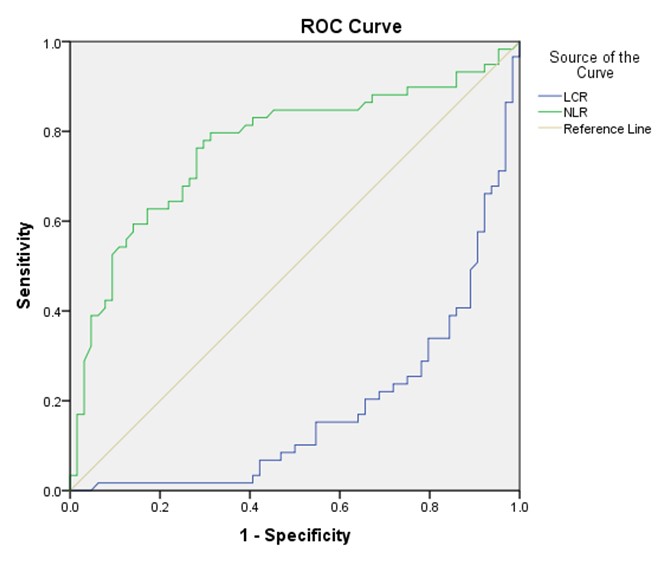
Figure 1: ROC curve analysis of NLR and LCR, CURB 65 scores and mortality, n=123
NLR and LCR ratios significantly predict disease
Table III: Regression analysis to predict disease severity, |
|||||
Severe Covid-19 |
|||||
|
Mean±SD |
Pearson’s Correlation |
R- square |
Beta coefficient (95% CI) |
p-value |
NLR ratio |
8.86±2.78 |
0.175 |
0.115 |
0.143 |
.001 |
LCR ratio |
269.1±65.3 |
-0.309 |
- |
-0.293 |
.01 |
CURB-65 scores |
|||||
NLR ratio |
8.86±2.7 |
0.65 |
0.29 |
0.48 |
.634 |
LCR ratio |
269.1±65.8 |
-1.6 |
- |
-0.159 |
.08 |
Outcome after 14 days of admission |
|||||
NLR ratio |
8.68±2.6 |
-0.68 |
0.22 |
-0.53 |
.562 |
LCR ratio |
257.1±63.1 |
0.138 |
- |
0.132 |
.149 |
severity (p=0.001 and p=0.01, respectively), while they do not predict CURB-65 scores and outcome of patients after 14 days of admission (p ≥ 0.05, Table 3). Age and gender had insignificant impact on disease severity with respect to NLR and LCR (p = 0.983 & p = 0.218). ROC curve showed 78% accuracy in NLR and 17% LCR for predicting disease severity (Figure 1).
NLR and LCR are most common established systemic inflammatory markers used, worldwide.13 Evidence from latest studies reported that severe Covid-19 patients showed dysregulation of immune response leading towards viral hyper inflammation development. Hyper inflammation needs to be screened using inflammatory markers like NLR and LCR for mortality reduction.14 In present study, we found high NLR and low LCR values for predicting disease severity (p = 0.05, & p = 0.01). Waqas et al reported that mean NLR was significantly high among patients who underwent mortality during hospitalization with Covid-19 (p = 0.001). However, LCR showed inverse relation with disease severity (p = 0.04).15 Yan et al reported that NLR values of survival individuals were significantly lower than non-survival (p = 0.001). They mentioned that NLR value ≥ 11.75 were statistically correlated with mortality.16 Liu et al., reported that NLR in highest tertile are 15.04 times more at risk of mortality as compared to patients at lower tertile (OR = 15.04; C.I 95%, p = 0.03). NLR stands as an independent risk factor for in-hospital mortality among COVID-19 patients, particularly notable in male patients.17 Mo et al reported similar findings of increasing NLR in severe Covid-19 patients (SMD = 2.4, 95% C.I, p = 0.01) and decreasing LCR (SMD = -0.9, C.I 95%, p = 0.02).18 In present study, CURB-65 showed positive correlation with NLR and negative correlation with LCR. Oktariani et al., reported that CURB scores are effective in measuring 14 days outcome in Covid-19 hospitalized patients.19 Lagunas-Rangel reported that patients with CURB-65 ≥ 3 scores showed high NLR value and low LCR.20 Qu et al reported that patients with severe Covid-19 showed high neutrophil count, high CRUB scores and low lymphocyte count as compared to non-severe patients.21 In our study, ROC curve showed 78% accuracy in NLR for predicting disease severity. Murillo-Zamora et al., reported that greater area under receiver operating curve is associated with high NLR and high CURB scores for critically ill patients of Covid-19 patients.22 Another similar study reported that adjusted odd of reduction in LCR, increase in NLR, need for high level care, ventilator support are common predictors of in hospital mortality.23
In hospital complications could be predicted early and help in effective and timely allocation of available resources. There is need to actively monitor high NLR and decreasing LCR in critically ill patients of Covid-19. In this pandemic situation, there is need of finite health care resources or validated tools like NLR or LCR in health care system for early triage and guiding prognosis of patients with severe Covid-19.
Neutrophil to lymphocyte and lymphocyte to C-reactive protein ratios are effective prognostic biomarkers of measuring severity of disease in Covid-19 patients. High neutrophil to lymphocyte and low lymphocyte to C-reactive protein ratios significantly predict disease severity, however, could not significantly predict CURB-65 scores and outcome after 14 days in Covid-19 patients. Study was conducted at single center and due to limited resources, it was not possible to take laboratory sample on daily basis that limits generalizability of our study. Our study is unique study in our setup where majority of population is affected with health and financial issue due to Covid-19.
- Ruan Q, Yang K, Wang W, Jiang L, Song J. Clinical predictors of mortality due to COVID-19 based on an analysis of data of 150 patients from Wuhan, China. Intensive Care Med. 2020;46(5):846-848. https://doi.org/10.1007/s00134-020-05991-x
- World Health Organization. Weekly epidemiological update on COVID-19. 2022. Available online: https://www.who.int/publications/m/item/weekly-epidemiological-update-on-covid-19---26-october-2022 (accessed on 26 October 2022)
- Bukhari AR, Ashraf J, Kanji A, Rahman YA, Trovao NS, Thielen PM, et al. Sequential viral introductions and spread of BA. 1 across Pakistan provinces during the Omicron wave. BMC Genom. 2023;24(1):432. https://doi.org/10.1186/s12864-023-09539-3
- Chang D, Lin M, Wei L, Xie L, Zhu G, Cruz CS, et al. Epidemiologic and clinical characteristics of novel coronavirus infections involving 13 patients outside Wuhan, China. JAMA. 2020;323(11):1092-1093. https://doi.org/10.1001/jama.2020.1623
- Xu XW, Wu XX, Jiang XG, Xu KJ, Ying LJ, Ma CL, et al. Clinical findings in a group of patients infected with the 2019 novel coronavirus (SARS-Cov-2) outside of Wuhan, China: retrospective case series. BMJ. 2020;368(2):606. https://doi.org/10.1136/bmj.m606
- Zini G, Bellesi S, Ramundo F, d'Onofrio G. Morphological anomalies of circulating blood cells in COVID‐19. Am J Hematol. 2020;95(7):870-872. https://doi.org/10.1002/ajh.25824
- Yang X, Yu Y, Xu J, Shu H, Liu H, Wu Y, et al. Clinical course and outcomes of critically ill patients with SARS-CoV-2 pneumonia in Wuhan, China: a single-centered, retrospective, observational study. Lancet Respir Med. 2020;8(5):475-481. https://doi.org/10.1016/S2213-2600(20)30079-5
- Huang Z, Fu Z, Huang W, Huang K. Prognostic value of neutrophil-to-lymphocyte ratio in sepsis: A meta-analysis. Am J Emerg Med. 2020;38(3):641-647. https://doi.org/10.1016/j.ajem.2019.10.023
- Song H, Kim HJ, Park KN, Kim SH, Oh SH, Youn CS. Neutrophil to lymphocyte ratio is associated with in-hospital mortality in older adults admitted to the emergency department. Am J Emerg Med. 2021 ;40(2):133-137.https://doi.org/10.1016/j.ajem.2020.01.044
- Zhou F, Yu T, Du R, Fan G, Liu Y, Liu Z, et al. Clinical course and risk factors for mortality of adult inpatients with COVID-19 in Wuhan, China: a retrospective cohort study. Lancet. 2020;395(10229):1054-1062. https://doi.org/10.1016/S0140-6736(20)30566-3
- Liu J, Liu Y, Xiang P, Pu L, Xiong H, Li C, et al. Neutrophil-to-lymphocyte ratio predicts critical illness patients with 2019 coronavirus disease in the early stage. J Transl Med. 2020;18(1):1-12. https://doi.org/10.1186/s12967-020-02374-0
- Killerby ME, Link-Gelles R, Haight SC. Centers for Disease Control and Prevention (CDC) Coronavirus Disease 2019 (COVID-19) Response Clinical Team. Characteristics associated with hospitalization among patients with COVID-19-metropolitan Atlanta, Georgia, March-April 2020. MMWR Morb Mortal Wkly Rep. 2020;69(4):790-794. https://doi.org/10.15585/mmwr.mm6925e1
- Huang C, Wang Y, Li X, Ren L, Zhao J, Hu Y, et al. Clinical features of patients infected with 2019 novel coronavirus in Wuhan, China. Lancet. 2020;395(10223):497-506. https://doi.org/10.1016/S0140-6736(20)30183-5
- Li X, Liu C, Mao Z, Xiao M, Wang L, Qi S, et al. Predictive values of neutrophil-to-lymphocyte ratio on disease severity and mortality in COVID-19 patients: a systematic review and meta-analysis. Crit Care. 2020;24(1):1-10. https://doi.org/10.1186/s13054-020-03374-8
- Ullah W, Basyal B, Tariq S, Almas T, Saeed R, Roomi S, et al. Lymphocyte-to-C-reactive protein ratio: a novel predictor of adverse outcomes in COVID-19. J Clin Med Res. 2020;12(7):415. https://doi.org/10.14740/jocmr4227
- Yan X, Li F, Wang X, Yan J, Zhu F, Tang S, et al. Neutrophil t lymphocyte ratio as prognostic and predictive factor in patients with coronavirus disease 2019: a retrospective cross‐sectional study. J Med Virol. 2020;92(11):2573-2581. https://doi.org/10.1002/jmv.26061
- Liu Y, Du X, Chen J, Jin Y, Peng L, Wang HH, et al. Neutrophil-to-lymphocyte ratio as an independent risk factor for mortality in hospitalized patients with COVID-19. J Infect. 2020;81(1): e6-12. https://doi.org/10.1016/j.jinf.2020.04.002
- Mo P, Xing Y, Xiao Y, Deng L, Zhao Q, Wang H, et al. Clinical characteristics of refractory coronavirus disease 2019 in Wuhan, China. Clin Infect Dis. 2021;73(11): e4208-4213. https://doi.org/10.1093/cid/ciaa270
- Oktariani NR, Pitoyo CW, Singh G, Mansjoer A. CURB 65 score as a predictor of early mortality in hospital-acquired pneumonia. Egypt J Chest Dis Tuberc. 2019;68(2):231-235. https://doi.org/10.4103/ejcdt.ejcdt_146_18
- Lagunas‐Rangel FA. Neutrophil‐to‐lymphocyte ratio and lymphocyte‐to‐C‐reactive protein ratio in patients with severe coronavirus disease 2019 (COVID‐19): a meta‐analysis. J Med Virol. 2020;92(10):1733-1734. https://doi.org/10.1002/jmv.25819
- Qu R, Ling Y, Zhang YH, Wei LY, Chen X, Li XM, et al. Platelet‐to‐lymphocyte ratio is associated with prognosis in patients with coronavirus disease‐19. J Med Virol. 2020;92(9):1533-1541.
- Murillo-Zamora E, Medina-González A, Zamora-Pérez L, Vázquez-Yáñez A, Guzmán-Esquivel J, Trujillo-Hernández B. Performance of the PSI and CURB-65 scoring systems in predicting 30-day mortality in healthcare-associated pneumonia. Med Clin (Eng Edit). 2018;150(3):99-103. https://doi.org/10.1016/j.medcli.2017.06.044
- Preetam M, Anurag A. MuLBSTA score in COVID-19 pneumonia and prediction of 14-day mortality risk: A study in an Indian cohort. J Family Med Prim Care. 2021;10(1):223-227.

An Official Publication of
Islamabad Medical & Dental College
Volume 13 Issue 1
Address of Correspondence
Rifat Yasmin
Email:
rifatomer7@gmail.com
Authors’ Contribution: 1,2Conception; Literature research; manuscript design and drafting; 3,4 Critical analysis and manuscript review; 5,6Data analysis; Manuscript Editing.
Cite this article. Afsar A, Yasmin R, Hussain H, Shah SA, Abidi STA, Qadir A. Prognostic Significance of Baseline Neutrophil to Lymphocyte Ratio and Lymphocyte to C-Reactive Protein Ratio in COVID-19 Patients. J Islamabad Med Dental Coll. 2024; 13(1): 122-127.
DOI: https://doi.org/10.35787/jimdc.v13i1.1097.