Restoration of Bilateral Premolars Using Custom Made Cast Post and Core: A Case Report
Asma Bibi, Saima Azam, Rida Fatima Waseem
Department of General Medicine, Dr. Akbar Niazi Teaching Hospital, Islamabad, Pakistan
When grossly carious teeth need to be restored after endodontic treatment the long-term success depends on the choice of post and core system. Custom cast post and core is recommended when remaining tooth structure is compromised and an insufficient ferrule is present. The following case report depicts the restoration of bilateral grossly carious premolar teeth by using custom cast posts followed by PFM crowns. The patient had presented with bilateral severely carious premolars with pulpal necrosis. The treatment plan included endodontic treatment followed by custom cast post and core with PFM crowns. In this way, esthetics and function for the patient can be achieved by using cast metal posts and metal ceramic crowns for restoration of premolars. It is important for the long-term survival of endodontically treated teeth that they should be restored with appropriately selected post and core system. In cases of severely worn-down premolars, the use of custom cast post and core could be recommended.
Keywords: Dental caries, Endodontically treated tooth, Crowns
Patients requiring endodontic treatment usually present with compromised coronal tooth structure secondary to dental caries, trauma or previous restorative treatment.1 This together with access cavity preparation further weakens the tooth resulting in insufficient resistance and retention form for the final restoration.2 Therefore, endodontists face challenging situations where the tooth lacks an adequate ferrule for retention of definitive restoration.3 Franklin Weine stated that most of the endodontic failures are due to inadequate post endodontic restorations rather than the failure of the root canal treatment itself.1The choice of post endodontic restorations is affected by the remaining coronal tooth structure, strategic importance of the tooth, canal configuration and the periodontal status of the patient.4 Teeth with more than 50% tooth structure loss or limited ferrule needs post and core followed by full coverage restoration.5One of the traditionally available options is a customized cast post and core. It is indicated in the premolar and lateral incisor teeth with elliptical or flared canals and where a better adaptation to the canal wall is required as it aids in resistance against torsional stress. In premolars and single rooted teeth this design provides coronoradicular stabilization to the weakened tooth.6,7 A case is presented where severely compromised bilateral premolars were restored with customized cast post and core technique.
Case Presentation
A 32-year-old male patient reported to the Department of Operative Dentistry and Endodontics with the complaint of decayed teeth on both sides. There was no pain or sensitivity associated with his teeth. His medical, family and social history were insignificant. Intraoral examination revealed the presence of multiple carious and restored teeth with moderate plaque and calculus deposits as shown in figure 1. The patient had a canine guided occlusion bilaterally with normal overjet and overbite. Tooth number 15 and 24 were grossly carious with compromised tooth structure. Tooth 15 had missing mesial, buccal, distal and palatal walls and less than 2mm ferrule circumferentially. Tooth 24 had loss of mesial and distal walls with less than 2 mm 180-degree ferrule. There was no response on cold test and electric pulp testing in both the teeth. Radiographic examination revealed deep dentinal caries with absence of periapical pathology. Based on clinical and radiographic findings, a diagnosis of pulpal necrosis with normal periapical status was established for 14 and 25. The management plan was aimed at treating the pulpal infection and restoring the form and function of the teeth. After informed consent, a treatment plan was devised which included endodontic treatment of 15 and 24 followed by custom-made cast post and core and full coverage porcelain fused metal crowns for 15 and 24. After rubber dam application, access cavities were prepared and chemo mechanical debridement was done with crown down technique using manual protapers (dentsply sirona, Germany). The teeth were continuously irrigated with 5.25 % sodium hypochlorite and saline was used as a final rinse. An intracanal medicament of calcium hydroxide was placed for 1 week.
The teeth were obturated with cold lateral condensation technique. The patient was scheduled after a week for fabrication of cast post and core. The post space was prepared using Gates Glidden drills #1 through #4 (Dentsply Sirona, Germany) ensuring 4mm of apical seal with GP (Figure 2). An impression of the canal was taken by filling the post space with light body condensation silicone impression material (Neosil Co. Korea) using a 40 lentulospiral (MANI, INC, JAPAN). Two 40 k files (MANI, INC, JAPAN) were cut to 16 mm of the blade and inserted as dowel in the canals. Half tray impression for both the teeth was taken using light body and heavy body through single step technique as shown in figure 3.
The impressions were sent to the laboratory for fabrication of custom cast post and core. After delivery from the lab, the adaptation of cast post and core was evaluated on the cast (figure 4, 5). A trial was done for the fit in the patient’s oral cavity and the post and core were cemented on the teeth with glass ionomer luting cement (3M ESPE, Germany). The patient was recalled next day. Shade matching was done and gingival retraction cord (CINCI-RAK, USA) was placed. Subgingival shoulder margin was prepared on the buccal side and chamfer was given on the palatal side.
An impression of the prepared teeth was made using addition silicon with two step technique and sent to lab. Porcelain fused to metal crowns were cemented to the teeth after trial as shown in figure 6. The occlusion was adjusted and post op instructions were given to the patient. The patient was happy with the way his badly damaged teeth were given a new life.
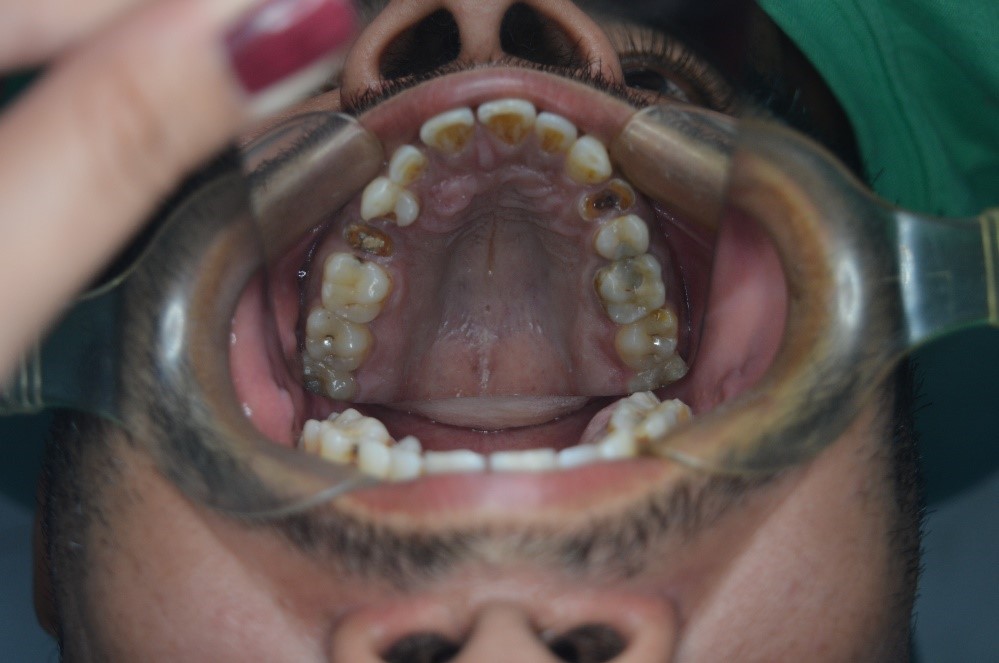
Figure 1: Pre-operative intraoral photograph
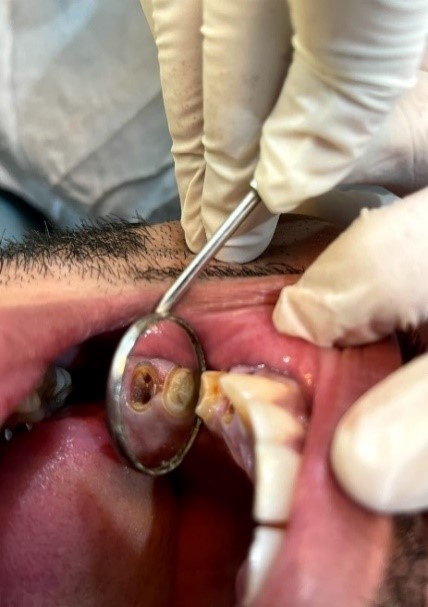
Figure 2: Post space preparation
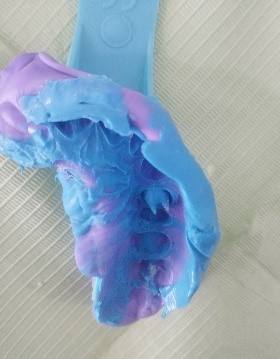
Figure 3: Impression for custom cast post and core
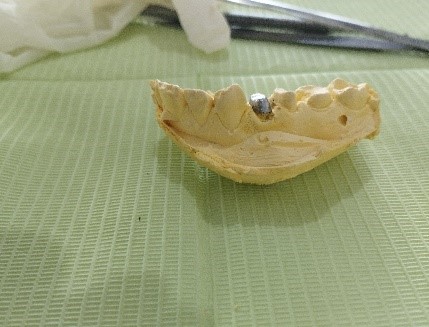
Figure 4: Marginal adaptation of custom cast post and core
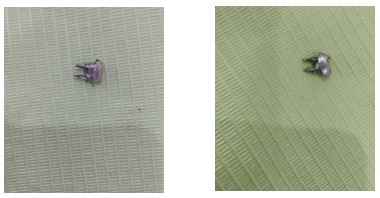
Figure 5: Lab custom cast post for #15, 24
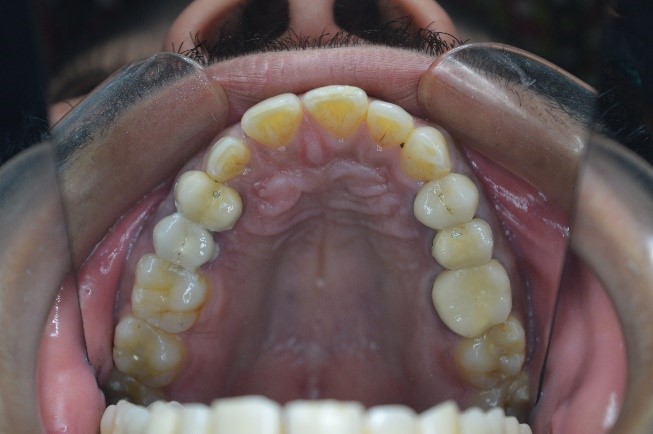
Figure 6: Final restoration
The predicament of restoring endodontically treated teeth is faced by every practitioner. When the tooth is root canal treated, the amount of tooth structure
remaining after tooth preparation must be carefully assessed. If there is minimal remaining tooth structure, a post is used to support the core. The core restoration is then enveloped with an indirect full coverage restoration such as a crown. There is an array of posts available in different materials, sizes and shapes. Commonly prefabricated metal and fiber posts are used. Other options include custom made metal post with a direct core restoration.8
Prefabricated posts have gained popularity in the recent times due to their ease of insertion, ready availability, fewer patient visits and decreased cost. These posts also provide more favourable results with sufficient coronal tooth structure and straight canals with adequate circumferential root dentin. In a clinical survey of 8143 dentists, 88.3% of them preferred using prefabricated posts and core. Prefabricated posts can be used with composite resin or amalgam cores.9 However in spite of its extensive use, prefabricated post leads to more tooth structure loss during post space preparation, is less adaptable to the canal walls and cannot change the angulation of the core.10
Alternatively customized cast metal post and core technique can be used when more than half of the tooth structure is lost.11,12 One most important the factor that determines the survival of endodontically treated teeth is the presence of circumferential remaining tooth structure known as ferrule. Ferrule helps to transfer the occlusal stresses to the periodontium thereby improving the fracture resistance of the root.13 Sreedevi et al compared the fracture resistance of endodontically treated teeth with sufficient remaining tooth structure restored without post, with 2 mm ferrule restored with custom cast post-core, with no ferrule restored with custom cast post-core and with 2 mm ferrule restored with prefabricated post and glass ionomer core. The custom cast post with 2mm ferrule group performed better than the custom cast post with no ferrule group which was better than the prefabricated post and core group. This signifies that in absence of ferrule custom cast post and core is reliable option compared to prefabricated posts. 14
Customized cast post and core provides a better fit of the post according to the anatomical configuration of the canal. This proves advantageous especially in flared and thin canals or teeth which are severely worn down with incomplete ferrule. Therefor it has benefit over other post systems in teeth with extensive tooth damage, partial fixed dental prosthesis abutments, bruxism and other heavy occlusion situations.15
These posts offer the advantage of better retention and resistance of the core restoration with minimum further tooth structure loss. Less preparation space in turn results in a thin layer of cement with increase wettability and better bond strength between the post and tooth. In turn this provides an anti-rotational property and physiological stress distribution thereby reducing the incidence of root fracture despite metal having a low modulus of elasticity.16 Gomez Polo et al reported that cast metal posts have shown higher survival rates over 10 years.17
One of the major advantages of custom cast post is that multiple post cores can be planned in teeth whose axial inclination is not ideal. This allows to change the axial inclination of the core within limits. Literature reports the successful use of customized cast post and core in posterior teeth in single or multiple teeth during full mouth rehabilitation.18
The custom cast post is associated with some drawbacks. Multiple visits and added expense due to lab work also difficulty with impression taking and construction of posts can pose potential problems.6
It is important for the long-term survival of endodontically treated teeth that they should be restored with appropriately selected post and core system. In cases of severely worn-down premolars, the use of custom cast post and core could be recommended.
- Jain P, Lakshmi S, Vigneshwaran S. Endodontically treated teeth with custom cast post and core and metal ceramic crowns restoration: A case report.2021;7(3):16-19. https://doi.org/10.18231/j.jdor.2021.004
- Khurana D, Jetwani A, Prasad AB, et al. Management of a Mutilated Molar Using Custom Cast Post: A Case Report. J Mahatma Gandhi Univ Med Sci Tech 2021; 6(3):85–88. https://doi.org/10.46858/JMGUMSTT.2021.060315
- Cureus Umre U, Sedani S, Nikhade PP, Bansod A. A Case Report on the Rehabilitation of Severely Worn Teeth Using a Custom-Made Cast Post. Cureus. 2022; 14(10): e30528 https://doi.org/10.7759/cureus.30528
- Akhtar A, Godla N, Vedavathi B, Nadig RR. Custom cast posts-A diminishing reality? -A case report.2018; 4(3): 01-04 https://doi.org/10.26703/jdre.v4i3.1
- Berman LH, Hargreaves KM. Restoration of endodontically treat tooth 11th edition Cohen's Pathways of the Pulp. Elsevier Health Sciences; 2020: 818-46 George E, Nair KR, et al. Multidisciplinary Management of Anterior Traumatized Tooth: A Case Report. Cons Dent Endod J 2019; 4(1):18–20. https://doi.org/10.1016/B978-0-323-59360-6.00024-0
- Al-Qarni FD. Customized post and cores fabricated with CAD/CAM technology: a literature review. Inter j of gen med. 2022: 15:4771-9. https://doi.org/10.2147/IJGM.S365746
- Pranati T, Manish Ranjan, Hima Sandeep A. Marginal Adaptability of custom-made Cast Post Made by Different Techniques - A Literature Review. Int J Dentistry Oral Sci. 2021; 8(8):3954-59. https://doi.org/10.14302/issn.2377-1623.ijdos-21-3687
- Amelia J, Firman D, Damayanti L. Tensile Bond Strength of Customized Cast Post and Core Cemented with Two Luting Agent. SONDE (Sound of Dentistry). 2022;7(2):1-7. https://doi.org/10.53570/sonde.v7i2.138
- Sabak SA. Prefabricated post and core material versus custom cast post and core in a maxillary first premolar tooth: Review of literature and management of a clinical case. Cairo Dental Journal. 1998:14(1):23-6.
- Tortopidis D, Kourtis S, Kountouras K. Restoration of endodontically treated anterior teeth with cast metallic post or prefabricated fibre post placement: 2 case reports and critical literature review. Balkan Journal of Dental Medicine. 2015;19(2):86-91.
- Matos JDM de, Nakano LJN, Lopes G da RS, Silva JR, Grande MFB, Marques AC, Ramos N de C, Vasconcelos JEL de, Andrade VC, Bottino MA, Nishioka RS. Post and core: a new clinical perspective – myths and facts. Arch Health Invest. 2020;10(2):221-7.
- Suleiman AB, Desai S, Tepperman A, Chvartszaid D, Malkhassian G, Habsha E et al. The Outcomes of Endodontically Treated Teeth Restored with Custom-Made Cast Post-and-Core Restorations: A Retrospective Cohort Study. J Endod.2023: S0099-2399(23)00824-5. https://doi.org/10.1016/j.joen.2023.02.011
- Saini D, Legha V: Esthetic rehabilitation of mutilated anterior teeth with custom cast post and core porcelain-fused-to-metal crowns. Int J Experiment Dent Sci. 2015;4(1):69-71. https://doi.org/10.5005/jp-journals-10029-1108
- Sreedevi S, Sanjeev R, Raghavan R, Abraham A, Rajamani T, Govind GK. An in vitro study on the effects of post-core design and ferrule on the fracture resistance of endodontically treated maxillary central incisors. J Int Oral Health 2015;7(8)37-4. https://www.ijohsjournal.org/doi/IJOH/10.5005/jp-journals-10032-1084
- Christopher VS, Ranjan M. Prevalence of age and sex in uses of custom-made cast post in endodontically treated teeth–a retrospective study. Int J Dentistry Oral Sci. 2021; 8(7):3257-62. https://doi.org/10.14302/issn.2377-1623.ijdos-21-3417
- Alqarni, H, AlHelal, A.A, Jekki, R, Kattadiyil, M.T.; Sayed, M.E.; Jain, S.; Vahdati, S.A.; Dehom, S. In Vitro Study Comparing Retention of Custom Post and Cores Fabricated Using Conventional, CAD/CAM Milling and 3D-Printing Techniques. Appl. Sci. 2022;12(23):11896. https://doi.org/10.3390/app122311896
- Gomez-Polo M, Llido B, Rivero A, Del Rio J, Celemin A. A 10-year retrospective study of the survival rate of teeth restored with metal prefabricated posts versus cast metal posts and cores. J Dent. 2010;38(11):916-20. https://doi.org/10.1016/j.jdent.2010.07.014
- Saini R, Mishri K, Kottor JL. Customized Posterior Split Cast Post Core System to Amend Treatment Outcome. Mouth. 2020;

An Official Publication of
Islamabad Medical & Dental College
Volume 13 Issue 1
Case Report
Address of Correspondence
Asma Bibi
Email:
ismahussain28@gmail.com
Authors’ Contribution: All authors contributed equally to the conception, literature search, manuscript drafting, editing and review
Cite this article. Bibi A, Azam S, Waseem RF. Restoration of Bilateral Premolars Using Custom Made Cast Post and Core: A Case Report. J Islamabad Med Dental Coll. 2024; 13(1): 178-182. DOI: https://doi.org/10.35787/jimdc.v13i1.1119