Evaluation of the Protective Roles of Canagliflozin and Zinc Sulphate on Body Weight and Hepatic Histology in Diabetic Dyslipidemia
Ayela Eman Zia1, Neelofar Yousaf2, Muhammad Umar Talha3, Wardah Siddique1, Zoobia Irum4, Waqar Ahmed Siddiqu1
1Combined Military Hospital Lahore Medical College, Lahore, 2Akhtar Saeed Medical & Dental College Lahore, 3Gujranwala Medical College, Gujranwala, 4Combined Military Hospital Institute of Medical Sciences, Bahawalpur
Objective: This study investigates the therapeutic properties of Canagliflozin, a SGLT-2 (Sodium glucose co-transprter-2) inhibitor, recognized for its tolerance and supplementary advantages on body weight and blood pressure, when used in combination with Zinc Sulphate.
Methodology: The study involved the use of a type-2 diabetic rat model, induced by a high-fat diet and streptozotocin to examine the separate and combined impacts of Canagliflozin and Zinc Sulphate on the histology of the liver. A total of forty-eight male Sprague-Dawley rats were separated into six groups and the treatments were delivered for eight weeks. Body weights were observed, and histological evaluations of the liver were performed with the NASH-CRN (Non-alcoholic Steatohepatitis Research Network) scoring system.
Results: The findings exhibited a notable decrease in body weight among the diabetic-induced groups in comparison to the normal control. The combined utilization of Canagliflozin and Zinc Sulphate showed a heightened efficacy in managing diabetes related weight loss and steatosis of liver in the rat model having type-2 diabetes.
Conclusion: This study indicates a possible combined treatment strategy that should be further investigated to enhance the management of hepatic steatosis in individuals with diabetes. The study also proposes the potential for using a reduced dosage of Canagliflozin in combination with Zinc, so limiting adverse effects.
Keywords: hepatic steatosis, dyslipidemia, Canagliflozin, Zinc
An exponential increase in the prevalence of diabetes has been witnessed over the past decade, resulting in a significant financial burden on global healthcare spending, particularly in developing nations such as Pakistan.1,2 Current treatment methods effectively manage hyperglycemia, but the accompanying adverse effects can negatively impact patient adherence. Therefore, there is a vital need for a medication that can enhance glycemic control while minimizing the side effects.3 Considering this, Canagliflozin, which belongs to the class of hypoglycemic drugs known as SGLT-2 inhibitors, has great potential as it is both well-tolerated and has the additional benefits of reducing body weight and blood pressure. It functions by increasing the elimination of glucose by inhibiting its reabsorption from the renal proximal tubule, hence decreasing the threshold for glucose in the kidneys.4 Zinc plays an important role in regulating bodily functions and can help correct elevated blood glucose levels.5 Insufficient data exists to demonstrate the efficacy of combining zinc with oral hypoglycemic medications for the treatment of diabetes mellitus.6 The HFD/STZ (High fat diet/ Streptozotocin) rat model is an animal model used to study type-2 diabetes in experimental research. The process involves inducing insulin resistance by administering a high-fat diet, followed by the treatment of these rats with STZ, which specifically targets and destroys the beta cells. This causes a decrease in functionality of the beta cells in the pancreas.7 The current study aims at providing a comprehensive understanding of individual as well as combined benefits of zinc and canagliflozin on the liver's tissue structure in individuals with type-2 diabetes mellitus and dyslipidemia.
This was an animal-based experimental Study, conducted in the Pharmacology Department of PGMI and King Edward Medical University, Lahore. A total of forty-eight male Sprague-Dawley rats with a weight ranging from 120g to 180g were recruited and randomly divided into randomly allocated into six homogeneous groups, each consisting of eight rats. Rats exhibiting symptoms of ailment were excluded. Rats were acclimatized for seven days at 22 ± 2 °C, 50 ± 5% humidity, with natural light-dark cycles, and had unrestricted access to food and water before the experiment began. The groups were designated as A, B, C, D, E, and F.
The rats in group A, which served as the normal control group, were provided with a typical rat diet, namely normal chow, during the eight-week duration of the study. Rats in the groups B, C, D, E, and F were administered a high-fat diet for a duration of eight weeks. After three weeks, they were also given streptozotocin in order to induce type-2 diabetes. The rats in group B, which served as the disease control group, were only administered streptozotocin for the purpose of inducing diabetes. Group C rats were orally fed zinc sulfate from the 4th to the 8th week after diabetes was induced. Group D rats were orally fed canagliflozin from the 4th to the 8th week after diabetes was induced. Rats in group E received oral administration of canagliflozin (at a dosage of 10mg/kg/day) and zinc sulphate from the 4th to the 8th week after diabetes was induced. Rats in group F were orally administered a half dose (5mg/kg/day) of canagliflozin and zinc sulphate from the 4th to the 8th week after diabetes was induced. The rats were sacrificed 24 hours after receiving their final dose, at the conclusion of the eighth week. Liver tissue samples were processed by fixation in 10% buffered formalin, followed by embedding in paraffin blocks. Sections of 4μm thickness were cut using a microtome, mounted on glass slides, and dried in an oven.
Deparaffinization was carried out with xylene and hydration through a series of alcohol solutions. Staining included immersion in hematoxylin, acid alcohol, ammonia, and eosin. After staining, dehydration was performed with alcohol and clarification with xylene. Finally, slides were mounted with DPX and examined under a microscope to evaluate hepatocyte steatosis. The severity of steatosis was determined using the NASH-CRN grading system8.
The data was analyzed using SPSS version 23.0 and GraphPad Prism version 8 on Windows. Quantitative data were presented as mean ± standard deviation. Mean plots were used for visual representation of parameter variations. Statistical analysis included one-way analysis of variance (ANOVA) followed by Tukey's multiple comparison tests. Histopathological changes in the liver were evaluated using Kruskal-Wallis ANOVA and Mann-Whitney U test. A p-value < 0.05 was considered statistically significant.
The body weight was almost similar in all the study groups at day 0, with a mean of 153.50±12.92 g in group A. Body weights increased in animals of group A from 164.13±13.83g at week 1 to 186.38±12.18 g on week 4 and continued to increase to 258.88±26.90 g till week 8.
HISTOPATHOLOGICAL SLIDES:
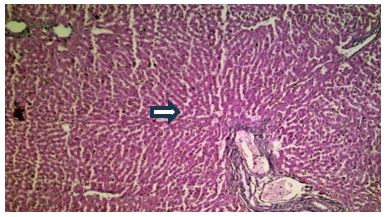
Group A (normal control group)
Section of rat liver showing normal morphology of hepatocytes in NC group (10 x; H&E)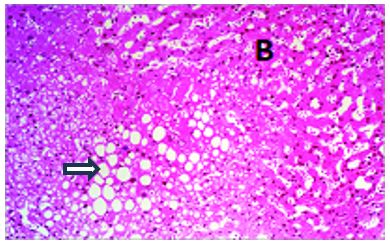
Group B (positive control group)
Section of rat liver showing fat deposition (hepatic steatosis) in hepatocytes of DC group (40 x; H&E) 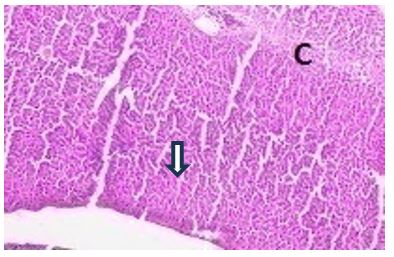
Group C Treatment group (HFD+STZ+Zinc)
Section of rat liver showing moderate hepatic steatosis in hepatocytes of zinc treated diabetic group (10 x; H&E)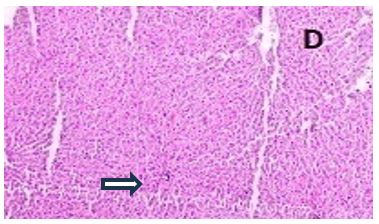
Group D Treatment group (HFD+STZ+Canagliflozin)
Section of rat liver showing moderate hepatic steatosis in hepatocytes of canagliflozin treated diabetic group (10 x; H&E) 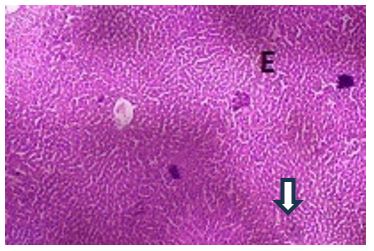
Group E Treatment group (HFD+STZ+Zinc+full dose Canagliflozin)
Section of rat liver showing mild hepatic steatosis in hepatocytes of combined treatment group (10 x; H&E) 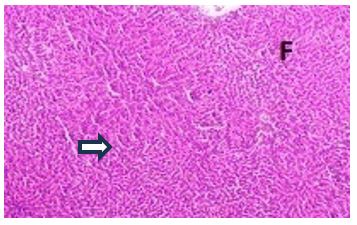
Group F Treatment group (HFD+STZ+Zinc+half dose Canagliflozin)
Section of rat liver showing mild hepatic steatosis in hepatocytes of combined treatment group (10 x; H&E Table I: Comparison of mean weight among study groups (ANOVA) |
|||||||
Weight |
Group-A |
Group-B |
Group-C |
Group-D |
Group-E |
Group-F |
P |
Mean±SD |
Mean±SD |
Mean±SD |
Mean±SD |
Mean±SD |
Mean±SD |
||
Week-0 |
153.50±12.92 |
147.00±8.21 |
142.25±7.63 |
140.00±5.40 |
132.00±6.46 |
133.00±11.25 |
0.11 |
Week-1 |
164.13±13.83 |
189.50±9.30 |
183.13±7.70 |
177.25±8.28 |
170.00±4.60 |
170.00±10.85 |
0.01 |
Week-2 |
173.88±12.87 |
220.63±7.37 |
208.75±10.08 |
215.00±11.01 |
200.25±6.86 |
213.25±13.23 |
<0.001 |
Week-3 |
184.50±11.31 |
248.13±7.08 |
243.75±10.26 |
243.88±14.88 |
249.88±12.10 |
261.25±19.33 |
<0.001 |
Week-4 |
186.38±12.18 |
210.00±17.34 |
222.75±15.13 |
217.25±11.88 |
222.13±14.88 |
241.50±22.58 |
<0.001 |
Week-5 |
203.13±16.48 |
190.50±13.60 |
199.25±18.15 |
200.00±11.99 |
203.75±20.23 |
227.75±30.50 |
0.013 |
Week-6 |
221.88±23.24 |
161.50±16.12 |
181.50±32.89 |
183.50±14.84 |
200.50±29.71 |
222.75±46.97 |
0.001 |
Week-7 |
236.00±26.86 |
151.88±19.55 |
171.38±36.04 |
173.63±25.44 |
184.63±35.23 |
220.00±49.58 |
<0.001 |
Week-8 |
258.88±26.90 |
174.38±22.55 |
178.63±38.89 |
182.25±31.18 |
192.88±37.87 |
222.13±50.14 |
<0.001 |
F-test |
35.80 |
68.55 |
27.79 |
48.51 |
41.97 |
23.28 |
|
p-value |
<0.001 |
<0.001 |
<0.001 |
<0.001 |
<0.001 |
<0.001 |
|
Body weights of groups B, C, D, E and F increased from 147.00±8.21, 142.25±7.63, 140.00±5.40, 132.00±6.46 and 133.00±11.25 g at week 0 to 210.00±17.34, 222.75±15.13, 217.25±11.88, 222.13±14.88 and 241.50±22.58 g respectively at week 4. Body weights were reduced to 174.38±22.55, 178.63±38.89, 182.25±31.18, 192.88±37.87 and 222.13±50.14 g in groups B, C, D, E and F respectively at week 8. Hepatic steatosis was examined at week 8 in 48 slides. The frequency and percentage of fatty change in group A, B, C, D, E and F were measured. Grade 0 (absent)
hepaticsteatosis was noted in 7 (87.5%) of group A rats and mild hepatic steatosis (grade 1) in 1 (12.5%) rat. In group B, 2 (25%) and 6 (75%) rats had moderate (grade 2) and severe (grade 3) hepatic steatosis, respectively. In group-C rats,5 (62.5%) had mild, 2 (25%) had moderate and 1 (12.5%) had severe steatosis. Likewise in group-D rats, 3 (37.5%) had mild, 4 (50%) had moderate and 1 (12.5%) had severe steatosis. In group E, 3 (37.5%) and 1 (12.5%) rat had mild and moderate hepatic steatosis, respectively. The number of rats having a mild hepatic steatosis in group F were 4 (50%). Rest of the rats in group E and F did not show steatosis
Table II: Effect of zinc and canagliflozin on grading of hepatic steatosis in rats given as number and percentage of animals (Kruskal-Wallis ANOVA) (n=48) |
||||||
|
Grade0 (absent) |
Grade1 (mild) |
Grade2 (moderate) |
Grade3 (severe) |
Kruskal-Wallis Test |
|
Groups |
N (%) |
N (%) |
N (%) |
N (%) |
Mean Rank |
Kruskal-WallisH 32.967 |
A |
7 (87.5) |
1 (12.5) |
0 (0.00) |
0 (0.00) |
9.94 |
p-value <0.001 |
B |
0 (0.00) |
0 (0.00) |
2 (25) |
6 (75.0) |
42.38 |
|
C |
0 (0.00) |
5 (62.5) |
2 (25) |
1 (12.5) |
29.25 |
|
D |
0 (0.00) |
3 (37.5) |
4 (50) |
1 (12.5) |
32.38 |
|
E |
4 (50) |
3 (37.5) |
1 (12.5) |
0 (0.00) |
17.31 |
|
F |
4 (50) |
4 (50) |
0 (0.00) |
0 (0.00) |
15.75 |
|
(Grade 0). After applying Kruskal-Wallis ANOVA, significant difference was observed in steatosis between group A, B, C, D, E and F with p<0.001.
There was an equivalent effect of low and high dose canagliflozin when combined with zinc sulphate and this combination therapy significantly improved hepatic steatosis and weight loss in type-2 diabetes induced by streptozotocin and high fat diet in rats. Weight loss and decreased lean body mass is usually observed in uncontrolled diabetes mellitus and is attributed to insulin resistance.9 Restoration of body weight was not observed in the treatment groups (C, D, E and F) at week 8, after giving the treatments for four weeks. The decrease in weight due to treatment with canagliflozin is primarily because of its osmotic diuretic effect resulting in high renal glucose elimination and caloric loss.10 Similarly, zinc supplementation has been shown to reduce weight when given in obese individuals because of its insulino-mimmetic action.11 NASH (nonalcoholic steatohepatitis) is a usually a part of non-alcoholic fatty liver disease (NAFLD) and it is commonly seen in diabetes, obesity and metabolic syndrome. NASH is relatively a benign form of steatosis and does not involve hepatocellular injury.8 Different grading systems are used for NASH to assess its severity. As mentioned earlier, NASH-CRN system has been employed this study.12 Rats of all the experimental groups except the negative control were fed on a high fat diet and it is a well-known fact that this type of diet is responsible for inducing obesity in the rats and decreasing insulin resistance. Furthermore, diabetes itself is associated with significant hepatic steatosis, as evident by the histological examination of the liver sections of the rats of positive control group, which exhibited severe hepatic steatosis (grade 3).13 This steatosis was abolished to some extent in the rats of group C, through the oral intake of zinc for four weeks. This hepatic protection and prevention of hepatic steatosis provided by zinc has been documented already in the diabetic-induced models of rats and is attributed to the antioxidant properties of zinc.14 Rats of group D, after having complete treatment with canagliflozin for four weeks, were able to fix the hepatic steatosis to some degree, although less than that with zinc. The role of canagliflozin in correcting hepatic steatosis associated with diabetes has not been established yet, however canagliflozin caused marked reduction in the hepatic weight of ZDF rats in another study.15 There is evidence suggesting that drugs belonging to the same class significantly improved hepatic damage in STZ-induced diabetic rats and prevented hepatic steatosis in these animals. 16,17 Group E and F rats showed even better results of reduction in hepatic steatosis because these groups were given a combination of zinc and canagliflozin, both of which acted synergistically to decrease the hepatic steatosis. Existing studies also show that adding zinc to other therapeutic agents improved their efficacy in preserving the hepatic architecture of STZ-induced diabetic rats.18
The present study showed that the combination of Zinc sulphate and Canagliflozin produced a pronounced effect on type 2 diabetic rat model in controlling hepatic steatosis and improving body weight than either of them used alone.
- Goyal Y, Verma AK, Bhatt D, Rahmani AH, Dev K. Diabetes: perspective and challenges in modern era. Gene Reports. 2020 Sep 1; 20:100759. https://doi.org/10.1016/j.genrep.2020.100759
- Adnan M, Aasim M. Prevalence of type 2 diabetes mellitus in adult population of Pakistan: a meta-analysis of prospective cross-sectional surveys. Annals of global health. 2020;86(1). https://doi.org/10.5334%2Faogh.2679
- Dowarah J, Singh VP. Anti-diabetic drugs recent approaches and advancements. Bioorganic & medicinal chemistry. 2020 Mar 1;28(5):115263. https://doi.org/10.1016/j.bmc.2019.115263
- Fu Y, Liu S, Ma Y, Wu N. Canagliflozin, an inhibitor of sodium-glucose co-transporter 2, advances in the treatment of type 2 diabetes. Journal of Chinese Pharmaceutical Sciences. 2022 Aug 1;31(8).
- Farooq DM, Alamri AF, Alwhahabi BK, Metwally AM, Kareem KA. The status of zinc in type 2 diabetic patients and its association with glycemic control. J Family Community Med. 2020 Jan-Apr;27(1):29-36. https://doi.org/10.4103/jfcm.jfcm_113_19
- Burki Z, Hussain M, Burki S, Farooqi W, Zeb A, Ahmad S. Effect of zinc supplementation on serum fasting blood sugar and HbA1c in adult diabetics on oral hypoglycemic agents. Gomal J Med Sci. 2017; 15(1):8-11. 7.
- Wickramasinghe AS, Attanayake AP, Kalansuriya P. Biochemical characterization of high fat diet fed and low dose streptozotocin induced diabetic Wistar rat model. Journal of Pharmacological and Toxicological Methods. 2022 Jan 1; 113:107144. https://doi.org/10.1016/j.vascn.2021.107144
- Brown GT, Kleiner DE. Histopathology of nonalcoholic fatty liver disease and nonalcoholic steatohepatitis. Metabolism. 2016;65(8):1080-86. https://doi.org/10.1016/j.metabol.2015.11.008
- Rudrappa SS, Wilkinson DJ, Greenhaff PL, Smith K, Idris I, Atherton PJ. Human skeletal muscle disuse atrophy: effects on muscle protein synthesis, breakdown, and insulin resistance: A qualitative review. Front Physiol. 2016; Aug 25;7:361. https://doi.org/10.3389/fphys.2016.00361
- Zhang H, Liu J, Zhu X, Li X, Chen H, Wu M, et al. A Phase I Study on the Pharmacokinetics and Pharmacodynamics of DJT1116PG, a Novel Selective Inhibitor of Sodium-glucose Cotransporter Type 2, in Healthy Individuals at Steady State. Clinical Therapeutics. 2020 May 1;42(5):892-905. https://doi.org/10.1016/j.clinthera.2020.03.007
- Payahoo L, Ostadrahimi A, Mobasseri M, Khaje-Bishak Y, Farrin N, Asghari-Jafarabadi M, et al. Effects of zinc supplementation on the anthropometric measurements, lipid profiles and fasting blood glucose in healthy obese adults. Adv Pharm Bull. 2013;3(1):161-5. https://doi.org/10.5681%2Fapb.2013.027
- Brunt EM, Kleiner DE, Wilson LA, Belt P, Neuschwander-Tetri BA. Nonalcoholic fatty liver disease (NAFLD) activity score and the histopathologic diagnosis in NAFLD: distinct clinicopathologic meanings. Hepatology. 2011;53(3):810-20. https://doi.org/10.1002/hep.24127
- Cusi K. Treatment of patients with type 2 diabetes and non-alcoholic fatty liver disease: current approaches and future directions. Diabetologia. 2016;59(6):1112–20. https://doi.org/10.1007/s00125-016-3952-1
- Barbara M, Mindikoglu AL. The role of zinc in the prevention and treatment of nonalcoholic fatty liver disease. Metabolism Open. 2021 Sep 1; 11:100105. https://doi.org/10.1016%2Fj.metop.2021.100105
- Liang Y, Arakawa K, Ueta K, Matsushita Y, Kuriyama C, Martin T, et al. Effect of canagliflozin on renal threshold for glucose, glycemia, and body weight in normal and diabetic animal models. PloS one. 2012;7(2):e30555. https://journals.plos.org/plosone/article/metrics?id=10.1371/journal.pone.0030555
- Hazem RM, Ibrahim AZ, Ali DA, Moustafa YM. Dapagliflozin improves steatohepatitis in diabetic rats via inhibition of oxidative stress and inflammation. International Immunopharmacology. 2022 Mar 1; 104:108503. http://dx.doi.org/10.1016/j.intimp.2021.108503
- Hayashizaki-Someya Y, Kurosaki E, Takasu T, Mitori H, Yamazaki S, Koide K, et al. Ipragliflozin, an SGLT2 inhibitor, exhibits a prophylactic effect on hepatic steatosis and fibrosis induced by choline-deficient l-amino acid-defined diet in rats. Eur J Pharmacol. 2015; 754:19-24. https://doi.org/10.1016/j.ejphar.2015.02.009
- Ito S, Torii Y, Chikamatsu S, Harada T, Yamaguchi S, Ogata S, et al. Oral coadministration of Zn-Insulin with d-form small intestine-permeable cyclic peptide enhances its blood glucose-lowering effect in mice. Molecular pharmaceutics. 2021 Feb 22;18(4):1593-603. https://doi.org/10.1021/acs.molpharmaceut.0c01010

An Official Publication of
Islamabad Medical & Dental College
Volume 13 Issue 2
Address of Correspondence
Ayela Eman Zia
Email:
ayelaemanz@gmail.com
Authors’ Contribution: 1,2Conception; Literature research; manuscript design and drafting; 3,4 Critical analysis and manuscript review; 5,6Data analysis; Manuscript Editing.
Cite this article. Zia AE, Yousaf N, Talha MU, Siddiqui W, Irum Z, Siddiqui WA. Evaluation of the Protective Roles of Canagliflozin and Zinc Sulphate on Body Weight and Hepatic Histology in Diabetic Dyslipidemia. J Islamabad Med Dental Coll. 2024; 13(2): 312-318.
DOI: https://doi.org/10.35787/jimdc.v13i2.1195