Frequency of Stress Urinary Incontinence in Pregnant Females
Fizah Mahnoor Khan1, Tehmina Gul2, Syeda Farah Naqvi3, Sumaiyah Obaid4, Mahwish Hayee Shahid5
1 Research Associate, Department of Physiotherapy, Fouji Foundation University, Islamabad
2Demonstrator, Aman Medical Institute, Islamabad
3House Officer, Department of Physiotherapy, Benazir Bhutto Hospital, Rawalpindi
4Assistant Professor, Department of Rehabilitation, Riphah International University, Islamabad
5Health Advisor, Oxford Policy Management
Background: Stress urinary incontinence (SUI) is the most common type of urinary incontinence (UI) in pregnant women and is known to have detrimental effects on the quality of life. The objective of this study was to determine frequency of stress-induced urinary incontinence in pregnant females.
Methodology: A Cross-sectional survey was conducted among 600 pregnant females selected via non probability purposive sampling technique from January to June 2018. Data was collected from major cities of Pakistan using validated questionnaires; International consultation on incontinence questionnaire” (ICIQ-SF) and self-structured questions assessing the referrals of pregnant women to physiotherapy, for stress urinary incontinence. Statistical analysis was done using SPSS. Frequency of qualitative variables was determined. Association of urinary incontinence with pregnancy related characteristics was determined by chi-square test.
Results: Out of 600 females, 84.3% (506/600) had experienced stress urinary incontinence in pregnancy with 64.5% reported among multigravida. 35.5% of the participants complained of increased urinary incontinence during the 9th month. Quality of life was moderately affected by stress urinary incontinence. Only 6.2% of the participants were referred to a physiotherapist for exercise. There was statistically significant difference between primigravida and multigravida in having urinary incontinence (p< .001).
Conclusion: Frequency of stress urinary incontinence was high in pregnant women especially during the 9th month. Referral to physiotherapy for urinary incontinence in pregnancy was extremely low.
Keywords: Incontinence, Pregnancy, Trimester, Third, Urgency
Urinary incontinence (UI) is any kind of accidental, unintentional or involuntary flow of urine from the bladder, a common phenomenon and often embarrassing1, 2.Urinary incontinence has multiple reasons, for instance, weakness of pelvic muscles, persistent constipation, poor bowel control, restricted or low mobility, physical problems, old age, poor bladder control etc3-7.There are many types of incontinence, but the prevalence of stress urinary incontinence in pregnant females is quite high8.In pregnant women, several hormonal changes occur. Moreover, the increased weight of the fetus also leads to stress incontinence. Therefore, mostly pregnant women are afflicted with this issue. Childbirth weakens muscles that are helpful in bladder control9.
Previous research shows all pregnant women experience stress urinary incontinence frequently but UI symptoms in multiparous women are more obvious due to pelvic floor structure changes in them10.
A 2016 study conducted in Pakistan stated, 51.1% of females complained of urinary incontinence in pregnancy out of which 38.3% had stress urinary incontinence11.In another study, stress urinary incontinence (SUI) was found in parous women of age 18-35 years. It was found that after just one vaginal delivery, the incidence of SUI is markedly increased. Research shows, many women afflicted by SUI believe it to be normal and may not report it to clinicians12. Urinary incontinence, if treated timely, can be cured in many cases. Exercises related to pelvic floor muscle in all pregnant women should be performed routinely13.
The physiotherapy care plan must be individualized for each patient. It must include standard physiotherapy interventions. Such interventions comprise modalities to decrease pain; pelvic floor muscle exercise with or without biofeedback and/or electrical stimulation to improve strength and coordination of the Pelvic floor muscles. Moreover, stabilization exercises improve the strength of abdominal or lumbar stabilizer muscles. Furthermore, educating the patient about bladder or bowel training, fluid management, and diet modification is helpful in this regard14.Many studies have reported that stress urinary incontinence should be treated by conservative measures and physiotherapy and pelvic floor exercise are some of the best ways to treat it15.This study will bring awareness about magnitude of the problem, which can contribute in devising strategies for its timely prevention and management.
It was a descriptive cross-sectional study that was conducted in government hospitals of Rawalpindi, Islamabad, Muzaffarabad and Peshawar, from January to June 2018. The ethical approval was obtained from the review committee of Riphah College of rehabilitation sciences and head of departments of all the hospitals.
Urinary incontinence criteria were based on ICS definition regardless of the amount of leaked urine. In existing literature, prevalence of UI varies from 30%-70%, a conservative estimate of 45% is used, and sample size calculated according to the following formula was 410 12 but 600 pregnant females were enrolled to strengthen the study.
N=Z2P(1-P)/e2
Pregnant Females in 3rd trimester with ages from 20-40 years were included. Females with anemia, Gestational diabetes mellitus (GDM), cardiac diseases, pregnancy induced hypertension (PIH), miscarriages, abortions, systemic disease, history of urinary incontinence other than pregnancy and any comorbidities were excluded. The non-probability Purposive sampling technique was used in this study. A self-structured questionnaire was used for the demographics (age, gender, area/complete address, contact number, month of pregnancy, primigravida or multigravida, occupation& referral to the physical therapist for urinary incontinence management) and the “International consultation on incontinence questionnaire” (ICIQ-SF) for evaluating the frequency, severity and impact on quality of life (QoL) of urinary incontinence. Its Cronbach’s alpha coefficient was calculated 0.75, test-retest was 0.70, Pearson Correlation Coefficient was calculated at 0.93 and the intra-class correlation coefficient was 0.84.13 Before conducting research, written consent was taken from the patients. ICIQ-SF questionnaire was used after permission of the author. As it was only available in English language, few participants had the issue in understanding questions, expert physical therapists available helped patients to understand it in order to minimize the biasness. All the statistical data was analyzed through SPSS version 21. For quantitative data, mean±SD and for qualitative data (frequency) were determined. Chi square test was used to find out association between parity and urinary incontinence.
Mean age (in years) and standard deviation of participants was 27.15±4.63. Data was collected from different cities with 16.7 %(n=100) participants from Nawab-Shah, 16.7% (n=100) from Muzaffarabad, 16.8 %(n=101) from Peshawar, 46% (n=276) from Rawalpindi & Islamabad and 2.3% (n=14) from Zhob, Baluchistan. Maximum Percentage (35.5%) of pregnant females having stress urinary incontinence reported it during 9th month (Table: I).
Table I: Stress Urinary Incontinence in the third trimester of pregnancy |
|
urinary incontinence |
Percentage |
No complaint of urinary incontinence |
15.7% (N=93) |
Urinary incontinence during 7th month |
17.5%(N=103) |
During the 8th month of pregnancy |
31.3%(N=186) |
During the 9th month of pregnancy |
36.5%(N=218) |
There was a significant difference between primigravida and multigravida in having urinary incontinence (p=< .001) (Table: II).
Table II: Urinary incontinence in Multigravida and Primigravida |
|||
Variable |
Percentage |
Urinary incontinence |
P-value |
Primigravida |
35.5% |
25% |
.001* |
Multigravida |
64.5% |
59.3% |
.001* |
=.001, highly statistically significant
The “International consultation on incontinence questionnaire” (ICIQ-SF) for evaluating the frequency, severity and impact on quality of life (QoL) of stress urinary incontinence has four parts. ‘How often do you leak urine, amount of leakage of urine, interference of stress urinary incontinence in daily life and when do you leak urine. As an overall trend, all questions showed a moderate impact on QoL (Figure: I)
Referral for stress urinary incontinence to physiotherapy was 6.2% while 93.8% said that there was no referral to Physical Therapist for urinary incontinence management. (Figure II)
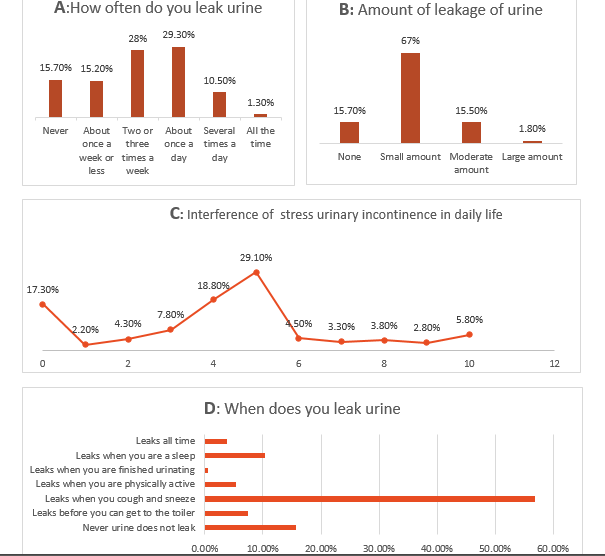
‘Figure I: International consultation on incontinence questionnaire
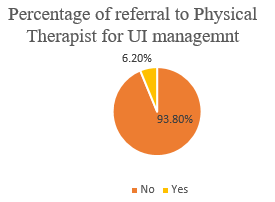
Figure II: Referral from Physician for physiotherapy
The result of this study shows stress urinary incontinence to be highly prevalent in pregnant females and incontinence level increasing with gestation period. These results are similar with the meta-analysis in 2021 confirming urinary incontinence to be increasing with gestational period and causing bothersome situations for pregnant women. Prevalence according to 44 studies was 41.0% (range of 9–75%). Stress urinary incontinence (63%) was the most prevalent type of UI; 26% of the women reported daily loss, whereas 40% reported loss on a monthly basis. Problem was experienced as mild to moderate. 17.
A cross-sectional study was done by Aruna et al 12 among 400, third trimester pregnant women which shows 75.25% prevalence and 47% affected quality of life. In this study, prevalence of stress urinary incontinence was 84.3 % (506/600) which is 10% higher as compared to their study. Also, 29.10% of participants experienced a moderate level of Interference in quality of life by stress urinary incontinence in this study. A study was conducted by Semra Kocaöz et al using International Consultation on Incontinence Questionnaire Short Form and found stress incontinence to be the most common type of incontinence found in women with frequency of 57% among other types9.
This study shows that multigravida women experienced 29.5% more UI symptoms than primigravida while another study conducted in 2017 showed that urinary incontinence symptoms and pelvic floor structure changes were more common in multiparous women as compared to nulliparous. 6,18 Urinary incontinence was reported most commonly in the 9th month of gestation in this study which is similar to a cross-sectional study showing 18.96% and 39.76% first and third trimester urinary incontinence respectively; third-trimester women showing 20.8% increase in prevalence. Also, mostly third-trimester women leaked a “small amount” of urine19.
According to another study, pelvic floor muscle exercises routinely in all pregnant women can help in pelvic floor muscle strengthening and controlling urinary incontinence20. Kegels training help in stress urinary incontinence reduction21, 22. For management of stress urinary incontinence, timely referral for physical therapy is required but this study shows only 6.2% of women were referred to physiotherapists. The study was conducted in a very short span of time affecting its generalizability.
Frequency of stress urinary incontinence in third-trimester pregnant women especially during the 9th month was high affecting quality of life. Referral to physiotherapy for urinary incontinence management in pregnancy was extremely low.
Recommendation:
Prompt action should be taken on the prevention of stress urinary incontinence by guiding mothers through educational programs about importance of regular pelvic floor exercises.
- Santini AC, Santos ES, Vianna LS, Bernardes JM, Dias A. Prevalence and factors associated with the occurrence of urinary incontinence during pregnancy. Rev. Bras. Saude Mater. Infant. 2020;19:967-74. Doi:10.1590/1806 93042019000400013
- Linde JM, Nijman RJ, Trzpis M, Broens PM. Prevalence of urinary incontinence and other lower urinary tract symptoms in children in the Netherlands. J Peds Urology. 2019;15(2):164-e1. Doi: 10.1016/j.jpurol.2018.10.027
- Silverio AA, Silverio LA, Silverio AA. Design of a Mixed Signal Bladder Control System with Sensor Front-End Readout and Drug Delivery Actuator based on TSMC 0.18 um Technology. In2020 IEEE 8th R10 Humanitarian Technology Conference (R10-HTC) 2020 (pp. 1-5). IEEE. Doi: 10.1109/R10-HTC49770.2020.9356960
- Moossdorff-Steinhauser HF, Berghmans BC, Spaanderman ME, Bols EM. Urinary incontinence during pregnancy: prevalence, the experience of bother, beliefs, and help-seeking behaviour. Int Urogynecol J. 2021;32(3):695-701. Doi:10.1007/s00192-020-04566-0
- Torgbenu EL, Aimakhu CO, Morhe EK. Effect of Kegel Exercises on Pelvic Floor Muscle Disorders in Prenatal and Postnatal Women-A Literature Review. Current Women's Health Reviews. 2021;17(3):202-7. Doi:10.2174/1573404816999200930161059
- Kobashi KC, Albo ME, Dmochowski RR, Ginsberg DA, Goldman HB, Gomelsky A, et al. Surgical treatment of female stress urinary incontinence: AUA/SUFU guideline. J Urology. 2017;198(4):875-83. Doi:10.1016/j.juro.2017.06.061
- Sangsawang B, Sangsawang N. Stress urinary incontinence in pregnant women: a review of prevalence, pathophysiology, and treatment. Int Urogynecol J. 2013;24(6):901-12. doi.org/10.1007/s00192-013-2061-7
- Jansson MH, Franzén K, Tegerstedt G, Hiyoshi A, Nilsson K. Stress and urgency urinary incontinence one year after a first birth—prevalence and risk factors. A prospective cohort study. Acta Obstet Gynecol Scand. 2021;100(12):2193-201. Doi:10.1111/aogs.14275
- Seshan V, Muliira JK. Self-reported urinary incontinence and factors associated with symptom severity in community-dwelling adult women: implications for women’s health promotion. BMC women's health. 2013;13(1):1-8. Doi:10.1186/1472-6874-13-16
- Luo D, Chen L, Yu X, Ma L, Chen W, Zhou N, et al. Differences in urinary incontinence symptoms and pelvic floor structure changes during pregnancy between nulliparous and multiparous women. Peer J. 2017;5:e3615. Doi:10.7717/peerj.3615
- Sharif S, Gondal MJ, Kamboh SM, Adeel M, Qamar M, Chaudhry A, et al. Urinary incontinence in pregnant multigravida from second trimester up to the delivery. Annals of King Edward Medical University.2017;23(2).Doi:10.21649/akemu.v23i2.1564
- Nigam A, Ahmad A, Gaur D, Elahi AA, Batra S. Prevalence and risk factors for urinary incontinence in pregnant women during late third trimester. Int J Reprod Contracept Obstet Gynecol. 2017;5(7):2187-91. Doi: 10.18203/2320-1770.ijrcog20162090
- Hajebrahimi S, Nourizadeh D, Hamedani R, Pezeshki MZ. Validity and reliability of the International Consultation on Incontinence Questionnaire-Urinary Incontinence Short Form and its correlation with urodynamic findings. Urology J. 2012;9(4):685-90. Doi:10.22037/uj.v9i4.1800
- Institute JB. The Joanna Briggs Institute best practice information sheet: the effectiveness of pelvic floor muscle exercises on urinary incontinence in women following childbirth. Nurs Health Sci. 2011;13(3):378-81. Doi:10.1111/j.1442-2018.2011.00617.x
- Al-Mehaisen LM, Al-Kuran O, Lataifeh IM, Betawie S, Sindiyani A, Al-ttal OF, et al. Prevalence and frequency of severity of urinary incontinence symptoms in late pregnancy: a prospective study in the north of Jordan. Arch Gynecol Obstet. 2009;279(4):499-503. Doi:10.1007/s00404-008-0720-6
- Jaffar A, Mohd-Sidik S, Nien FC, Fu GQ, Talib NH. Urinary incontinence and its association with pelvic floor muscle exercise among pregnant women attending a primary care clinic in Selangor, Malaysia. Plos one. 2020;15(7):e0236140. Doi: 10.1371/journal.pone.0236140
- Moossdorff-Steinhauser HF, Berghmans BC, Spaanderman ME, Bols EM. Prevalence, incidence and bothersomeness of urinary incontinence in pregnancy: a systematic review and meta-analysis. International Urogynecology J. 2021:1-20. Doi:10.1007/s00192-020-04636-3
- Kocaöz S, Talas MS, Atabekoğlu CS. Urinary incontinence in pregnant women and their quality of life. JCN. 2010;19(23‐24):3314-23. Doi:10.1111/j.1365-2702.2010.03421.x
- Franco EM, Parés D, Colomé NL, Paredes JRM, Tardiu LA. Urinary incontinence during pregnancy. Is there a difference between first and third trimester? Eur. J. Obstet. Gynecol. 2014;182:86-90. Doi:10.1016/j.ejogrb.2014.08.035
- Stoner LM, Way MM. Stress urinary incontinence: Parous versus nulliparous women ages 18–35 (Doctoral dissertation, Grand Valley State University) 2000.
- Scott KM, Gosai E, Bradley MH, Walton S, Hynan LS, Lemack G, et al. Individualized pelvic physical therapy for the treatment of post-prostatectomy stress urinary incontinence and pelvic pain. Int Urol Nephrol.2020;52(4):6559.Doi:10.1007/s11255-019-02343-7
- Mostafa Abd El-Aty E, EL-Ghareap Hassan M. Effect of Kegel Exercise Training Program On Improving Quality Of Life Among Women With Urinary Incontinence. Egyptian Journal of Health Care. 2021; 12(2):946-64. Doi: 10.2
- Mostafa Abd El-Aty E, EL-Ghareap Hassan M. Effect of Kegel Exercise Training Program On Improving Quality Of Life Among Women With Urinary Incontinence. Egyptian Journal of Health Care. 2021; 12(2):946-64. Doi: 10.21608/EJHC.2021.172829

An Official Publication of
Islamabad Medical & Dental College
Volume 10 Issue 4
Authors’ Contribution
1Conception; Literature research; manuscript design and drafting; 2, Critical analysis and manuscript review; 3 Data analysis; 4,5Manuscript Editing.
Article info
Received: September 11, 2020
Accepted: December 15, 2021
Address of Correspondence
Fizah Mahnoor Khan
Email:
drfizahpt@gmail.com
Cite this article. Khan FM, Gul T, Naqvi SF, Obaid S, Shahid MH. Frequency of Stress Urinary Incontinence in Pregnant Females. J Islamabad Med Dental Coll. 2021; 10(4): 216-220. Doi:10.35787/jimdc.v10i4.603
Funding Source: Nil
Conflict of Interest: Nil