Future Trends in the Treatment of MRSA in Pakistan
Zarafsahn Badar1, Muhammad Noor ul Amin2, Ayesha Janjua 3, Azhar Iqbal 4, Sobia Humerah 5, Pakeeza Arzoo Shaiq 6
1,3 Associate Professor, Department of Pharmacology, Foundation University Islamabad
22Medical Technologist, Department of Pathology, Rawalpindi Institute of Cardiology, Rawalpindi
Lab Technician, Department of Pathology, Holy Family Hospital, Rawalpindi
5 Associate Professor, Department of Physiology, Alnafees Medical College, Isra University, Islamabad
6Assistant Professor, University Institute of Biochemistry and Biotechnology, PMAS Arid Agriculture University, Rawalpindi
Background:The Methicillin resistant Staphylococcus aureus (MRSA) is accountable for community and hospital acquired infections. Due to over and misuse of antibiotics, MRSA isolates are becoming multidrug resistant even with linezolid and vancomycin. The objective of this study was to determine recent antimicrobial profile of MRSA, isolated from different clinical samples and current treatment options for MRSA, other than vancomycin and Linezolid.
Methodology:This cross-sectional study was conducted at Foundation university medical college from Jan 2019 to Dec 2020. Total 918 samples of blood, pus swab, throat swab, tracheal swab, wound swab, endotracheal tube (ETT) tips, Catheter tips, axillary swab and suction tips received by using aseptic techniques, for culture and sensitivity in different hospitals of Rawalpindi and Islamabad, were taken. Isolated pathogens were identified using standard protocols and susceptibility testing was done by Kirby-Bauer disc diffusion method.
Results:Out of 918 samples, MRSA was isolated in 96 (10.4%) samples and most frequently observed in 27% (n=26) blood samples. The mean age of enrolled patients was 52.02 (SD±16.1) years, the infection was largely seen in age group 46-55(24%) and in 57% (n=52) male population. MRSA showed higher resistance to levofloxacin 78.1% (n=75), ciprofloxacin 75% (n=72), erythromycin 70.8% (n=68) and gentamycin 62.5% (n=60). The susceptibility of older drug chloramphenicol and Trimethoprim-sulfamethoxazole was found 61% & 49% respectively. MRSA isolates were highly susceptible to vancomycin (96.8%), linezolid (89.5%) and teicoplanin (70.85%). Alarmingly, 2.1% (n=2) MRSA isolates showed resistance to vancomycin.
Conclusion: Vancomycin resistant MRSA is a matter of great concern, because of unawareness among health administrative departments and public, self-medication, lack of surveillance system and non-availability of antibiotic policy.
Keywords:Antibiotics, MRSA, Vancomycin, Chloramphenicol
Surprisingly not long after the historical development of Penicillin, the adaptive power of staphylococcus has led to the dawn of the era of Methicillin resistant staphylococcus aureus (MRSA) infections. MRSA is notorious for developing resistance in treatment of infections ranging from minor skin infections to life-threatening full-blown sepsis1.
By and large, the problem of antibiotic resistance is on the rise due to extensive and irrational use of antibiotics along with self-medication and its impact is more, in low and middles income countries where infection rates are high due to unhygienic environment and poor health facilities.1,2 Misuse and overuse of the antibiotics also helps in natural bacterial evolution and selection which becomes resistant to wide range of antibiotics2.
Nosocomial MRSA infections are more prevalent and reluctant although the incidence of community acquired MRSA is also escalating. Healthcare-associated MRSA is a truly opportunistic pathogen, which causes infection in otherwise seriously ill patients, or those who have undergone major surgery, patients on hemodialysis, and with an indwelling catheters and bed sores. The bug is also inhabitant of nursing homes. Moreover, healthcare-associated infections caused by MRSA significantly increase the costs of hospital treatment3.
As limited numbers of antibiotics are effective against this super-bug, the mainstay of treatment is vancomycin. Recently the development of resistance against the glycopeptide, vancomycin is of concern and poses a challenge in the treatment of resilient MRSA infections. Decline in the development of new antibiotics in the setting of rapidly developing resistance against the existing ones make the circumstances worse.4,5 The consequential rise in the incidence of nosocomial infections due to MRSA poses a great threat to indoor patients and the medical personnel. This necessitates us to determine a standard empirical therapy depending upon the sensitivity of the organism to various drugs at a particular place. Targeting the bacteria early in a course of infection can improve survival, prevent complications and reduce the health care cost. To accomplish this goal, a standard empirical therapy from time to time by scrutinizing sensitivity pattern in a health care facility is essential.6
Therefore, this study was designed to determine the current antimicrobial profile of MRSA isolates, obtained from patients who visited hospitals of twin cities. The main objective of this study was to find out current treatment options for MRSA other than vancomycin, linezolid (oral), telavancin and ceftaroline (intravenous).
This cross-sectional study was conducted at Department of Pharmacology, Foundation university medical college, Rawalpindi after the acceptance from ethical committee. A total of 918 (Calculated by Raosaft sample size calculator) samples of blood, pus swab, throat swab, tracheal swab, wound swab, endotracheal tube (ETT) tips, Catheter tips, axillary swab and suction tips received by using aseptic techniques, for culture and sensitivity in different hospitals of Rawalpindi and Islamabad, during study period from January 2019 to December 2020 were taken. All submitted specimens except blood were inoculated on blood agar, MacConkey agar and chocolate agar (Oxoid-UK) according to specimen type and incubated at 35±2oC for 24 hours. Blood samples were inoculated into Bact alert (Biomerieux) and Bactec (BD) at 37oC for 5 to 7 days.
Bacterial isolates were identified by using standard identification protocols which includes colony morphology, gram staining and biochemical tests such as catalase test, slide and tube coagulase test, deoxy ribonuclease activity and API Staph7.
The confirmed S. aureus isolates were processed further for antimicrobial susceptibility testing by Kirby-Bauer disc diffusion method as per Clinical Laboratory Standard Institute (CLSI) guidelines. The antibiotics included Ampicillin, Amoxicillin, Amoxicillin + clavulanic acid, Erythromycin, Levofloxacin, Ciprofloxacin, Amikacin, Tigecycline, Gentamicin, Rifampicin, Teicoplanin, Linezolid, Sulfamethoxazole + trimethoprim, Fosfomycine, Vancomycin, Quinupristin/dalfopristin, Doxycycline, Chloramphenicol, Nitrofurantoin and MRSA was confirmed by applying Cefoxitin (30 µg) discs on Muller Hinton agar and incubating at 37oC for 24 hours. The zone sizes of all antibiotics including cefoxitin were measured and according to CLSI standards (CLSI M100-S25) the categorization of isolates as susceptible, intermediate, or resistant was done. The Staphylococcus aureus isolates with zone size of Cefoxitin< 21 mm were considered as MRSA.7
Out of 918 samples, MRSA were isolated in 96 (10.4%) samples. MRSA were largely isolated in blood samples followed by pus and urine samples with the frequency of 26 (27.0%), 22 (23.0%) and 14 (14.6%) respectively (Table 1).
In our study population, the frequency of MRSA infection was found in 55 (57.3%) males and 41 (42.7%) female population (Figure 1). The mean age of enrolled patients was 52.02 years (SD±16.1) ranging from 06 to 85 years. The Staphylococcus aureus infection was seen in all age groups but largely in age group 46-55 years with the percentage of 24.0% (n=23) (Table 2). The drug resistant pattern according to CLSI (2017) standards other than cefoxitin is given in Table 3.
It clearly shows that Vancomycin resistant strains are only 2% whereas linezolid resistance is 8%. 61% of the strains are susceptible to older drug chloramphenicol and 49% to Trimethoprim-sulfamethoxazole. It was found that Quinolones antibiotics (Levofloxacin and Ciprofloxacin) are highly resistant to MRSA 78.1% and 75.0% respectively (Table 3). MRSA isolated from urine samples was highly sensitive to Nitrofurantoin (71.5%).
Table I: Distribution of MRSA in Different types of Specimen |
|
Specimen |
Frequency (Percentage %) |
Blood |
26 (27.0) |
Urine |
14 (14.6) |
Catheter Tip |
5 (5.2) |
Fluids |
8 (8.4) |
Throat Swab |
3(3.1) |
HVS |
4 (4.2) |
Pus |
22 (22.9) |
Sputum |
3 (3.1) |
wound swab |
9 (9.4) |
Tissue |
2 (2.1) |
Total |
96 (100) |
HVS= High Vaginal Swab
Table II: Age Wise Distribution of MRSA |
|
Age Group (years) |
Frequency (Percentage %) |
06-15 |
5 (5.2) |
16-25 |
09 (9.4) |
26-35 |
13 (13.5) |
36-45 |
10 (10.4) |
46-55 |
23 (24.0) |
56-65 |
17 (17.7) |
66-75 |
15 (15.6) |
76-85 |
04 (4.2) |
Total |
96 (100) |
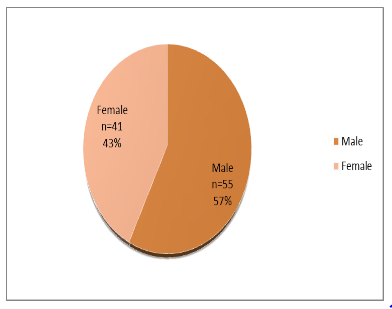
Figure 1: Gender Distribution of MRSA Positive patients.
| Table III: Sensitivity Pattern of MRSA Isolates | |||
| Name of | Susceptible Frequency (%) | Resistant Frequency (%) | Intermediate Frequency (%) |
| Antibiotic | |||
| Ampicillin | 0 | 96 (100) | 0 |
| Oxacillin | 0 | 96 (100) | 0 |
| Amoxicillin | 0 | 96 (100) | 0 |
| and clavulanate | |||
| Erythromycin | 24 (25.0) | 68 (70.8) | 04 (4.2) |
| Levofloxacin | 16 (16.7) | 75(78.1) | 05 (5.2) |
| Ciprofloxacin | 19 (19.8) | 72 (75.0) | 05 (5.2) |
| Amikacin | 43(44.8) | 50 (52.0) | 03 (3.2) |
| Tigecycline | 57 (59.4) | 35 (36.5) | 02 (2.1) |
| Gentamicin | 30 (31.2) | 60 (62.5) | 06 (6.3) |
| Rifampicin | 66 (68.8) | 24 (25.0) | 06 (6.2) |
| Teicoplanin | 68 (70.8) | 24 (25.0) | 04 (4.2) |
| Linezolid | 86 (89.5) | 08 (8.4) | 02 (2.1) |
| Trimethoprim-sulfamethoxazole | 47(49.0) | 42 (43.7) | 07 (7.3) |
| Vancomycin | 93 (96.8) | 02 (2.1) | 01 (1.1) |
| Quinupristin | 59 (61.4) | 28 (29.2) | 09 (9.4) |
| /dalfopristin | |||
| Doxycycline | 49 (51.0) | 40 (41.7) | 07 (7.3) |
| Chloramphenicol | 59 (61.4) | 30 (31.2) | 07 (7.3) |
| Fosfomycin | 08 (57.2) | 05 (35.7) | 01 (7.1) |
| Nitrofurantoin | 10 (71.5) | 03 (21.4) | 01 (7.1) |
Misuse and overuse of the antibiotics helps in natural bacterial evolution and selection which becomes resistant to wide range of drugs. Today Staphylococcus aureus is one of the most common causes of healthcare-associated infections, causing 40-70% of infections of intensive care units and quite a few of them are MRSA8.
In this study, MRSA was isolated in 10.4% population, mainly from admitted patients in surgical units of different hospital of twin cities. The Epidemiology of MRSA is increasing yearly and the incidence of MRSA in different cities of Pakistan varies from 2% to 60% due to difference in clinical practices and adherence to standard infection control guidelines9, 10.
It was found that all MRSA isolated in this study were resistant to beta-lactam antibiotics (Amoxicillin, Ampicillin, Oxacillin and amoxicillin/clavulanate). High resistance of MRSA was seen to Erythromycin, Levofloxacin and Ciprofloxacin with the frequency of 68 (70.8%), 75 (78.1%) and 72 (75.0%) respectively. The resistant frequencies of erythromycin (70%, 69.1% & 65%) reported in previous studies is in line with our results which is 70.8%. The ciprofloxacin resistance (33.7% and 47%) was lower in these studies as compared to our study (75%)9, 11, 13.
In present study, MRSA resistance to gentamicin was found to be 62.5%, while the studies conducted in Lahore and Peshawar reported higher resistance 97.6% and 100% respectively.9,10 MRSA resistance to Rifampicin was found 25.0 %, while low resistance of rifampicin such as 18.8%, 14.0% and 7.0 % reported in previous studies.13,14. Siddique et al 2017 demonstrated slightly higher resistance (28.0%) of MRSA towards rifampicin as compared to the present study9.
The present study has reported 31.2% resistance of MRSA against Chloramphenicol which was in accordance with the study of Khan et al 2014 who had reported 29.41% resistance.10 The study conducted in Karachi reported (5.3%) low resistance of MRSA to chloramphenicol.9 In this study we documented that 49% isolated MRSA were sensitive to Trimethoprim-sulfamethoxazole which were higher than what was reported (3.9%) in 2011.9 Other studies conducted in Pakistan reported 51% & 54.17% sensitivity of MRSA to co-trimoxazole which were slightly higher than this study10, 14.The studies conducted in Nigeria, Jordan and Iran reported co-trimoxazole sensitivity 56.9%, 58.4% and 73.5% respectively.14,15 Due to the neglected use of co-trimoxazole, bacteria may now have been susceptible. This can mark resurgence in the use of this inexpensive easily available oral antibiotic.
Isolated MRSA showed high sensitivity to vancomycin, linezolid, nitrofurantoin (for urine isolates), teicoplanin, rifampicin, chloramphenicol, Quinupristin/dalfopristin, tigecycline fosfomycine while intermediate sensitivity was seen with co-trimoxazole and Amikacin in our study.
Vancomycin showed complete resistance to 2.1% of the isolates and intermediate resistance to 1.1% of cases. This is less than that reported in a similar study in Ethopia16. A retrospective study done in 2017 showed 5% resistance to vancomycin whereas comparable studies in the past also showed lesser resistance which is consistent with our study14, 17. Interestingly, MRSA is still reported to be 100% susceptible to vancomycin in a recent study done in Afghanistan18. Although, vancomycin remains the drug of choice for MRSA infections; the augmentation in development of resistance to vancomycin by MRSA in recent years is in the background of escalating incidence of MRSA infections and continued use of the glycopeptide itself19. This has also been emphasized in a systematic review published by Abubakar and Sulaiman20.
Linezolid (LZD) is broad-spectrum oxazolidinone effective against central nervous system infections, MRSA acute bacterial endocarditis and MRSA hospital-acquired pneumonia. Oral administration coupled with a favorable side-effect not only provides economic benefits but is also contributing to the rapid development of resistance against this valuable armor. In our study,89.5% of the isolates were susceptible to LZD20. The findings are consistent with those reported from Lahore in which 90% were sensitive to LZD.21 From various areas of India, LZD resistance reported in literature ranges from 2-20%22. However, resistance to LZD has been reported as high as 48% in a study conducted in Pakistan23.
Vancomycin resistant MRSA is a matter of great concern, because of unawareness among health administrative departments and public, shortage of funds, lack of surveillance system and research concerning MRSA infections.
An important aspect highlighted from our study is that we can advocate the use of inexpensive and older drugs like co-trimoxazole and chloramphenicol in multidrug resistant MRSA infections. It is also recommended that administration of glycopeptides should be based on the sensitivity pattern and local epidemiology.
Sale of drugs over the counter, including antibiotics round the clock to the public, self-medication, wide spread quackery and over prescription of antibiotics by doctors to patients is few of the major causes of high resistance to infections. Hence awareness can be generated through campaigns. Being health personnel, we must use antibiotics judiciously and within our limited resources we must maintain a system of scrutiny in all hospitals.
- Kashef N, Hamblin MR. Can microbial cells develop resistance to oxidative stress in antimicrobial photodynamic inactivation? Drug Resistance Updates. 2017 Mar 1;31:31-42. DOI: 10.1016/j.drup.2017.07.003
- Gurung RR, Maharjan P, Chhetri GG. Antibiotic resistance pattern of Staphylococcus aureus with reference to MRSA isolates from pediatric patients. Future science OA. 2020 Feb 24;6(4):FSO464. DOI: 10.2144/fsoa-2019-0122.
- Ayukekbong JA, Ntemgwa M, Atabe AN. The threat of antimicrobial resistance in developing countries: causes and control strategies. Antimicrobial Resistance & Infection Control. 2017 Dec;6(1):1-8. DOI: 10.1186/s13756-017-0208-x
- Alseqely M, Newton-Foot M, Khalil A, El-Nakeeb M, Whitelaw A, Abouelfetouh A. Association between fluoroquinolone resistance and MRSA genotype in Alexandria, Egypt. Scientific reports. 2021 Feb 19;11(1):1-9. DOI: 10.1038/s41598-021-83578-2
- Blaskovich MA, Hansford KA, Butler MS, Jia Z, Mark AE, Cooper MA. Developments in glycopeptide antibiotics. ACS infectious diseases. 2018 Jan 24;4(5):715-35. DOI: 10.1021/acsinfecdis.7b00258
- Wangai FK, Masika MM, Maritim MC, Seaton RA. Methicillin-resistant Staphylococcus aureus (MRSA) in East Africa: red alert or red herring?. BMC infectious diseases. 2019 Dec;19(1):1-0. DOI: 10.1186/s12879-019-4245-3
- Becker K, Skov RL, Von Eiff C. Staphylococcus, Micrococcus, and other catalase‐positive cocci. Manual of clinical microbiology. 2015 May 15:354-82. DOI: 10.1128/9781555817381
- Avershina E, Shapovalova V, Shipulin G. Fighting Antibiotic Resistance in Hospital-Acquired Infections: Current State and Emerging Technologies in Disease Prevention, Diagnostics and Therapy. Frontiers in microbiology. 2021:2044. DOI 10.3389/fmicb.2021.707330
- Siddiqui T, Muhammad IN, Khan MN, Naz S, Bashir L, Sarosh N, et al. MRSA: Prevalence and susceptibility pattern in health care setups of Karachi. Pak J Pharm Sci. 2017 Nov 1;30(Suppl 6):2417-21. DOI: emr-190229
- Khan AT, Jamil K, Farooqi N, Bilal M, Hussain I. Frequency of methicillin resistant staphylococcus aureus in patients referred from other specialties and its antimicrobial susceptibility and resistance pattern. Journal of Medical Sciences. 2014 Mar 3;22(1):28-31.
- De Jonge S, Boldingh Q, Solomkin J, Dellinger P, Egger M, Salanti G, et al. Conference on Prevention & Infection Control (ICPIC 2019). Antimicrobial Resistance and Infection Control. 2019;8(1):148. DOI: 10.1186/s13756-019-0567-6
- Brohi NA, Noor AA. Frequency of the Occurrence of Methicilin Resistant Staphylococcus aureus (MRSA) Infections in Hyderabad, Pakistan. Pakistan Journal of Analytical & Environmental Chemistry. 2017 Jun 22;18(1):84-90. DOI: 10.21743/pjaec/2017.06.08
- Mir F, Rashid A, Farooq M, Irfan M, Ijaz A. Antibiotic sensitivity patterns of staphylococcal skin infections. Journal of Pakistan Association of Dermatology. 2016 Nov 22;25(1):12-7.
- Motamedi H, Asghari B, Tahmasebi H, Arabestani MR. Identification of hemolysine genes and their association with antimicrobial resistance pattern among clinical isolates of Staphylococcus aureus in West of Iran. Advanced biomedical research. 2018;7. DOI: 10.4103/abr.abr_143.18
- Al-Zoubi MS, Al-Tayyar IA, Hussein E, Al Jabali A, Khudairat S. Antimicrobial susceptibility pattern of Staphylococcus aureus isolated from clinical specimens in Northern area of Jordan. Iranian journal of microbiology. 2015 Oct;7(5):265. DOI: PMID-26719783
- Dilnessa T, Bitew A. Prevalence and antimicrobial susceptibility pattern of methicillin resistant Staphylococcus aureus isolated from clinical samples at Yekatit 12 Hospital Medical College, Addis Ababa, Ethiopia. BMC infectious diseases. 2016 Dec;16(1):1-9. Doi: 10.1186/s12879-016-1742-5
- Hanif E, Hassan SA. Evaluation of antibiotic resistance pattern in clinical isolates of Staphylococcus aureus. Pak J Pharm Sci. 2019 May 1;32(4):1749-53. DOI: 31680068.
- Naimi HM, Rasekh H, Noori AZ, Bahaduri MA. Determination of antimicrobial susceptibility patterns in Staphylococcus aureus strains recovered from patients at two main health facilities in Kabul, Afghanistan. BMC infectious diseases. 2017 Dec;17(1):1-7. DOI: 10.1186/s12879-017-2844-4.
- Morrisette T, Alosaimy S, Abdul-Mutakabbir JC, Kebriaei R, Rybak MJ. The evolving reduction of vancomycin and daptomycin susceptibility in MRSA—salvaging the gold standards with combination therapy. Antibiotics. 2020 Nov;9(11):762. DOI: 10.3390/antibiotics9110762
- Abubakar U, Sulaiman SA. Prevalence, trend and antimicrobial susceptibility of Methicillin Resistant Staphylococcus aureus in Nigeria: a systematic review. Journal of infection and public health. 2018 Nov 1;11(6):763-70. DOI: 10.1016/j.jiph.2018.05.013.
- Markwart R, Willrich N, Eckmanns T, Werner G, Ayobami O. Low proportion of linezolid and daptomycin resistance among bloodborne vancomycin-resistant Enterococcus faecium and methicillin-resistant Staphylococcus aureus infections in Europe. Frontiers in microbiology. 2021;12. DOI. 10.3389/fmicb.2021.664199
- Azhar A, Rasool S, Haque A, Shan S, Saeed M, Ehsan B,et al. Detection of high levels of resistance to linezolid and vancomycin in Staphylococcus aureus. Journal of medical microbiology. 2017 Sep 1;66(9):1328-31. DOI: 10.1099/jmm.0.000566.
- Shariq A, Tanvir SB, Zaman A, Khan S, Anis A, Khan MA,et al. Susceptibility profile of methicillin-resistant Staphylococcus aureus to linezolid in clinical isolates. International Journal of Health Sciences. 2017 Jan;11(1):1. DOI: PMID. 2293153.

An Official Publication of
Islamabad Medical & Dental College
Volume 11 Issue 2
Address of Correspondence
Muhammad Noor Ul Amin
Email:
noorulaminamin@yahoo.com
Author's Contribution
1Conception; Literature research; manuscript design and drafting; 2,3 Critical analysis and manuscript review; 4,5Data analysis; 6Manuscript Editing.
Cite this articleBadar Z, Amin N, Janjua A, Iqbal A, Humaira S, Shaiq PA. Future Trends in the Treatment of MRSA in Pakistan. J Islamabad Med Dental Coll. 2022; 11(2):96-102. DOI: https://doi.org/10.35787/jimdc.v11i2.672.