Etiology and Pattern of Partially Dentate States with respect to Gender and Choice of Treatment
Adil Bin Irfan1 ,Saad Mansoor2 ,Naseer Ahmed1 ,Tayba Saeed1 ,Wareesha Naseem1 ,Maria Shakoor Abbasi1 ,Maryam Abdul Rehman1 ,Aleesha Faisal1
1 Department of Prosthodontics, Altamash Institute of Dental Medicine, Karachi,
2Department of Prosthodontics, Foundation University College of Dentistry and Hospital, Islamabad, Pakistan.
Objective:Edentulism is an irreversible chronic condition that seriously affects the
stomatognathic system. Consequently, determining its etiology and pattern with respect to the
choice of treatment may contribute to prioritizing preventive and rehabilitative oral health
interventions. Therefore, the aim of this study was to identify the causes and patterns of
partially dentate states with respect to gender and their respective choice of treatment.
Methods:A descriptive cross-sectional study was conducted on 555 patients visiting
the prosthodontics department of Altamash Institute of Dental Medicine for a duration of five
months from 15th Oct’2019 to 15th March’2020. A close-ended well-structured questionnaire was
used to collect the data. The descriptive analysis was carried out using SPSS-25 and Chi-square
test was used, to find the effect of gender, and number of missing teeth on partially dentate
arch classification. The p-value of ≤ 0.05 was considered as statistically significant.
Results:: The results of the study showed the two most common causes of missing teeth
were caries (66.3%), and periodontal disease (13.8%). It was also found that Kennedy’s and
Mauk’s class 3 to be the most prevalent in maxilla 159 (61.3%), 98(37.1%) and 148 (50%), 120
(41.23%) in mandible. Osborne’s class 2 was most prevalent with 127 (48.65%) in the mandible and
171 (58.16%) in the maxilla, respectively. Furthermore, both genders were found to have
Kennedy’s and Mauk’s class 3 and Osborne class 2. Ironically, the majority of the patients
choose acrylic partial dentures as a treatment option for the replacement of missing teeth.
Conclusion:This study describes that Kennedys, Mauk’s Class 3 and Osborne Class 2
were found in the majority of participants. Dental caries and periodontal disease were the
common cause of missing teeth with acrylic partial denture remained the most opted treatment
option.
Key words:Kennedy’s Classification, Mauk’s Classification, Osborne Classification,
Partial Dentate Arches
Partial edentulism is a condition where there is partial loss of the functional dentition. This refers to the loss of one or several, but not all teeth in a dental arch.1Partial edentulism can significantly affect the Oral Health-Related Quality of Life (OHRQoL) of an individual.2The two most common reported causes of tooth loss are dental caries and periodontal problems; others are accidental trauma, endodontic complications, and congenitally missing teeth.1The etiology of partially dentate states can vary, and, may be influenced by gender and other factors.1,3 The pattern of partially dentate states refers to the distribution and arrangement of missing teeth in an individual’s mouth. Tooth loss can occur in various patterns, and it can affect one or multiple areas of the mouth. In addition, the pattern of partial edentulism has been evaluated in many selected populations in different countries.4,6The classification of partially dentate states in dentistry provides information about the pattern of tooth loss. Dentists and dental professionals use specific classifications to categorize and describe the distribution of missing teeth in a patient's mouth. The classification systems help to standardize communication among dental professionals and aid in treatment planning.4,6 Various classification systems for partially edentulous arches are available in the literature, including, Applegates, Wild, Bailyn, Mauks’s, Osborne and Lammie’s, Kennedy’s, Cummer, Neurohr, Skinner, and Avant.3,4Kennedy’s classification at present, is considered the most broadly acknowledged and conventional classification for partially edentulous arches.2,5 The most widely used Kennedy’s classification is as follows; Class-I: Bilateral edentulous area present posterior to remaining natural teeth, Class-II: Unilateral edentulous area present posterior to remaining natural teeth, Class-III: Unilateral edentulous area with natural teeth both anterior and posterior to it, Class-IV: Single but bilateral edentulous area present anterior to remaining natural teeth. Despite all the advantages, Kennedy’s classification cannot be used in all the cases without applying specific rules, recommended by Applegate.4,5In addition, Mauk has suggested a classification system based on the number, length and position of the edentulous spaces. Mauk’s Classification is as follows; Class-I: Bilateral space with no teeth posterior to it. Class-II: Bilateral space with teeth present posterior to one space. Class-III: Bilateral space with teeth present posterior to both spaces. Class-IV: Unilateral space with no teeth posterior to it. The opposing arch is unbroken. Class-V: Anterior space with unbroken posterior arches on both sides. Class-VI: Irregular spaces around the arch. The remaining teeth are single or in small groups.6Moreover, Osborne and Lammie’s Classification is based on the support of the removable partial denture, which is as follows; Class-I: Mucosa borne, Class-II; Tooth Borne, Class-III: Combination of mucosa borne and tooth-borne.3 In the modern era, different treatment options are available for partial dentate patients including cast partial dentures, fixed partial dentures, resin-bonded bridges and implant-supported prostheses.7Due to its cost-effectiveness, removable acrylic partial dentures are the most widely used treatment modality.8 Nevertheless, the choice of treatment for individuals with partially dentate states will depend on various factors, including the extent of tooth loss, bone health (quality and quantity), patient's preference, financial factors, and oral health condition. In some cases, cultural and gender factors may influence treatment choices, but this is likely to be more complex and context-specific.3,7,8 Very few studies have analyzed the correlation between partial edentulism and its influencing factors including socio-economic parameters, age, gender.3,4,8 The rationale of this study is to determine its etiology and pattern with respect to the choice of treatment as it may contribute to prioritizing preventive and rehabilitative oral health interventions. In addition, to make our results generalized an increased sample size was used compared to previous research. The aim of this study was to identify the causes and patterns of partially dentate states with respect to gender and their respective choice of treatment. Unlike previous researches3,4,8 we also aim to correlate the gender difference and socioeconomic parameters with partial edentulism states, and evaluate awareness for its replacement, etiology of missing teeth and predict a particular treatment option that is suitable for such patients.
This cross-sectional study was conducted at the Department of Prosthodontics of Altamash Institute of Dental Medicine for a period of 5 months from 15th Oct’2019 to 15th March’2020. Prior approval from the ethics and review committee was taken AIDM/EC/05/2019/09. The sample size was calculated with Open-Epi calculator by considering the prevalence of Kennedy's classification 67.2%6, level of significance at 95% and 90% power of the test. The estimated sample size was 555 participants. The probability simple random technique was used for participant recruitment in this study. Every 2nd patient from a pool of patients who visited the dental outpatient department was included in the study. The objective, consent statement for voluntary participations and declarations of anonymity and confidentiality was included in the questionnaire for all subjects to understand prior to their agreement. The subjects included in the study were local residents who were partially dentate belonging to any age group or gender. Patients with completely edentulous arches, tooth anomalies and congenitally missing teeth were excluded A well-structured and validated proforma was used to collect data from eligible participants. It had 2 sections. Section 1 included the demographic details of the participants. Section 2 included the details of the missing teeth (number, pattern and etiology of tooth loss) and the treatment options opted by the patient. Later on, on the basis of these findings Kennedy’s classification was determined. A total of 611 participants responded. 56 forms were found incomplete after scrutiny and excluded from the study. Finally, 555 participants were included in this study. Therefore, the response rate was 90.83%. The data was entered and analyzed with statistical package for social sciences (SPSS) version 25. Descriptive analysis and Chi-square Test were performed, considering the p-value of ≤ 0.05 as statistically significant.
The demographic details of participants along with frequency of various causes of missing teeth and respective treatment options chosen by the participants for replacement of missing teeth are presented in Table I. Upon examination, it was found that 331 (66.3%) participants lost their teeth due to caries, 49 (9.8%) had missing teeth owing to broken down crown, 50 (10%) had trauma leading to missing teeth, while 69 (13.8%) lost their teeth as a result of periodontal problems. Majority of patients had 3 or less missing teeth (69.1%) while few had more than 8 missing teeth. The prevalence of all 3 classifications for partially edentulous arches (Kennedy’s, Mauk’s and Osborne) is described in Figure I and II. When the different Kennedy’s classes were compared with respect to causes of missing teeth, majority of patients resulted in a Kennedy’s class 3, Mauk’s class 3 & Osborne 2 (maxilla and mandible) due to loss of carious teeth. Patients ended up with a Kennedy’s class 4, Mauk’s Class 5 and Osborne Class 2 either due to carious or mobile teeth or a result of trauma, for both maxilla and mandible. Majority of patients ended up with a Kennedy’s class 1 and 2, Mauk’s class 1, 2 and 4, and Osborne Class 1 and 3 in mandible as a result of carious teeth. The findings are shown in figure 3 and 4. According to Table II, it can be seen that both genders were found to have Kennedy’s and Mauk’s class 3 and Osborne class 2. Furthermore, a far greater number of females were found to have Kennedy’s and Mauk’s class 3 and Osborne class 2 152(58.5) compared to males 108(41.5) in both maxilla and mandible.
|
Table I – Demographics and specific data of dental arches |
||
|
Variables |
Frequency (%) |
|
|
Gender |
Male |
221 (44.3) |
|
Female |
278 (55.7) |
|
|
Education |
Uneducated |
22 (4.4) |
|
Primary |
70 (14) |
|
|
Matriculation |
103 (20.6) |
|
|
Intermediate |
48 (9.6) |
|
|
Graduate |
256 (51.3) |
|
|
Occupation |
Student |
26 (5.4) |
|
Housewife |
199 (41.3) |
|
|
Others |
242 (50.2) |
|
|
Retired |
15 (3.1) |
|
|
Etiology |
Carious |
331 (66.3) |
|
Broken Crown |
49 (9.8) |
|
|
Trauma |
50 (10) |
|
|
Mobility |
69 (13.8) |
|
|
Treatment Options
|
Acrylic Partial Denture |
262 (47.2) |
|
Cast Partial Denture |
54 (9.72) |
|
|
Fixed Dental Prosthesis |
177 (31.89) |
|
|
Implant Supported Fixed Partial Denture |
62 (11.17) |
|
Considering the treatment options for replacement of missing teeth, 262 (47.2%) participants opted acrylic partial dentures, 54 (9.72%) opted cast partial dentures, 177 (31.89%) opted for fixed dental prosthesis and 62 (11.17%) opted for implant supported fixed partial dentures. Distribution of treatment options with respect to classification type is given in Table III. Additionally, majority of females opted for acrylic partial denture 138(24.86) and fixed partial denture 120(21.6) compared to males 124(22.34) and 57(10.7) respectively. There was a significant association (p0.001) between gender and classification type in maxilla while no significant difference (p=0.189) amongst was found between gender and classification type in mandible. Furthermore, in our study we found a significant difference (p0.015) between Kennedy’s classification in maxilla and mandible. Lastly, there was no significant difference (p=0.799) between number of missing teeth and treatment options.
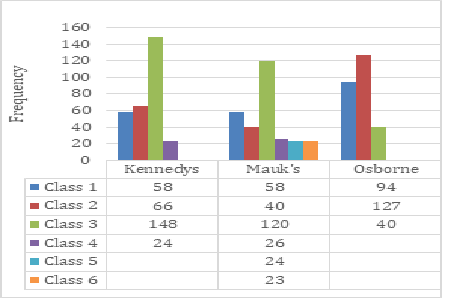
Figure 1 Distribution of Kennedy’s, Mauk’s and Osborne classification in Mandible (n=555)
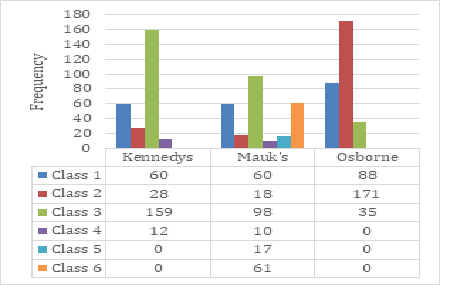
Figure 2 Distribution of Kennedy’s, Mauk’s and Osborne classification in Maxilla (n=555)
<
|
Table II: Gender based distribution of treatment options and Kennedy’s, Mauk’s, and Osborne classification |
||||
|
Arch |
Classification |
Male N% |
Female N% |
p- value |
|
Maxilla |
Kennedy’s, Mauk’s and Osborne class 1 |
2(50) |
2(50) |
0.001 |
|
Kennedy’s class 2, Mauk’s class 4 and Osborne 1 |
11(40.7) |
16(59.3) |
||
|
Kennedy’s class 3, Mauk’s class 3 and Osborne 2 |
108(41.5) |
152(58.5) |
||
|
Kennedy’s class 4, Mauk’s class 5 and Osborne 2 |
30(78.9) |
8(21.1) |
||
|
Mandible |
Kennedy’s, Mauk’s and Osborne class 1 |
11(44) |
14(56) |
0.189 |
|
Kennedy’s class 2, Mauk’s class 4 and Osborne 1 |
23(44.2) |
29(55.8) |
||
|
Kennedy’s class 3, Mauk’s class 3 and Osborne 2 |
90(40.9) |
130(59.1) |
||
|
Kennedy’s class 4, Mauk’s class 5 and Osborne 2 |
17(63) |
10(37) |
||
|
Treatment Options |
Acrylic partial denture |
124(22.34) |
138(24.86) |
0.799 |
|
Cast partial denture |
14(2.52) |
40(7.20) |
||
|
Fixed dental prosthesis |
57(10.7) |
120(21.6) |
||
|
Implant supported FPD |
23(4.14) |
39(7.02) |
||
|
Table III: Distribution of treatment options with respect to classification type |
||||||||
|
Kennedy’s, Mauk’s, Osborne classification |
||||||||
|
Treatment options |
Acrylic Partial Denture N=262 (47.2%) |
Cast Partial Denture N = 54 (9.72%) |
Fixed dental Prosthesis N = 177 (31.89%) |
Implant supported FPDS N= 62 (11.17%) |
||||
|
Dental Arch |
Maxilla N% |
Mandible N% |
Maxilla N% |
Mandible N% |
Maxilla N% |
Mandible N% |
Maxilla N% |
Mandible N% |
|
91 (16.39) |
171 (30.81) |
22 (3.96) |
32 (5.76) |
46 (8.28) |
131 (23.60) |
40 (7.20) |
22 (3.96) |
|
Edentulism greatly affects the oral health related quality of life in terms of low self-esteem, changes in dietary habits, speech defects and psychological impact. The loss of teeth occurs due to various dental diseases, with caries and periodontitis being the most common, followed by trauma and genetics. Unfortunately, seeking dental treatment is the last priority and often delayed, leading to teeth movements and eventually complications. Moreover, the choice of treatment is mainly on basis of cost rather than quality or recommended first line of treatment.9To identify and facilitate dental practitioners various classifications were proposed over time i.e. Kennedys, Mauks and Osborne is used as it provides immediate visualization and aids in selection of the most suitable treatment as well as in planning dental prosthesis design.4,6,10 In this study patients visiting the dental OPD were evaluated for the partial loss of their teeth, causes associated to it and the respective treatments chosen, which were further compared with respect to the type of Kennedy’s class identified. As dental treatment is least prioritized and expensive, the importance is often associated with the level of education and socioeconomic status. Our study indicated that mostly the patients visiting the OPD to get replacement for their missing teeth were educated (95.6%) and the most common cause of tooth loss in them was caries (66.3%). The second leading cause was mobility or periodontal disease. Similar findings were found in numerous studies.11,13 In our study, it can be seen that majority of the participants had Kennedy’s and Mauk’s class 3 and Osborne class 2. These findings are similar to numerous studies done over the time3,5,8,13-17where Kennedy’s class 3 was the most common pattern observed in partially edentulous patients. However, Kennedy’s classification 1 was the least prevalent in our study. This was in contrast to studies16-18, where class 4 was the least prevalent. The increase in female ratio in the present study could account for the difference, owing to their less betel quid chewing habits, which would otherwise greatly affect the posteriors. Additionally, it was found in the present study that Kennedy’s, Mauk’s class 3 and Osborne class 2 was more prevalent in females as compared to males in both maxilla and mandible. This was in accordance with a similar study conducted by Budtz-Jorgensen et al19. This can be attributed to the fact that females are more concerned and promptly visit the dentist. While conflicting results were found in other studies, where greater number of males were found to have Kennedy’s, Mauk’s class 3 and Osborne class 2 compared to females.15,20 Furthermore, according to some studies3,5 there was no correlation of Kennedys classification with gender. Different studies stating different outcome could mean population-based preferences and dental education for the people of the community. In the current research Mauk’s class 3 and Osborne Class 2 of partially edentulous arch was prevalent among the participants in maxilla and mandible, to the authors knowledge no scientific data or comparison is available in published literature. When treatment options were considered, majority of patients either went with acrylic partial denture or fixed dental prosthesis while cast partial dentures were the least chosen as replacements for missing teeth. This finding was similar to the study carried out by Hafeez et al.8Moreover, there was a distinction in treatment plans chosen when different partially edentulous classification was compared. Patients with Kennedy’s class 1, 2 and 4, Mauk’s Class 1,2 & 4 and Osborne 1 & 3 opted acrylic partial dentures. Lastly, patients with Kennedy’s Class 3, Mauk’s Class 3, 5 & 6 and Osborne 2 & 3 opted for fixed prosthesis in both the arches. These findings are similar to study conducted by Ozkurt et al7 which stated that fixed partial dentures were the common treatment option for Kennedys 3 and 4. The present study found that a greater number of females opted for acrylic partial dentures (24.86%) and fixed dental prosthesis (21.6%) compared to males (22.34 & 10.7%) respectively. This may be due to the reason that females are more concerned about teeth replacement to overcome esthetic compromise and loss of function.21 Furthermore, in this study a significant difference (p=0.000) amongst gender and various classification in maxilla was found. However, the study also found that there was no significant difference (p=0.189) amongst gender and various classifications in mandible which is similar to surveys that indicate no association of tooth loss and gender treatment (0.799).3,5 Studies conducted by Fouda SM and Araby14,22 stated that men are more prone to tooth loss which contradicts from our survey as majority of patients were female. This may be due to the busy schedule of males owing to their work, as a result of which they are unable to attend the OPD. The limitations of this study were that the study was confined to a single site of data collection therefore reflected only a certain group of people from a particular locality. Further studies covering a larger sample size, from various sites are warranted to generalize the results.
This study describes that Kennedys, Mauk’s Class 3 and Osborne Class 2 were found in majority of
participants. Dental caries and periodontal disease were the common cause of missing teeth with
acrylic partial denture remained the most opted treatment option.
Conflict of Interest:The authors declared no conflict of interest.
Funding:none
- Jandial S, Gupta R, Sharma S, Mahajan N, Kotwal B, Kharyal S. Incidence of Partial Edentulism Based on Kennedy’s Classification in Jammu. Int J Prev Public Health Sci. 2017:30;3(2):38–40.
- Qureshi, A. W., Rahim, S., Abbasi, M. S., Akhtar, Q, Qureshi, S. W. (2019). Oral stereognostic score in edentulous patients. Pak Oral Dent J.2019;39(3):309-313.
- Kumar B, Naz A, Rashid H. A survey of partial edentulism based on kennedy’s classification in maxillary arches. Pak J Med Dent. 2018;7(3):5–5.
- Nayyer M, Khan DA, Gul H, Aslam A, Khan NB, Aslam F. Patterns of partial edentulism according to kennedy’s classification -a cross sectional study. Pak Armed Forces Med J. 2020:27;70(Suppl-1):S87-90.
- Devishree RA, Sangeetha S, Jain A. Prevalence of partial edentulism according to Kennedy’s classification based on age, gender, and arch. Drug Invent Today. 2018:1;10:108–10.
- Lone MA, Shah SA, Mir S. Pattern of partial edentulism based on Kennedys classification among dental patients in Kashmir: retrospective study. Int J Appl Dent Sci. 2019; 5(2): 209-212.
- Ozkurt Kayahan Z, özçakır tomruk C, Kazazoglu E. Partial edentulism and treatment options. Yeditepe Dent J. 2017;13(1):31–6.
- Hafeez A, Kamran MF, Masood RT, Chaudhary MA, Ali W. A retrospective study of partial edentulism and its rehablitation at a tertiary care centre at islamabad. Pak Oral Dent J. 2017:31;37(4):638-41..
- Ahmed N, Faruqui S. Factors affecting dental prosthesis satisfaction in Pakistani population. Internet J Dent Res. 2015; 3(2):24-26.
- Miller EL. Systems for classifying partially dentulous arches. J Prosthet Dent. 1970;24(1):25–40.
- Imran T, Ahmed N, Nazeer B. Pattern of occlusal contacts in intercuspal position of natural teeth. Int J Dent Res. 2016;4(1):19-21.
- Ahmed N, Abbasi MS, Alavi FB, Naz A, Masood S, Irfan AB. Factors influencing the treatment options for single missing tooth: A patient preference based study. Isra Med J. 2021; 13(1): 24-28.
- Shrestha P, Bhagat T. Partial Edentulism in Patients Visiting the Dental Out-Patient Department at the Tertiary Care Centre in the Eastern Part of Nepal. J Nepal Prosthodont Soc. 2018:30;1(1):33–7.
- Fouda SM, Al-Harbi FA, Khan SQ, Virtanen JI, Raustia A. Missing Teeth and Prosthetic Treatment in Patients Treated at College of Dentistry, University of Dammam. Int J Dent. 2017:30; 2017: 6 https://doi.org/10.1155/2017/7593540
- Moaleem MMA. Pattern of Partial Edentulism and Its Relation to Age, Gender, Causes of Teeth Loss in Jazan Population. American J Health Res. 2016; 4(5):121 DOI: 10.11648/j.ajhr.20160405.12
- Choudhary Z, Kumar P, Amin M, Malik S. Kennedy’s classification - a study done at dow international dental hospital. Pak Oral Dent J. 2016:31;36(4):677–677.
- Joana M, Francisco M, Ana F, João BM, Durão MP, Alexandre RJ. Patterns of edentulism in Egas Moniz University Dental Clinic population. Ann Med. 2019:29;51(sup1):130–1.
- Hama DAM, Mahmood DDK, Abdullah DAO. Prevalence And Assessment Of Partially Edentulism According To Kennedys Classification In Sulaimani City. 2016;07:4.
- Budtz-Jörgensen E. Restoration of the partially edentulous mouth--a comparison of overdentures, removable partial dentures, fixed partial dentures and implant treatment. J Dent. 1996;24(4):237–44.
- Moaleem MA. Patterns of Partial Edentulism and its Relation to Khat Chewing in Jazan Population – A Survey Study. J Clin Diagn Res. 2017;11(3):55–9.
- De Marchi RJ, Hilgert JB, Hugo FN, Santos CMD, Martins AB, Padilha DM. Four-year incidence and predictors of tooth loss among older adults in a southern Brazilian city. Community Dent Oral Epidemiol. 2012;40(5):396–405.
- Araby YA, Almutairy AS, Alotaibi FM. Pattern of Partial Edentulism in Correlation to Age and Gender among a Selected Saudi Population. Int J Dent Sci Res.2017.5(1):1-4.

An Official
Publication of
Islamabad Medical & Dental College
Volume 12 Issue 3
Editorial
Address of Correspondence
Maria Shakoor Abbasi
Email:
maria-shakoor@hotmail.com
. Irfan AB, Mansoor S, Ahmed N, Naseem W, Saeed T, Abbasi MS, Rahman MA, Faisal A. Etiology and Pattern of Partially Dentate States with respect to Gender and Choice of Treatment. J Islamabad Med Dental Coll. 2023; 12(3): 179-185. DOI: https://doi.org/10.35787/jimdc.v12i3.708